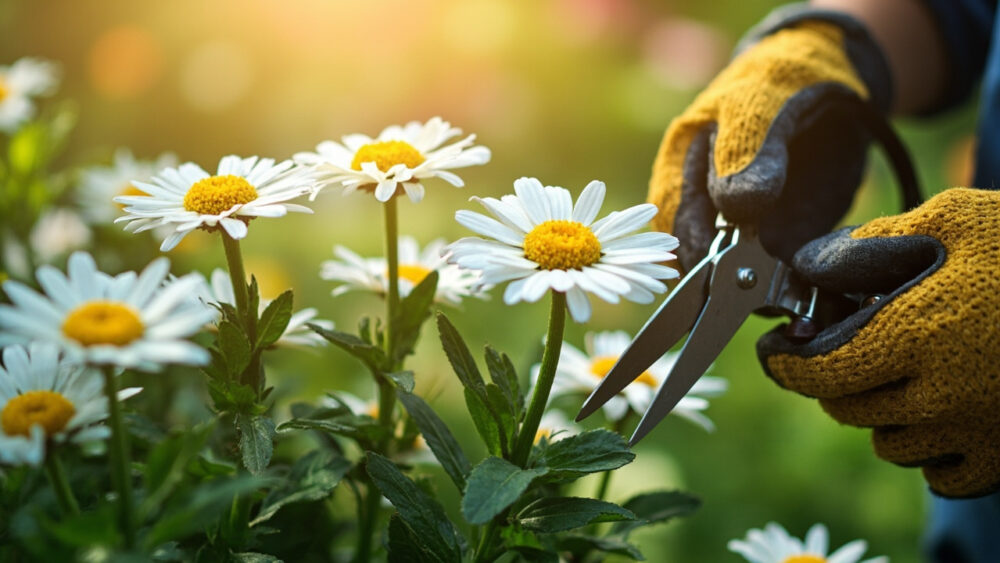
Here is how to prune shasta daisies without losing a season of blooms: deadhead spent flowers all summer by snipping the stem down to the first set of healthy leaves, cut the whole plant back hard to 2 to 4 inches once flowering stops for good in fall, and never touch the plant while it is still budding or blooming. That is the whole job in one sentence, but the timing details are where most people lose flowers they didn’t have to lose.
There is one cut almost everyone gets backward, and it is the difference between a daisy that reblooms in August and one that just sits there green and stubborn. There is also a fall pruning decision that depends entirely on your winter, not on what your neighbor did to theirs.
Stick around for the mistakes section, because two of them are the reason otherwise healthy shasta daisies stop flowering by midsummer. And save the at-a-glance card at the very bottom, it has the numbers you’ll want pulled up on your phone the next time you’re standing in front of the plant with shears in hand.
When to Prune Shasta Daisies (and When to Leave Them Alone)
Shasta daisies get pruned at three different times for three different reasons, and mixing them up is where people go wrong. Deadhead continuously through the entire bloom season, roughly early summer through early fall depending on your zone. Cut back hard once after the final flush of bloom fades in fall, or in early spring in colder zones. Divide every 2 to 3 years, which is really a pruning-adjacent job in itself.
What you should never do is cut back a plant that is still actively budding just because it looks a little ragged. Those buds are next month’s flowers, and shastas rebloom in flushes, not all at once.
The season you’re in decides everything else about how you approach the shears.
Tools and the One Prep Step That Actually Matters
A clean pair of bypass pruners or sharp scissors handles everything here, shastas don’t have tough woody stems. For the big fall cutback, hedge shears speed things up on established clumps.
Wipe the blades with rubbing alcohol before you start, especially if you’ve used them on anything with powdery mildew or leaf spot this season. Shastas are prone to both, and a dirty blade is a great way to hand a healthy clump someone else’s fungal problem.
That single wipe-down is the prep step people skip, and it’s the one that actually matters.
How to Deadhead Through the Summer
Where to cut
Follow the flowering stem down past the spent bloom until you hit the first full set of healthy leaves or a side bud, then cut there. Cutting just below the flower head and leaving 6 inches of bare stem behind is the version that stalls reblooming, because the plant has nothing left on that stem to push new growth from.
How much to take
Take the whole flowering stem, not just the petals. If you assumed pinching off the dead flower head alone counts as deadheading, that guess is why the plant looks tidy for a week and then stops blooming, that bare stem just sits there doing nothing productive.
Do this every few days during peak bloom and you’ll get a second, sometimes third flush before frost.
The Big Fall Cutback, Step by Step
1. Wait for the real end of bloom
Don’t cut back after the first flush fades if buds are still forming lower on the plant. Wait until frost has browned the foliage or flowering has genuinely stopped for the season, usually mid to late fall depending on your climate.
2. Cut to 2 to 4 inches
Shear the entire clump down to 2 to 4 inches above the crown. This is more aggressive than most perennials get, but shastas respond well to it and it removes overwintering sites for pests and mildew spores.
3. Or leave it, if you’re in a harsh winter zone
In zone 4 or colder, some gardeners leave the cutback stems in place until early spring instead. The old growth traps snow and insulates the crown. Cut back in early spring instead, right as new basal growth appears at the base.
Which timing is right for you comes down to how your winters actually behave, not a fixed rule.
What to Expect After You Cut
After deadheading, expect new buds within 1 to 3 weeks on a plant that’s getting consistent moisture and at least 6 hours of sun. If nothing happens after three weeks, the plant is likely stressed by heat, drought, or crowding rather than waiting on you.
After the fall cutback, expect nothing until spring, and that’s correct. You’re looking at bare crowns until new basal leaves push up once soil warms.
Fresh growth that looks thin and sparse the first spring after a hard cutback usually means the clump is overdue for division, not that anything went wrong with your pruning.
The Mistakes That Actually Cost You Flowers
- Deadheading too high on the stem: leaving long bare stalks behind stalls reblooming for weeks.
- Cutting back while still budding: you lose flowers that were days away from opening.
- Shearing in late spring instead of fall or early spring: this removes the current season’s flower buds before they ever form.
- Skipping division: clumps left untouched past 3 years get woody, hollow centers and bloom less every year, no amount of correct pruning fixes that on its own.
- Dirty blades: spreads powdery mildew and leaf spot clump to clump.
Most of these are one-time fixes, catch them once and the plant recovers by the following season.
Shasta Daisies at a Glance
- Deadhead: cut spent flower stems down to the first healthy leaf set or side bud, every few days through the bloom season.
- Fall cutback: shear the whole clump to 2 to 4 inches after bloom truly ends, usually after the first hard frost blackens the foliage.
- Cold-climate exception: in zone 4 and colder, leave stems standing over winter and cut back in early spring instead.
- Division: split clumps every 2 to 3 years in early spring or early fall to keep blooms strong.
- Tools: sharp bypass pruners, wiped with rubbing alcohol before you start.
- Reblooming: expect new buds 1 to 3 weeks after deadheading with adequate sun and moisture.
- Never prune: while the plant is still actively budding or flowering.
Get the deadheading cut right and the fall cutback timed to your winter, and everything else about growing shasta daisies takes care of itself.
When in doubt, cut lower and later rather than higher and earlier.