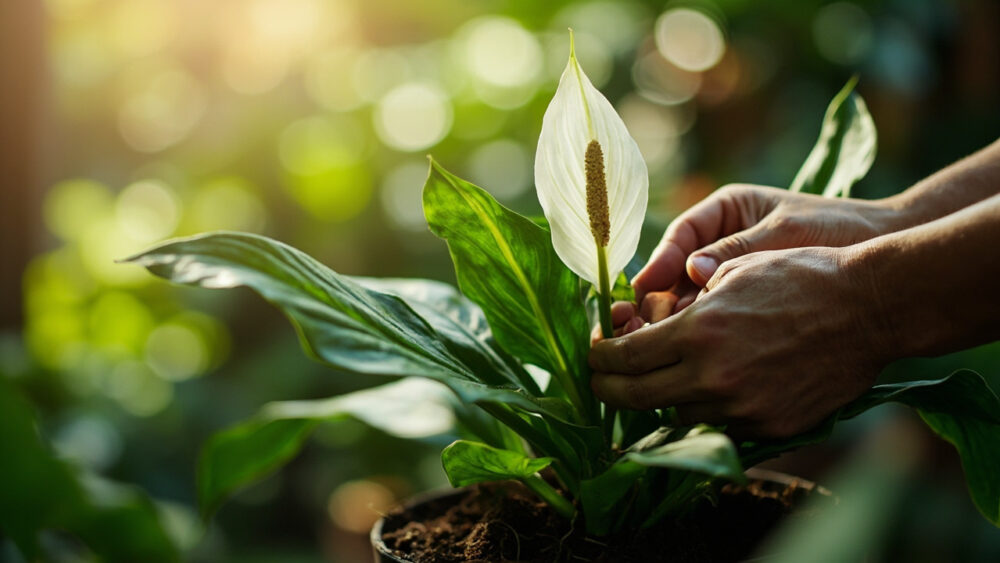
If your peace lily has plenty of dark green leaves but has not sent up a single white bloom in months, the most likely cause is not enough light. Peace lilies tolerate low light without dying, but they will not flower in it. Move it somewhere brighter with no direct sun and you will often see a flower spike within six to ten weeks.
Most people blame fertilizer first, and that guess is usually wrong. A peace lily starved for light will not bloom no matter how much you feed it, and overfeeding it actually makes flowering worse, not better. There is one detail on the plant itself that tells you exactly which cause you are dealing with, and it is not the leaf color most people check.
I will also give you the honest answer on timing, because some peace lilies that have never bloomed are actually fine and just need one change, while others are rootbound messes that need a repot before they will bother. Stick around for the diagnosis checklist at the bottom. It is built to run in about two minutes, standing right next to the plant.
Causes, Most to Least Likely
1. Not Enough Light
Confirm it: peace lilies bloom on the energy they store, and low light means the plant is putting everything into staying alive, not flowering. If your plant sits more than six or seven feet from a window, or in a north-facing room with no supplemental light, this is almost certainly it. Leaves may still look glossy and healthy, which is what fools people.
Fix it: move it to bright, indirect light, close to an east or west window, or a few feet back from a south window with a sheer curtain. Direct hot sun will scorch the leaves, so avoid that extreme too.
Light is the fix most peace lilies actually need, but it is not the only one.
2. Rootbound and Overdue for Repotting
Confirm it: slide the plant out of its pot. If you see a dense tangle of roots circling the outside with little visible soil, or roots poking out the drainage holes, it is rootbound. Rootbound peace lilies often bloom more, not less, right after repotting because the stress signals the plant to reproduce.
Fix it: repot up one size, using a pot only 2 inches wider in diameter, with fresh, well-draining potting mix. Going too much bigger encourages root growth over flowering.
A plant that is comfortable in its pot can still refuse to bloom for a completely different reason.
3. Wrong Watering Rhythm
Confirm it: peace lilies are famous for drooping dramatically when thirsty, then bouncing back within hours of watering. If yours never gets to droop because you water on a fixed schedule regardless of soil condition, the roots may be staying too wet, which stresses the plant and suppresses blooming.
Fix it: let the top 1 to 2 inches of soil dry before watering again, and let the plant tell you with a slight droop rather than watering by the calendar. Always empty the saucer so roots are not sitting in standing water.
Watering habits are sneaky because the plant can look perfectly fine for months while blooming quietly gets postponed.
4. Too Much Nitrogen, Not Enough Phosphorus
Confirm it: check what you have been feeding it. A high-nitrogen, all-purpose houseplant fertilizer pushes lush green leaf growth at the direct expense of flowers. If your plant has gotten noticeably leafier and bigger over the last year with zero blooms, this is a strong suspect.
Fix it: switch to a balanced or bloom-formulated fertilizer, diluted to half strength, applied every four to six weeks during spring and summer only. Skip fertilizing entirely in fall and winter.
Feeding is easy to overdo, and the leaf-versus-flower tradeoff is worth understanding before you reach for the bottle again.
5. Temperature Swings or Cold Drafts
Confirm it: peace lilies want daytime temperatures in the 65 to 85 F range and resent anything below 60 F. If the plant sits near a drafty window, an exterior door, or an air conditioning vent, temperature stress could be blocking bloom formation even with good light.
Fix it: relocate it away from drafts and vents, and keep it out of rooms that get cold overnight in winter.
This cause is easy to overlook because the symptoms look identical to a light problem at first glance.
6. Simply Too Young
Confirm it: a peace lily grown from a small division or a young nursery plant may genuinely be too immature to flower yet, regardless of care. Check the plant’s size. Peace lilies typically need to reach a certain maturity, often a year or more of steady growth, before they bloom for the first time.
Fix it: there is no shortcut here. Keep conditions good and give it time, generally another six months to a year of healthy growth.
Once you know which of these fits, the next step is confirming it against the others, because a few of these causes look alike at first.
How to Tell the Causes Apart
Light problems show up as an otherwise healthy, uniformly green plant that simply never flowers, with no other symptoms on the leaves at all.
Rootbound plants often show slower growth overall and roots visible at the drainage holes or the soil surface, even though the leaves stay green.
Overwatering problems usually come with a tell beyond no blooms: yellowing older leaves, a musty soil smell, or leaves that stay limp even right after watering.
Too much nitrogen shows as a plant that is growing fast and getting leafier by the month, with new leaves larger than older ones, but zero flower spikes.
Cold stress tends to hit whichever side of the plant faces the draft first, so uneven leaf edges or one-sided damage points there rather than at light.
A young plant looks completely normal in every way, just small, which is the biggest clue that patience, not troubleshooting, is the actual fix.
Once you have matched your symptom pattern, the next question is the one everyone actually wants answered.
Will It Recover?
The honest answer is that almost every non-blooming peace lily recovers once the real cause is fixed, because failure to bloom is a condition issue, not a disease. This is one of the more forgiving problems in houseplant care.
Light fixes are the fastest, often producing a bloom spike in six to ten weeks once the plant is properly placed.
Rootbound fixes take a little longer, usually eight to twelve weeks after repotting, since the plant needs time to settle before it redirects energy to flowering.
Watering and fertilizer corrections take the longest, often a full growing season, because you are undoing months of accumulated stress or nutrient imbalance.
The one situation where you should adjust expectations rather than cut losses is a genuinely young plant. There is nothing to fix, only time to let pass.
Even a full recovery, though, will not last if the same conditions creep back in.
How to Keep It From Happening Again
Give it consistent bright, indirect light year-round, since this single factor drives more non-blooming peace lilies than everything else combined.
Water by feel, not schedule, checking the top inch or two of soil before every watering.
Feed lightly and only during active growth, using a balanced or phosphorus-leaning fertilizer at half strength, and stop entirely from fall through winter.
Repot every 18 to 24 months, or sooner if roots are visibly crowding the pot, to prevent the plant from stalling out.
Keep it away from cold glass, exterior doors, and heating or cooling vents so temperature swings never become the hidden culprit.
Run through the checklist below at the plant right now and you will know exactly which fix to make today.
Diagnosis Checklist
- Check the distance from the nearest window: if it is more than 6 feet with no direct light reaching the leaves, move it closer or to a brighter spot first.
- Slide the plant partway out of its pot: if roots circle densely around the outside or poke through drainage holes, plan a repot one size up.
- Press a finger into the top 2 inches of soil: if it is consistently damp rather than drying between waterings, ease off the watering schedule.
- Recall your last three feedings: if you used a high-nitrogen, all-purpose fertilizer regularly, switch to a balanced or bloom formula at half strength.
- Check for drafts: hold your hand near the plant at leaf height, and if you feel cold air or a vent breeze, relocate it.
- Estimate the plant’s age: if it is under a year old from a small division or starter pot, give it more time before troubleshooting further.
- Make one change at a time, wait six to ten weeks, and only then decide whether to adjust again.
Peace lilies are not shy bloomers once their conditions are right, they are just honest about telling you when something is off.
Fix the right cause and you are usually looking at flower spikes within a season, not years.