The best companion plants for beets are bush beans, onions, garlic, brassicas like cabbage and broccoli, lettuce, and most alliums, because they either share row space well without competing for the same root depth or actively repel the pests that go after beet leaves. What ruins the pairing almost every time is one specific vegetable that gardeners plant next to beets constantly, thinking it helps, when it actually stunts the roots before you ever see a symptom above ground.
There is also a sign most people read backwards. Stunted, small beets get blamed on poor soil or not enough water, when the real cause is usually who is standing next to them, not what is under them.
I will get to the exact layout that works in a 4-foot bed, the pairing myths that sound smart but do nothing, and the one companion nobody mentions that beets genuinely need. Save-able specifics, including spacing and depth, are in the Beets at a Glance card at the very bottom.
Why Companion Planting Matters More for Beets Than You Would Think
Beets are not a fussy crop, but they are a slow, quiet one. They do not show stress the way tomatoes do, with dramatic wilting or curling.
A struggling beet just quietly makes a small, woody root and small leaves, and by the time you pull it you have already lost the season on that row. Good neighbors prevent the slow problems: shading, root crowding, and pest pressure that builds over eight to ten weeks rather than overnight.
That is the whole case for companion planting here. It is not magic, it is spacing, timing, and pest confusion done on purpose.
Here is what actually earns a spot next to your beets, and why.
Bush Beans
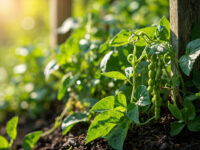
Bush beans fix nitrogen in the soil through bacteria on their roots, and beets are moderate nitrogen feeders that benefit from that boost, especially for leaf growth.
They also stay low and bushy rather than vining, so they never shade out beet foliage the way pole beans eventually will.
Plant them in the same bed with beans on one side of the row and beets on the other, roughly 12 to 18 inches apart.
Nitrogen from beans feeds the leaves, but there is one root crop that undoes all of it.
Onions, Garlic, and Leeks
Alliums are the single best pest defense you can plant next to beets. Their scent confuses leaf miners and some aphid species that would otherwise home in on beet foliage by smell.
They also root shallow and narrow, so they never compete with the swelling beet root for underground space.
Garlic planted in fall alongside a spring beet crop, or onion sets planted the same week as beet seed, both work well. Space alliums about 4 to 6 inches from the beet row itself.
That pest confusion trick works both directions, and the next plant on this list proves it.
Brassicas: Cabbage, Broccoli, Kale
Cabbage worms and cabbage loopers care about brassicas, not beets, so planting them together does not create a shared pest problem the way you might assume.
What it does create is a good use of space, since brassicas are heavy feeders on nitrogen and beets are moderate feeders, so they are not fighting hard over the same nutrients.
Give brassicas more room than you would think, at least 18 to 24 inches from the beet row, because their leaves get wide and will shade beet tops if crowded.
Lettuce takes that same shading problem and turns it into an advantage.
Lettuce and Other Low Greens
Lettuce, spinach, and other quick low greens make good living mulch between beet rows. They shade the soil surface just enough to slow moisture loss without blocking light from the beet tops, since beet leaves stand upright and lettuce stays low.
Interplant lettuce in the same row about 4 to 6 inches from beet seedlings, and you will usually harvest the lettuce entirely before the beets need that space for their roots to bulk up.
Good spacing solves half the battle, but the layout of the whole bed solves the rest.
Laying Out the Bed So Nobody Crowds Anybody
Beet roots need clear space below the soil line, roughly 3 to 4 inches around each root at maturity, even though the seedlings look tiny at first.
Plant beet seed about half an inch deep, thin seedlings to 3 to 4 inches apart once they have two true leaves, and keep rows 12 to 18 inches apart to leave room for companions on either side.
A practical layout in a 4-foot-wide bed: beets down the center, a row of bush beans or bulb onions along one edge, and lettuce or spinach filling gaps along the other.
Keep tall crops on the north side of the bed if you are in the northern hemisphere, so they never cast afternoon shade over the beet row.
Layout solves crowding, but it does nothing for the plants that hurt beets from underground.
What to Never Plant Next to Beets
If you guessed that beets clash with something aggressive and vining like squash, that is a reasonable guess, but it is not the main offender. Squash is a minor space issue at worst.
The real problem is pole beans, not bush beans. Pole beans climb, shade the entire row by midseason, and their extensive root systems directly compete with beet roots for the same soil depth where beets are trying to swell. The result is small, tough beets that look fine above ground until you pull them.
Mustard is the other one people do not expect. It is a brassica, but a fast, aggressive one that competes hard for the same soil nutrients beets need early on, and it can inhibit beet root development through allelopathic compounds it releases into the soil.
Field mustard and beets grown in the same bed consistently produce smaller, oddly shaped roots than beets grown alone or with better neighbors.
Skip pole beans and mustard near beets, full stop. The next mistake is subtler and takes a whole season to notice.
The Slow Damage: Charlock and Close Relatives
Beets belong to the same general plant family group as spinach and Swiss chard in terms of nutrient draw, and while they can be grown near each other without disaster, heavy stands of chard packed too close will out-compete young beet seedlings for light and water because chard grows faster and taller early on.
This is not a toxicity problem, it is a timing and vigor problem. Chard germinates fast and grows aggressively for the first month, so if you sow both at once in tight quarters, chard wins.
Give chard its own section of the bed, or start beets a week or two ahead if you want them side by side.
Now for the myths that get repeated in every gardening forum without much evidence behind them.
Companion Planting Myths That Do Not Hold Up
Marigolds get credit for repelling nearly every pest in every vegetable garden, beets included, but there is no solid evidence they do anything measurable against the specific pests that bother beets, which are mainly leaf miners, flea beetles, and aphids. They look nice. That is the honest extent of it.
The claim that beets and tomatoes actively harm each other is repeated often but overstated. Tomatoes will shade out beets if planted too close because tomato foliage gets large, but that is a spacing problem, not a chemical one. Give tomatoes 24 inches of clearance and the conflict disappears.
- Marigolds near beets: pleasant, not protective in any measurable way.
- Beets and tomatoes as enemies: a spacing issue, not a real incompatibility.
- Beets stunt everything nearby: not true, beets are mild competitors when given normal spacing.
The real decisions that matter are spacing, timing, and root depth, and here is all of that in one place.
Beets at a Glance
- When to plant: two to three weeks before your last expected frost, once soil hits at least 50°F, with succession sowings every three weeks through early summer.
- Depth and spacing: sow seed about half an inch deep, thin seedlings to 3 to 4 inches apart, rows 12 to 18 inches apart.
- Best companions: bush beans, onions, garlic, leeks, cabbage family crops with room to spread, lettuce and spinach as living mulch.
- Never plant nearby: pole beans, which shade and root-compete, and mustard, which suppresses root growth in the same soil.
- Watch for: chard or spinach sown too close outcompeting young beet seedlings in the first month, a timing problem, not a toxicity one.
- Skip the myth: marigolds do not meaningfully protect beets, and tomatoes only hurt beets if planted within about 24 inches.
- Signal to trust: small, tough roots almost always trace back to a crowded neighbor, not poor soil.
Get the neighbors right and the roots take care of themselves.
Everything else about growing beets well is just soil, water, and patience.