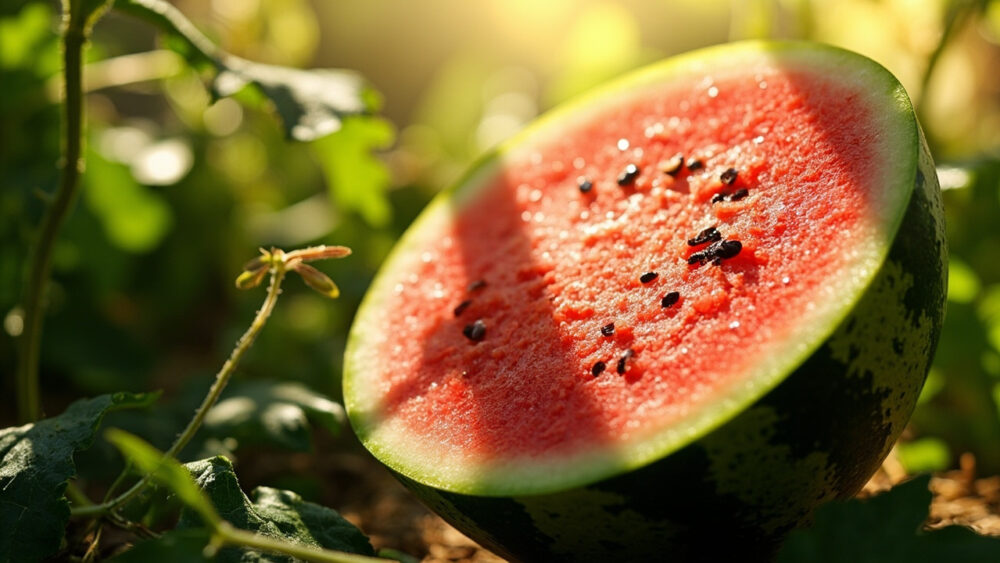
Yes, you can freeze watermelon, but only the flesh, and only if you accept that it comes out of the freezer softer and slushier than it went in. Frozen and thawed watermelon is never going to be crisp again. Freeze it whole with the rind on, though, and you get a mushy, watery mess that nobody wants to eat.
The trick isn’t really about freezing at all. It’s about deciding what you’re freezing it for.
Most people ruin their first batch the same way, and it has nothing to do with freezer temperature. There’s also a texture problem almost nobody warns you about until it’s too late, a storage-time question that catches people off guard, and a fairly obvious sign of spoilage that gets misread as “still fine.” Stick around for the Watermelon at a Glance card at the bottom, it’s the version of this you’ll actually want saved to your phone next time you’re standing in the kitchen with a half a melon and no plan.
The Right Way to Freeze Watermelon
Cut the flesh into cubes or balls, about 1 inch across, discarding rind and as many seeds as you can pick out. Spread the pieces in a single layer on a parchment-lined baking sheet, not touching each other.
Freeze that tray uncovered for 3 to 4 hours, until the pieces are solid. This step, called flash freezing, keeps the cubes from fusing into one giant block.
Once frozen solid, transfer the cubes into a freezer bag or airtight container. Press out as much air as you can before sealing, then label it with the date.
Skip the flash-freeze step and you’ll regret it the first time you try to pour out a single serving.
The Mistake That Ruins Most Batches
Here’s the one that gets almost everyone: freezing wet, undrained cubes straight into a bag. Watermelon is roughly 90 percent water, and all that extra moisture turns into a solid brick of ice with fruit trapped inside.
The fix isn’t skipping water, it’s managing it. After cutting the cubes, let them sit in a colander for 10 to 15 minutes so excess juice drains off before they go on the tray.
Some people blot the cubes dry with a paper towel too. It’s a small step but it noticeably cuts down on ice crystals and clumping.
Get the moisture right and you’ve solved most of what makes frozen watermelon disappointing.
The Texture Problem Nobody Mentions
If you assumed frozen watermelon thaws back to something you can eat in slices, that guess is what leads to the most disappointment. Watermelon’s cell walls are full of water, and freezing ruptures them.
Thawed watermelon comes out soft, mushy, and weeping juice, every time, no matter how carefully you froze it. There’s no method that avoids this, it’s just how the fruit behaves.
That’s fine if you’re using it in smoothies, agua fresca, sorbet, or frozen cubes dropped straight into a drink as edible ice. It’s not fine if your plan was a thawed fruit salad.
Knowing what frozen watermelon is actually good for changes how disappointed you’ll be later.
How Long Watermelon Actually Keeps, Each Way
On the counter, a whole uncut watermelon holds for about 7 to 10 days in a cool spot out of direct sun. Once it’s cut, counter storage is done, refrigerate immediately.
In the fridge, cut watermelon in a sealed container keeps for 3 to 5 days. A whole melon in the fridge stretches out to 2 to 3 weeks.
In the freezer, properly flash-frozen and sealed cubes stay good for 8 to 12 months. Quality starts sliding after that, though it’s not unsafe, just increasingly bland and icy.
Those numbers only hold if the fruit went in clean and cold, which brings up prep.
Prep That Makes or Breaks the Batch
Wash the rind before cutting, even though you’re throwing it away. Your knife drags whatever is on that rind straight through the flesh as it cuts.
No blanching is needed, watermelon is eaten raw and freezing raw is correct here. Blanching would just cook it into baby food.
Pick out seeds as you cube, it’s tedious but frozen seeds are unpleasant and there’s no fixing it after the fact. Seedless varieties save you this step entirely.
Good prep upfront is the difference between cubes you’re glad to have in July and a bag you throw out in March.
The Signs It Has Turned
A watermelon that’s gone bad announces itself pretty clearly, but people talk themselves out of trusting it. A sour, fermented smell is the biggest tell, fresh watermelon smells faintly sweet or like almost nothing.
Slimy or mushy texture beyond normal softness, a grayish or dull color to the flesh, and any visible mold on the rind or cut surface all mean it’s done. Toss it.
In the freezer, watermelon doesn’t spoil the same way, but heavy ice crystals and a washed-out, colorless look mean it’s past its prime for eating and better suited to smoothies at that point.
If none of that applies, you’re just dealing with normal storage limits, not spoilage.
Other Mistakes That Cost People a Whole Batch
- Freezing it whole with the rind on: the water inside expands, ruptures the cells everywhere at once, and you get an unusable, weeping mess when it thaws.
- Skipping the flash freeze: cubes fuse into one solid block, forcing you to thaw the whole bag just to use a handful.
- Packing it into a container with air space: freezer burn sets in fast on high-water fruit, turning the surface pieces gray and tasteless within a couple months.
- Refreezing thawed watermelon: texture and flavor degrade further each time, and food safety gets shakier too, only refreeze if it stayed cold the whole time.
Avoid those four and your watermelon will hold up as well as this fruit is ever going to hold up frozen.
Watermelon at a Glance
- Best way to freeze it: cube the flesh, drain 10 to 15 minutes, flash freeze on a tray 3 to 4 hours, then bag it airtight.
- Never freeze: whole melons with the rind still on, the texture turns to mush.
- Counter storage: 7 to 10 days whole, uncut, in a cool spot.
- Fridge storage: 3 to 5 days once cut, 2 to 3 weeks whole.
- Freezer storage: 8 to 12 months for best quality in a sealed bag or container.
- Best uses after freezing: smoothies, sorbet, agua fresca, or drop frozen cubes straight into a drink as fruit-flavored ice.
- Signs it’s spoiled: sour smell, slimy texture, dull gray flesh, or visible mold, discard immediately.
Frozen watermelon is never going to be a fresh slice again, and that’s fine once you plan for it. Freeze it for smoothies and ice, not for a fruit salad, and you’ll never be disappointed opening that bag.