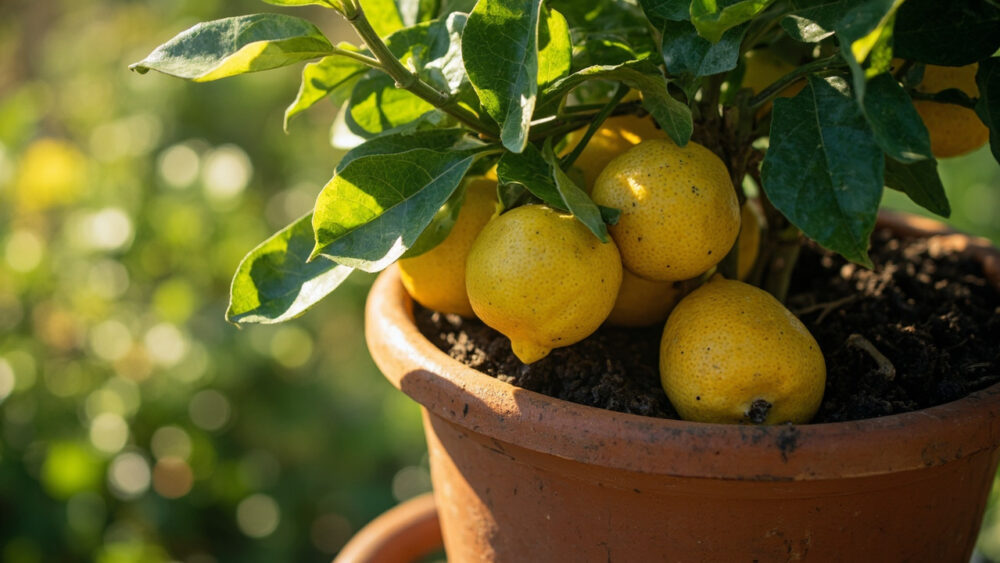
Growing lemons in pots works anywhere, even well outside citrus country, because the pot is what lets you cheat winter: grow the tree outdoors all summer, then haul it in before frost. A dwarf lemon on Flying Dragon or similar dwarfing rootstock will fruit in a 15 to 20 gallon container and stay under 8 feet with pruning. Plant it in fast-draining citrus mix, give it 8 or more hours of sun, and water only when the top 2 inches of soil dry out, and you can realistically pick your first ripe lemons within 1 to 2 years of planting a nursery tree.
Most potted lemon trees die slowly, not suddenly, and almost always from the same root cause: soil that stays wet. That is the mistake that quietly ends more attempts than cold ever does, and I will show you exactly how to avoid it.
There is also a sign nearly everyone misreads on a potted lemon: dropped leaves and yellowing get blamed on underwatering when the actual cause is usually the opposite, or a nutrient problem masquerading as thirst. And the question you are probably already forming, whether you can leave the tree outside year round, has a real answer that depends on your winter lows, not on wishful thinking.
Stick around for the full walkthrough, including feeding schedules and the harvest signs that actually mean ripe. There is a save-able Lemons at a Glance card at the very bottom with every number in one place.
When to Plant a Potted Lemon Tree
Plant in springonce nighttime lows are reliably staying above 50°F, or in early fall well before your first frost. Both windows give roots time to settle before the tree faces either summer heat stress or winter dormancy.
Skip planting during a heat wave or a cold snap. A nursery tree transplanted into new soil is stressed enough without extreme temperatures piled on.
If you live in zone 8 or colder, plan on the tree living in a container permanently since it will need to come indoors every winter. In zones 9 and 10 you can eventually sink the pot into the ground or upsize it and treat winter protection as optional on all but the coldest nights.
Timing matters, but the pot and soil you choose matter just as much.
Choosing the Pot and Mixing the Right Soil
Start smaller than you think you need. A young tree goes into a 5 to 7 gallon pot, not straight into its final 15 to 20 gallon home. Oversized pots hold excess moisture around a small root ball and that is exactly the wet-soil trap that kills more lemon trees than cold does.
Every pot needs real drainage holes, not just one. Terra cotta or a plastic container both work, but unglazed terra cotta dries faster, which is an advantage with citrus.
Use a citrus or cactus blend, or build your own with equal parts potting soil, coarse sand or perlite, and compost. Skip garden soil entirely. It compacts in a container and suffocates roots.
Once the mix is ready, the planting itself is quick.
Planting Your Lemon Tree Step by Step
1. Check the root ball
Slide the tree out of its nursery pot and look for roots circling the bottom. Loosen or slice through any tight circling roots with a clean knife before planting.
2. Set the depth
Plant so the top of the root ball sits level with, or very slightly above, the soil surface. Burying the trunk flare invites rot.
3. Watch the graft union
Most lemon trees are grafted; keep that swollen bump on the trunk at least 2 to 3 inches above the soil line, never buried.
4. Backfill and settle
Fill in around the root ball, firming gently as you go, then water thoroughly until it runs from the drainage holes.
5. Place the pot
Set it where it gets 8 or more hours of direct sun, ideally south-facing, and keep it out of strong wind that can dry the pot fast or tip it over.
Planting is the easy part; keeping the watering and feeding rhythm right through the season is where most trees actually succeed or fail.
Watering and Feeding Through the Season
Here is the mistake I promised to unpack: overwatering, not underwatering, is what kills potted lemons. Check the top 2 inches of soil with a finger before watering, and only water once that layer is dry. In summer heat that might mean every 2 to 3 days. In cooler weather or indoors it can stretch to once a week or longer.
Yellow leaves that drop steadily are the sign everyone misreads. It looks like drought stress, so the instinct is to water more, which is usually the opposite of what the tree needs. Overwatered roots stop absorbing nutrients properly, and the leaves yellow and drop for that reason, not thirst. Let the pot dry out more between waterings and see if new growth comes in greener before you assume you need to water harder.
Feed with a citrus-specific fertilizer, which supplies the nitrogen and micronutrients like iron, zinc, and manganese that potted citrus burns through fast. Apply every 4 to 6 weeks during active growth in spring and summer, and cut back or stop entirely once the tree slows down for winter.
Get the water and food rhythm right and most of the pest and disease trouble below never gets a foothold.
Problems Most Likely to Strike (and How to Head Them Off)
Root rot shows up as wilting leaves on soil that is still wet, the opposite of what wilting usually signals. It comes from poor drainage or a pot with no escape route for water. Fix the drainage before you fix anything else, and repot into fresh, fast-draining mix if the smell or the roots look mushy and dark.
Spider mites and citrus scale both turn up on stressed, indoor trees over winter. Look for stippled or sticky leaves and fine webbing on the undersides. A strong spray of water followed by insecticidal soap, applied per the product label, handles most infestations if you catch them early.
Leaf drop after a move indoors is normal, not a crisis. Citrus trees sulk for a few weeks after any change in light or humidity and usually recover on their own once they adjust.
Sudden yellowing between the leaf veins while the veins stay green points to a nutrient deficiency, usually iron or magnesium, and a dose of citrus fertilizer typically clears it up within a few weeks.
Handle the tree right through blooming and all that effort finally turns into fruit.
When and How to Harvest Your Lemons
Now for the follow-up question you were already asking: no, you cannot rush a lemon by picking it early and letting it ripen on the counter, not the way a tomato does. Lemons only ripen on the tree. Color change is your best clue, but size and a slight give when you squeeze gently matter too.
A ripe lemon is fully yellow with no green remaining at the stem end, and it should feel slightly soft to firm pressure rather than rock hard. Depending on variety and how warm your summer ran, fruit takes 6 to 9 months from bloom to ripe.
Twist or clip the fruit rather than pulling, which can tear bark and open the tree to disease. Ripe lemons hold on the tree for weeks without spoiling, so there is no rush to pick the whole crop at once.
A potted dwarf lemon can bloom and hold fruit at more than one stage at the same time, which is part of the fun of growing citrus indoors.
Save the numbers below to your phone before you head back out to the tree.
Lemons at a Glance
- When to plant: spring once nights stay above 50°F, or early fall well ahead of frost.
- Pot size: start in a 5 to 7 gallon container, size up to 15 to 20 gallons as the tree matures.
- Soil: a fast-draining citrus or cactus mix, never plain garden soil.
- Planting depth: root ball level with the soil surface, graft union 2 to 3 inches above the soil.
- Light and water: 8 or more hours of direct sun, water only when the top 2 inches of soil are dry.
- Feeding: citrus-specific fertilizer every 4 to 6 weeks during active spring and summer growth.
- Harvest: fully yellow fruit, slight give when squeezed, 6 to 9 months from bloom to ripe.
If you remember one thing, remember this: a dry pot forgives you, a wet one rarely does.
Get that one habit right and everything else on this list just falls into place.