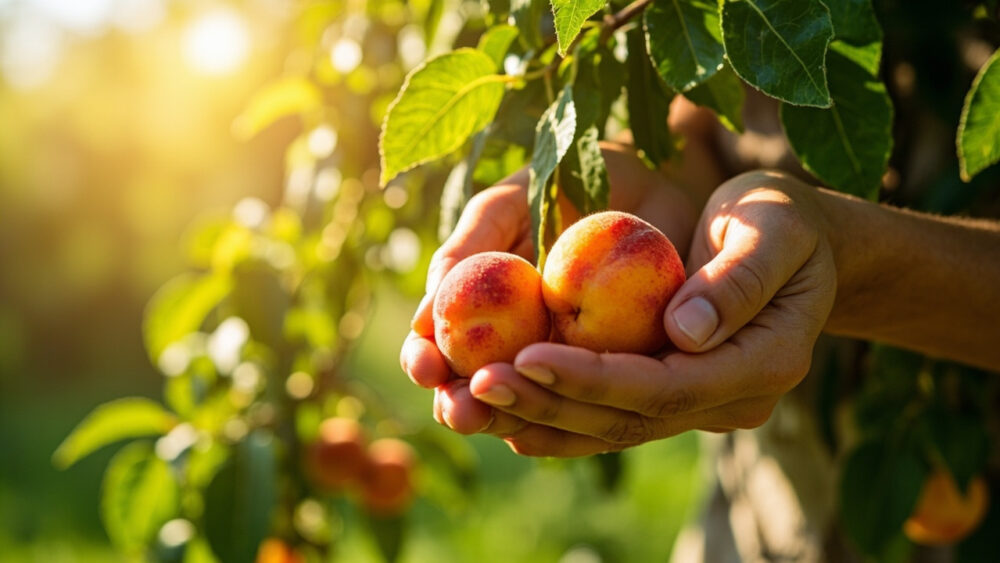
Apricots are ready when the color has gone fully from green-gold to deep orange (with a red blush on many varieties), the fruit gives slightly when you press it gently, and it separates from the branch with a light twist instead of a hard tug. That usually lands somewhere in a two to three week window in early to mid summer, depending on your climate and variety. Miss it by a few days in either direction and you either get a mealy, sour apricot that never recovers, or a mushy one on the ground.
Here is the part almost nobody tells you: apricots do not ripen much after picking, unlike peaches. Pick too early thinking they will “finish” on the counter, and you will get a firm, bland fruit that stays firm and bland forever. That is the single mistake that ruins more apricot harvests than birds, squirrels, and brown rot combined.
There is also a sign everyone misreads, a color change that looks like ripeness but is not, and a real answer to the question you are about to ask next: what do I do if my tree ripens all at once. Stick around, because the save-able Apricots at a Glance card at the bottom has the timing, spacing, and storage numbers in one place for your phone.
The Real Ready Signs
Color is the first clue, but it lies to you sometimes. A lot of varieties turn a warm gold-orange days before they are actually ripe, especially on the shaded side of the tree.
The color shift
Look at the background color, not just the blush. The green undertone needs to be completely gone, replaced by solid orange or golden orange all over, including the shoulders near the stem, which ripen last.
The give test
Cup the fruit in your palm and press gently near the stem end. A ripe apricot yields slightly, like pressing the pad of your thumb. If it feels hard as a golf ball, it needs more days.
The release test
A ripe apricot separates from the branch with a slight twist and almost no resistance. If you have to yank or pull the branch down with it, it is not ready yet.
Get those three signs to agree and you will almost never pick a bad one.
The Timing Window, and What Guessing Wrong Costs You
Apricots ripen over a two to three week stretch per tree, but individual fruit ripens unevenly, so you will pick the same tree three or four times, not once. In most climates that harvest window falls in late June through mid July, though warm-winter, low-elevation growers can be picking in late May, and cooler zones push into late July.
If you assumed a rock-hard green apricot would soften into something sweet on the windowsill, that guess is the one that costs people the whole crop. Unlike bananas or tomatoes, apricots have very little starch reserve to convert to sugar after picking. What you pick is close to what you get.
Go too late and you lose fruit a different way: it softens fast, drops, splits after a rain, or gets claimed by birds and wasps overnight. Overripe apricots also bruise from their own weight sitting on the branch.
The honest target is to pick slightly firm-ripe rather than dead ripe, then let the last softening happen over a day or two on the counter out of direct sun.
Next comes the part that actually protects the tree while you pick.
How to Harvest Without Wrecking Next Year’s Crop
Apricot wood is brittle, and the spurs that will fruit again next year sit close to where you are grabbing this year’s fruit. Rough handling now means fewer apricots next summer.
- Support the fruit in your palm before you twist it, never pull straight down on an unsupported apricot.
- Twist gently at the stem, the same motion as unscrewing a loose cap, rather than jerking it off.
- Pick from the top down and outside in, since sun-exposed fruit ripens first.
- Use a basket, not a bucket, and lay fruit in a single layer to avoid crushing the bottom layer under the weight of more apricots.
- Leave the stem on the tree, not on the fruit. Apricots pulled with the stem attached bruise around that point within a day.
Skip a step ladder standing on a single rung near the top; apricot branches snap easier than you expect under weight, and a broken limb does not grow back this season.
Once the fruit is in the basket, the clock starts running fast.
Right After Picking: The Two-Hour Window
Get picked apricots out of direct sun immediately. Fruit sitting in a basket in full sun for even an hour or two will soften and bruise noticeably faster than fruit moved into shade right away.
Sort as you go. Any fruit with a soft spot, a split skin, or a spot where a bird already sampled it should go into a separate “use today” pile, since it will not hold.
Do not wash apricots until you are ready to eat or process them. Washing early introduces moisture that speeds up mold and softening in storage.
What you do in the next 24 to 48 hours decides whether this harvest turns into jam, dried fruit, or a compost pile.
Keeping the Harvest Going: Storage and a Second Wave
Firm-ripe apricots keep about 3 to 5 days at room temperature, or up to 1 to 2 weeks refrigerated, though cold storage dulls the flavor and texture somewhat. If you have more fruit than you can eat fresh, apricots freeze well halved and pitted, and they dry into one of the better dried fruits you can make at home, whether in a dehydrator or a very low oven.
Because ripening is uneven, plan on three to five picking passes over the season rather than one big harvest day. Check the tree every two to three days once the first fruit starts turning fully orange.
For preserving in quantity, pick a batch slightly underripe (still firm but fully colored) specifically for jam or canning, since it holds its shape better under heat than dead-ripe fruit does.
Everything above gets easier once you have the numbers in front of you instead of in your head, which is exactly what the card below is for.
Apricots at a Glance
- Ready color: solid gold to deep orange all over, including the shoulders near the stem, no green undertone left anywhere.
- Ready feel: gives slightly under gentle thumb pressure and separates from the branch with a light twist, no tugging.
- Harvest window: a two to three week stretch per tree, typically late spring through mid summer depending on climate, picked in three to five passes as fruit ripens unevenly.
- Picking mistake to avoid: do not pick green and firm expecting it to ripen further, apricots barely soften off the tree and stay bland if picked too early.
- Handling: support the fruit in your palm, twist gently at the stem, lay in single layers, move out of direct sun within an hour or two of picking.
- Storage: 3 to 5 days at room temperature, 1 to 2 weeks refrigerated, or freeze halved and pitted, or dry for long-term keeping.
- For preserving: pick slightly underripe but fully colored fruit for jam or canning, it holds shape better under heat than dead-ripe fruit.
Get the color and the give right and the timing takes care of itself.
Everything else, the twist, the shade, the quick sort, just protects the harvest you already earned.