The fastest way to narrow down cabbage varieties is to decide what you are actually doing with the harvest first: fresh eating and salads want a different head than kraut-making, and storage cabbage is a different plant entirely from the quick-growing types you eat in early summer. Get that one decision right and half this list falls away on its own.
Most beginners grab the biggest, roundest green cabbage at the nursery because it looks like “the” cabbage, then wonder why it splits before it sizes up or takes twice as long as promised. There is a smaller, better-behaved category most people skip right past for no good reason, and a couple of old storage varieties that quietly outperform everything modern in a root cellar.
Number 13 on this list is the one gardeners most often plant in the wrong season and then blame the variety for bolting. Stick around, because the last few entries and the actual decision-making method, the one that accounts for your space, your climate, and how much fuss you want to deal with, are waiting at the bottom.
Fast, Early Cabbage for Impatient Gardeners
These are bred to size up quickly and get out of the ground before summer heat or fall frost becomes a problem.
1. Early Jersey Wakefield
The classic quick cabbage, this heirloom forms a small, pointed, cone-shaped head in as little as 60 to 65 days from transplant. It suits tight spaces since heads only run 2 to 4 pounds, and its speed makes it a solid choice for gardeners squeezing a crop in before real heat hits.
2. Golden Acre
A round, dense little head that matures in about 60 to 70 days and holds up better to warm weather than most fast types. It is forgiving of slightly crowded spacing and makes a good first cabbage for someone who has never grown the crop before.
3. Parel
Bred for uniformity, this hybrid produces tight, smooth 2 to 3 pound heads on a short 55 to 60 day timeline. It resists splitting better than most early types if you leave it in the ground a week past ready, which matters if your schedule slips.
Speed has its place, but if you want cabbage on the table all season, the next group covers the middle ground.
All-Purpose Green Cabbage for the Main Crop
This is the category most gardeners actually need most of, the reliable green cabbage for slaw, stir-fry, and general kitchen use.
4. Copenhagen Market
An old standby for good reason, producing solid, round 3 to 4 pound heads in roughly 70 to 75 days with a mild, tender flavor. It tolerates a wider range of soil and spacing mistakes than fussier hybrids, which is exactly why it has stayed popular for a century.
5. Stonehead
Dense enough to bounce, this hybrid forms very solid, crack-resistant heads around 4 pounds in about 65 to 70 days. Its main strength is patience: it sits in the garden longer than most without splitting, so a busy week does not cost you the crop.
6. Blue Vantage
A workhorse hybrid that produces large, blue-green 5 to 8 pound heads with good disease resistance built in, maturing around 80 days. It is a strong pick if your garden has a history of fungal or bacterial problems in the brassica bed.
7. January King
A cold-hardy oddball with blue-green leaves flushed purple after frost, this heirloom actually improves in flavor once temperatures drop. It takes 100 days or more and rewards patience with a sweetness you will not get from a summer cabbage.
Green cabbage covers the basics, but red and savoy varieties earn their space for reasons beyond looks.
Red Cabbage for Color and Storage
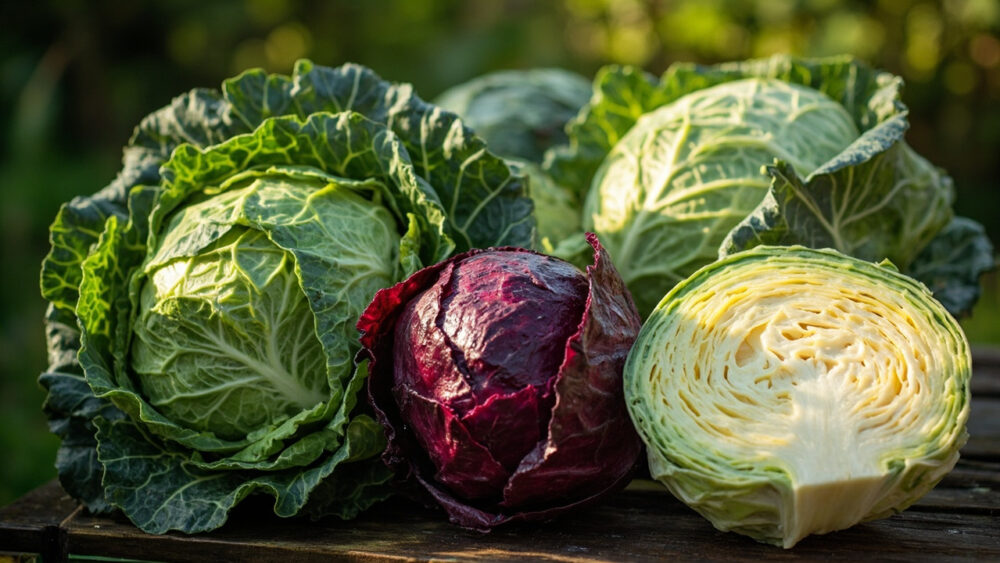
Red types are not just decorative, they generally store longer and hold their crunch better than green cabbage.
8. Ruby Perfection
The reliable red hybrid most seed catalogs default to, forming round, uniform 3 to 4 pound heads in about 80 days with deep purple-red color that holds through cooking. It is the safest choice if you want red cabbage without gambling on an heirloom’s quirks.
9. Red Acre
A faster, smaller red maturing in roughly 70 to 76 days, producing compact 2 to 4 pound heads that are excellent for pickling and slaw. It handles crowding better than Ruby Perfection, useful if your rows are tighter than you planned.
10. Lasso
A storage-focused red with a very solid, small-core head that keeps for months in a cool cellar without turning soft. Skip it if you want fast eating, this one is bred for the gardener thinking about February, not July.
If those red heads are for storage, the savoy category below is worth a hard look before you finalize your list.
Savoy and Specialty Cabbage
Savoy types have crinkled, softer leaves and a milder flavor, and this group also covers the shapes that break the round-head mold entirely.
11. Savoy Ace
Crinkled and tender, this hybrid savoy forms 3 to 4 pound heads in about 80 days with leaves mild enough to eat raw in a salad, not just cooked. It is a good entry point for anyone who finds regular cabbage too assertive.
12. Deadon
A cold-tolerant savoy bred to sweeten after frost, producing dense, dark green-purple heads over a long 100-plus day season. It suits gardeners in cooler climates who can leave it standing into late fall without worrying about a hard freeze wrecking it.
13. Napa (Chinese Cabbage)
The one everyone plants at the wrong time, this elongated, barrel-shaped type is actually a fall crop first and a spring crop second, because it bolts fast once days lengthen and temperatures climb. Grown in cooling autumn weather it forms a mild, juicy, crinkled head in 50 to 80 days that is the backbone of kimchi and stir-fries; planted in spring it too often skips straight to flower before it heads up at all.
14. Pointed Sweetheart
A cone-shaped European type with a noticeably sweeter, more tender leaf than round cabbage, maturing in about 65 to 70 days. It is a favorite among gardeners who find regular cabbage too strong-tasting raw, since it works well thinly sliced with no cooking at all.
15. Kalibos
A conical red heirloom from Poland with a sweeter flavor than round red types, reaching about 65 to 70 days to maturity. Its unusual shape and deep color make it a standout in a mixed cabbage bed, and it is worth growing at least once just to see it next to a round head.
How to Choose the Right One
Run any shortlist through this order and the decision gets fast.
- Space first: compact heads like Early Jersey Wakefield or Red Acre fit 12 to 15 inch spacing, while big storage types like Blue Vantage need 18 to 24 inches to size up properly.
- Climate second: if your falls stay mild, January King and Deadon reward the wait with better flavor; if frost comes hard and early, stick to the 60 to 75 day types.
- Purpose third: fresh eating and slaw favor sweeter types like Pointed Sweetheart, kraut and pickling favor dense round heads, storage favors Lasso or any variety noted for a small core.
- Timing fourth: Napa cabbage specifically wants a fall planting timed so it matures in cooling weather, not a spring one racing toward summer heat.
- Care appetite fifth: if you tend to forget the garden for a week at a time, choose split-resistant types like Stonehead over anything described as needing prompt harvest.
- Disease history last: if your soil has grown brassicas for years with problems, prioritize resistant hybrids like Blue Vantage over untested heirlooms.
Pick by purpose first and the right head practically chooses itself.
Plant a couple of types from different categories this season and you will know exactly which one earns a permanent spot next year.