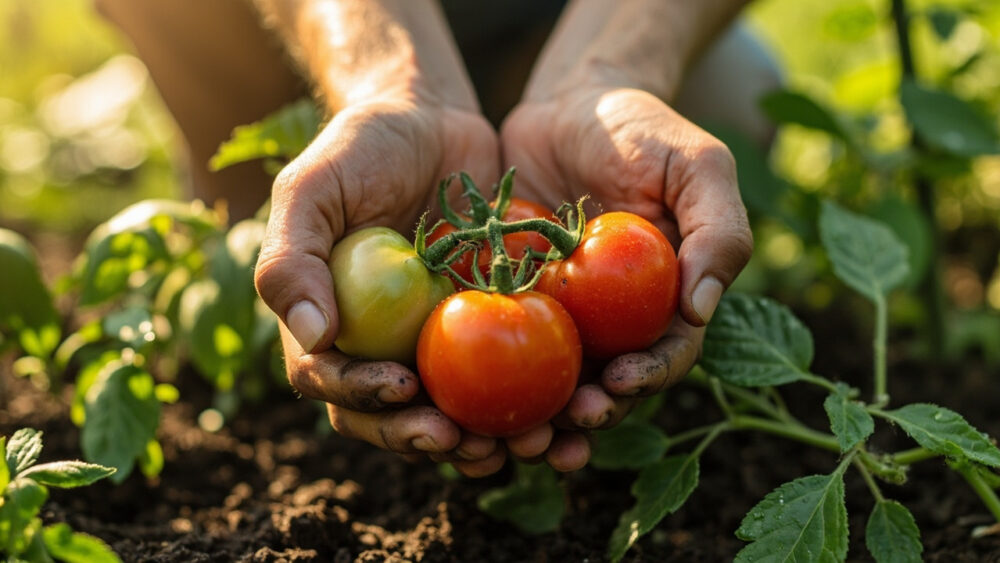
Here is how to grow roma tomatoes without wasting a season figuring it out yourself: set transplants outside two to three weeks after your last frost date once soil hits at least 60°F, give each plant 24 to 36 inches of space in full sun, and feed them consistently once fruit starts to form. Roma is a paste tomato bred for meaty, low-moisture flesh, which makes it forgiving in a lot of ways and unforgiving in a few specific ones.
Most first-time failures come down to one of three things: planting too early into cold soil, crowding plants so tight that disease moves through the whole row in a week, or watering on a random schedule instead of a consistent one. That last one is the mistake that quietly ruins the most fruit, and it shows up as a problem people blame on the wrong cause entirely.
Stick with this and I will walk you through timing, soil prep, the actual planting steps, feeding through the season, the diseases that specifically target romas, and when to pick. The save-able Roma Tomatoes at a Glance card is waiting at the bottom once you have the full picture.
When to Plant Roma Tomatoes
Roma tomatoes go into the ground as transplants, not seed sown directly outside, because they need a head start most climates cannot give them fast enough. Wait until soil temperature holds at 60°F or warmerchecked with a simple soil thermometer a couple inches down, and until night air temps stay reliably above 50°F.
That usually lands two to three weeks after your average last frost date. Zones 3 to 6 are typically planting outdoors in late May to early June. Zones 7 to 10 can go earlier, often mid-April through May.
If you start seed yourself, do it indoors six to eight weeks before that outdoor planting window. Cold soil is the trap: a transplant that sits at 50°F soil for two weeks just stalls, sulks, and often gets outcompeted by the weeds around it once it finally starts growing.
Get the timing right and the next decision, where you actually put the plant, matters just as much.
Choosing the Spot and Prepping the Soil
Roma tomatoes want a minimum of six to eight hours of direct sunand eight-plus is better if your summers run mild. Less than that and you get more vine, fewer tomatoes, and slower ripening.
They also want soil that drains. Heavy clay that stays soggy for days after rain sets these plants up for root rot and splitting fruit. Work in two to three inches of compost across the bed before planting, and if drainage is genuinely poor, raise the bed 8 to 12 inches.
Aim for soil pH between 6.2 and 6.8. A cheap soil test tells you where you stand; if you are low, garden lime nudges it up, and if you are high, sulfur brings it down, following the product label rates.
Rotate the spot if you can. Tomatoes planted in the same soil where tomatoes, peppers, eggplant, or potatoes grew last year inherit whatever soilborne disease was hanging around from that crop.
Good soil sets the table, but how you actually get the plant into the ground decides a lot of what happens next.
Planting Roma Tomatoes Step by Step
1. Dig deep, not wide
Dig a hole deep enough to bury two-thirds of the transplant’s stem, removing the lower leaves first. Tomatoes root along any buried stem, and a deeply planted transplant builds a bigger root system than one planted at the same depth it came in the pot.
2. Space for airflow
Give each plant 24 to 36 inches within the row and 36 to 48 inches between rows. Roma plants get bushy and dense; crowding them is the fastest route to fungal disease, since wet leaves that cannot dry out are exactly what blight and mildew want.
3. Stake or cage at planting time
Set a stake or cage in the hole before you backfill, not weeks later once roots have spread. Roma plants are semi-determinate to determinate depending on the strain, and most benefit from support to keep fruit clusters off the soil.
4. Water in immediately
Soak thoroughly right after planting, even if the soil looked moist. That first deep watering settles soil around the new roots and prevents air pockets that dry them out.
The plant is in the ground now, and what happens over the next ten weeks depends almost entirely on water.
Watering and Feeding Through the Season
If you assumed inconsistent watering just means smaller tomatoes, that guess undersells the actual damage. Irregular watering is the direct cause of blossom end rotthe black, leathery patch that ruins the bottom of an otherwise perfect roma, and it happens even in soil with plenty of calcium, because the plant cannot move calcium to the fruit when water supply is stop-and-start.
Water deeply, one to two inches per week, adjusted upward in heat, and aim for consistency over volume. A finger test an inch down should feel barely moist, never bone dry, never soggy.
Mulch with straw or shredded leaves, 2 to 3 inches deep, to buffer soil moisture between waterings and cut down on splashback that spreads disease.
For feeding, work a balanced fertilizer into the soil at planting, then switch to something lower in nitrogen and higher in phosphorus and potassium once flowers appear. Too much nitrogen late in the season buys you a jungle of leaves and very little fruit.
Feed every three to four weeks through fruit set, then dial back as harvest approaches.
Even with perfect watering, roma tomatoes have a short list of problems that show up almost every year, and knowing them before they strike is the difference between a minor setback and a lost crop.
Problems That Actually Hit Roma Tomatoes
Roma’s dense growth habit and thin-skinned early fruit make it a target for a specific short list of issues.
- Blossom end rot: caused by inconsistent watering, not lack of calcium in most gardens. Fix the watering schedule and mulch heavily. Existing damaged fruit will not recover, but new fruit should come in clean.
- Early blight: brown spots with yellow rings on lower leaves first. Prune lower branches for airflow, avoid overhead watering, and remove infected leaves promptly. A fungicide labeled for tomato blight can help if caught early. Follow the label exactly.
- Cracking or splitting: usually a heavy rain or deep watering right after a dry stretch. Even, regular watering prevents most of it.
- Hornworms: large green caterpillars that strip leaves fast. Hand-pick them off in the early morning when they are easiest to spot.
- Blossom drop: flowers falling without setting fruit, common when night temps drop below 55°F or climb above 75°F. This corrects itself once temperatures settle.
Head off what you can, accept that a couple of these show up most years anyway, and keep an eye on the plant as fruit sizes up, because harvest timing is its own skill.
When and How to Harvest Roma Tomatoes
Roma tomatoes are ready when the fruit turns a deep, uniform red (or the mature color of your specific variety, since some romas finish orange or yellow) and gives slightly to a gentle squeeze. That typically runs 70 to 80 days from transplant, depending on the specific cultivar and your season’s heat.
Color is the honest signal, not size. Roma fruit reaches full size well before it is ripe, so a big pale green tomato is not close, no matter how tempting it looks.
Twist gently or snip with pruners rather than yanking, which can tear the stem and damage the plant. Harvest every two to three days once fruit starts turning, since ripe romas left on the vine in hot weather split and attract pests fast.
If frost is coming and you still have a load of green fruit, pick it all and ripen it indoors on a counter out of direct sun. It will not have quite the flavor of vine-ripened fruit, but it beats losing the whole batch to a hard freeze.
That is the whole cycle, and here is the short version worth saving before you close this tab.
Roma Tomatoes at a Glance
- When to plant: transplants outside two to three weeks after last frost, once soil holds at 60°F or warmer.
- Sun and spot: six to eight hours of direct sun minimum, well-draining soil, pH 6.2 to 6.8.
- Depth and spacing: bury two-thirds of the stem, space plants 24 to 36 inches apart with 36 to 48 inches between rows.
- Watering: one to two inches per week, kept consistent, mulched to buffer swings and prevent blossom end rot.
- Feeding: balanced fertilizer at planting, then lower nitrogen, higher phosphorus and potassium once flowering starts, every three to four weeks.
- Watch for: blossom end rot from uneven watering, early blight on lower leaves, hornworms, blossom drop in temperature extremes.
- Harvest: 70 to 80 days from transplant, when fruit is deep uniform color and gives slightly to a gentle squeeze, picked every two to three days during peak season.
Get the watering consistent and the spacing generous, and roma tomatoes forgive almost everything else.
That combination alone will carry most gardens to a full crate of paste tomatoes by late summer.