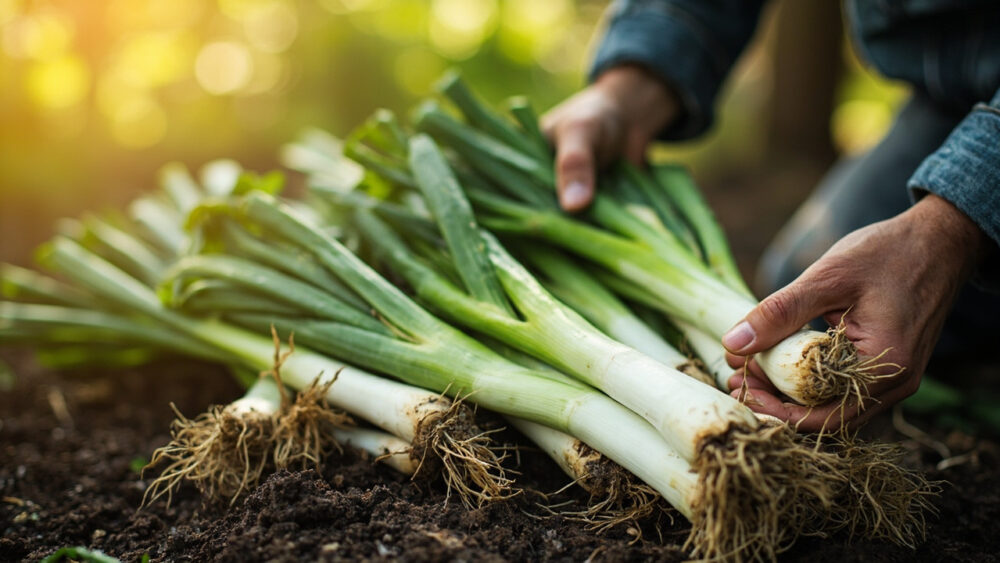
The best way to store leeks is unwashed and untrimmed, wrapped loosely in a damp paper towel or plastic bag, and kept in the crisper drawer of your fridge, where they will hold for three to four weeks. If you have a root cellar or a cold garage that stays near 32 to 40°F, you can keep them even longer packed upright in damp sand. That is the short answer, but how you store leeks depends a lot on what you plan to do with them, and that is where most people go wrong.
There is one mistake that ruins more leeks than any other, and it happens before storage even starts. There is also a sign of spoilage that looks alarming but is actually harmless, and a different sign that looks fine but means the leek is already gone inside.
Stick with me and I will also tell you the honest answer to the question right behind this one: whether freezing actually works for leeks, and what it does to their texture. There is a save-able Leeks at a Glance card at the very bottom with every number in one place.
The Method That Actually Works: Fridge Storage
Do not wash your leeks before storing them. That is the mistake that ruins most attempts, and it is the opposite of what feels responsible.
Leave the roots and about an inch of the dark green tops on. Trimming too close opens the leek up to rot and moisture loss. Wrap each leek loosely in a slightly damp paper towel, then slide the bundle into a perforated produce bag or a loosely closed plastic bag. Set it in the crisper drawer, ideally the one set to high humidity.
Check the towel every week or so and re-dampen it if it has dried out completely.
Up next is how long that actually buys you, and it is longer than most vegetables in that same drawer.
How Long Leeks Actually Keep
On the counter at room temperature, leeks hold for maybe two to three days before they start going soft. That is not real storage, just a short buffer before you cook them.
In the fridge, unwashed and wrapped, leeks keep three to four weeks. Some gardeners with good crisper drawers push past that to five or six weeks, but quality drops steadily after the one-month mark, even if the leek is technically still edible.
In a cold cellar packed upright in damp sand, held near freezing but not frozen, leeks can last two to four months. This is the traditional method and it is genuinely the best long-haul option if you have the space and the temperature control.
Frozen, leeks keep about ten to twelve months, but freezing changes them more than you might expect.
Freezing Leeks: The Honest Answer
If you assumed you could just toss whole leeks in a freezer bag the way you might with peppers, that guess costs you texture. Leeks freeze fine, but only if you prep them first, and only for cooked dishes, never for anything you wanted crisp or fresh.
Slice or chop the leeks first, then blanch them in boiling water for 30 to 60 seconds. Cool them immediately in ice water, drain well, and pat them as dry as you can before bagging. Skipping the blanch is the second most common way people ruin a batch, since unblanched leeks turn mushy and lose flavor fast in the freezer.
Frozen leeks are strictly a cooking ingredient after this. They go straight into soups, sauces, and stir fries from frozen, no thawing needed.
That prep step matters just as much even if you are not freezing anything at all.
Prep That Makes or Breaks Every Storage Method
Do not wash leeks until you are ready to use them. Water trapped between the layers speeds up rot no matter where you store them. Grit hides between the layers too, but that is a problem for the cutting board, not the storage bin.
Curing is not really a thing with leeks the way it is with onions or garlic. Leeks do not form a dry papery skin, so there is no cure-and-dry step to wait on. What they need instead is cold and a bit of humidity, which is the opposite of what cures alliums like onions.
If you are harvesting your own, pull them when the stalks are at least an inch thick, ideally before a hard freeze locks the ground.
Get the prep right and the signs of trouble become easy to read correctly.
Signs Your Leeks Have Turned
Here is the sign everyone misreads: a little slime or a musty smell right at the root end after a few weeks in the fridge is often just the outer layer breaking down, and you can usually peel that layer off and use the rest.
The real red flags are a strong sulfur or ammonia smell all the way through, a soft slimy center when you cut across the stalk, or dark wet spots spreading up from the base. Any of those mean the leek is compromised past the outer layer and should go in the compost, not the pot.
A leek that looks a little wilted and floppy on the outside is not dead. Wilted is a moisture problem, not a rot problem, and a quick soak in cold water often perks it right back up before cooking.
Knowing that difference is what separates a wasted batch from a saved one.
The Mistakes That Cost You the Whole Batch
- Washing before storage: traps moisture between the layers and starts rot within days.
- Trimming roots and tops too close: opens entry points for decay.
- Storing in a sealed, non-perforated bag: traps humidity and condensation against the leek.
- Skipping the blanch before freezing: leads to mushy, flavorless leeks once thawed.
- Piling leeks together unwrapped in a drawer: one soft leek spreads rot to its neighbors fast.
Avoid these five and a bag of leeks is genuinely one of the lower-maintenance vegetables in your fridge.
Leeks at a Glance
- Fridge storage: unwashed, roots and an inch of green left on, wrapped in a damp paper towel inside a perforated bag, crisper drawer.
- Fridge shelf life: three to four weeks, up to five or six in a very good crisper.
- Cold cellar storage: upright in damp sand, held near 32 to 40°F, lasts two to four months.
- Freezer prep: chop first, blanch 30 to 60 seconds, cool in ice water, dry well before bagging.
- Freezer shelf life: ten to twelve months, for cooked dishes only.
- Bad signs: sulfur or ammonia smell throughout, slimy center, dark wet spots at the base.
- Harmless signs: a little outer-layer slime at the root, or overall wilting that a cold water soak can fix.
Store leeks dry and cold, and deal with them within a month. Everything else on this page is just the fine print that keeps that month from turning into three rotten days.