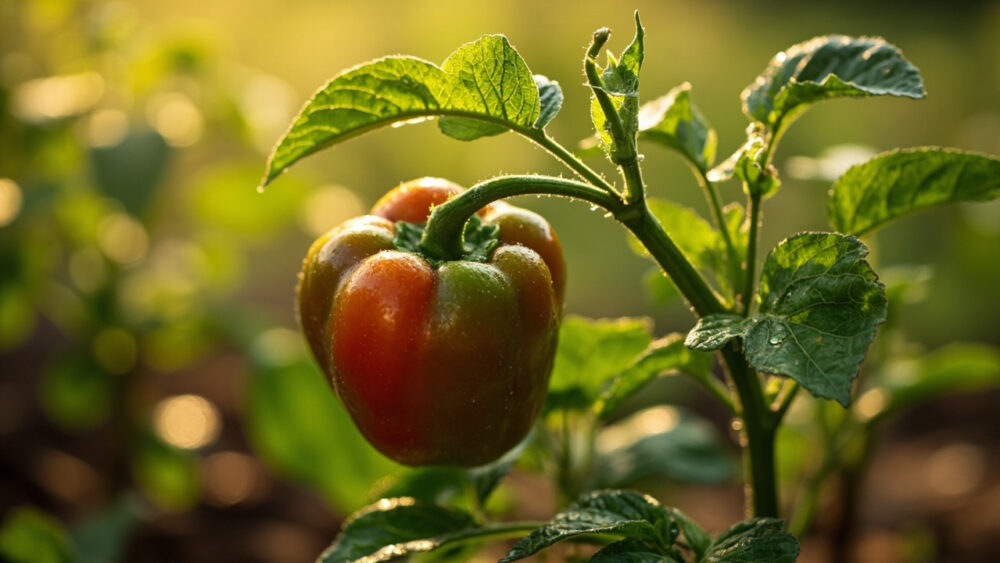
From seed, bell peppers take about 100 to 150 days to reach a full-size, colored harvest. From a transplant you bought at the nursery, figure 60 to 90 days after it goes in the ground. That is the honest range, and where you land in it depends on things most people never think to check.
The variety you planted changes this answer more than almost anything else. So does your climate, and so does one specific mistake that quietly adds two or three weeks to the wait without you ever noticing it happened.
Stick around for the stage-by-stage breakdown, the legitimate ways to speed things up, and a save-able quick-reference card at the bottom with the numbers in one place.
The Realistic Timeline, Start to Finish
If you start from seed indoors, expect 8 to 10 weeks before that seedling is ready to go outside. Add another 60 to 90 days in the garden after transplanting. That puts total seed-to-harvest time at roughly 100 to 150 days, sometimes longer for big bell types in cooler climates.
Buying a transplant skips the slowest part. You are only waiting on that 60 to 90 day garden stretch, which is why most home gardeners buy starts instead of seed.
Either way, the first fruit you see is not the finish line.
Green, unripe peppers show up first, often 6 to 8 weeks after transplanting. Getting them to red, yellow, or orange takes another 2 to 4 weeks on top of that.
That color wait is the part almost everyone underestimates.
What Actually Controls the Speed
Variety matters first. Smaller bells and Italian-frying-pepper-adjacent types mature faster than the big blocky supermarket-style bells, sometimes by two to three weeks.
Climate matters just as much. Peppers are a warm-season crop that stalls out below 65°F and stops setting fruit reliably once nights drop back under 55°F, so a short, cool growing season simply cannot deliver the same speed as a long, hot one no matter what you do.
Soil temperature at planting is the detail most people skip. Peppers set outside into cold soil, below 60°F, will sit and sulk for two to three weeks before they even start growing again. That stall is real time lost, and it does not show up as damage, just silence.
Sun matters too: peppers want 6 to 8 hours of direct light, and shade slows everything down even if the plant looks otherwise healthy.
So two people who bought the same transplant on the same day can end up harvesting two or three weeks apart, and neither one did anything wrong.
Stage by Stage: What You Should Actually See
Here is what a normal, on-track pepper plant looks like at each point, so you can tell where yours stands right now.
- Weeks 1 to 2 after transplant: the plant looks stalled, maybe even a little sulky. This is normal root establishment, not a problem.
- Weeks 3 to 5: steady new leaf growth, the plant visibly gets bushier and taller.
- Weeks 5 to 7: small white or pale flowers appear at branch joints.
- Weeks 6 to 9: tiny green peppers form where flowers dropped off.
- Weeks 8 to 12: peppers reach full size but stay green.
- Weeks 10 to 14: peppers shift to their final color, red, yellow, or orange depending on variety.
If your plant matches its stage within a week or two, it is doing exactly what it should.
How to Legitimately Speed This Up
You can shave real time off this timeline, but only in a few specific places. Warm soil before you plant by waiting until it is reliably above 65°F, or by using black plastic mulch to raise soil temperature a week or two early.
Buying a larger, already-flowering transplant instead of a small seedling can save two to three weeks outright, since you are skipping vegetative growth you would otherwise wait through.
Consistent watering and steady feeding, not heavy feeding, keep the plant from stalling. Erratic watering is one of the most common self-inflicted delays.
What does not work: extra nitrogen fertilizer. It pushes leafy growth at the expense of flowers and fruit, and it is the single most common reason an otherwise healthy-looking pepper plant produces late and produces little.
More feeding is not the fix people assume it is, and it can actively work against you.
When Slow Is Normal, and When It Is a Problem
A pepper plant that looks stalled for its first two weeks in the ground is normal. One that has no flowers by week 8 to 10, or that flowers but drops every bloom without setting fruit, is telling you something is off.
The two most common causes of dropped flowers are temperature swings, nights consistently above 75°F or below 55°F, and inconsistent watering. Neither one is fixable after the fact for that flush of blooms, but the plant will try again once conditions settle.
A plant that is stunted, yellowing from the bottom up, and simply not growing at all past week 4 or 5 usually points to poor drainage, compacted soil, or a root-bound transplant that never recovered from being potted too long. That one is worth digging up and checking the roots.
Genuinely stalled and genuinely slow are two different plants, and the difference is whether it is still moving forward at all.
Bell Peppers: Quick Reference
- Seed to harvest: about 100 to 150 days total, depending on variety and climate.
- Transplant to harvest: about 60 to 90 days after planting outside.
- Green to full color: an additional 2 to 4 weeks past first full-size green fruit.
- Ideal soil temperature at planting: at least 60 to 65°F, colder soil causes a two to three week stall.
- Light needs: 6 to 8 hours of direct sun daily for on-schedule growth.
- Biggest speed killer: excess nitrogen fertilizer, which delays flowering and fruiting.
Save this card, and check your own plant against the stage timeline whenever you start wondering if it is behind.
Most of the time, it is right on schedule. It just does not feel that way from the middle of the wait.