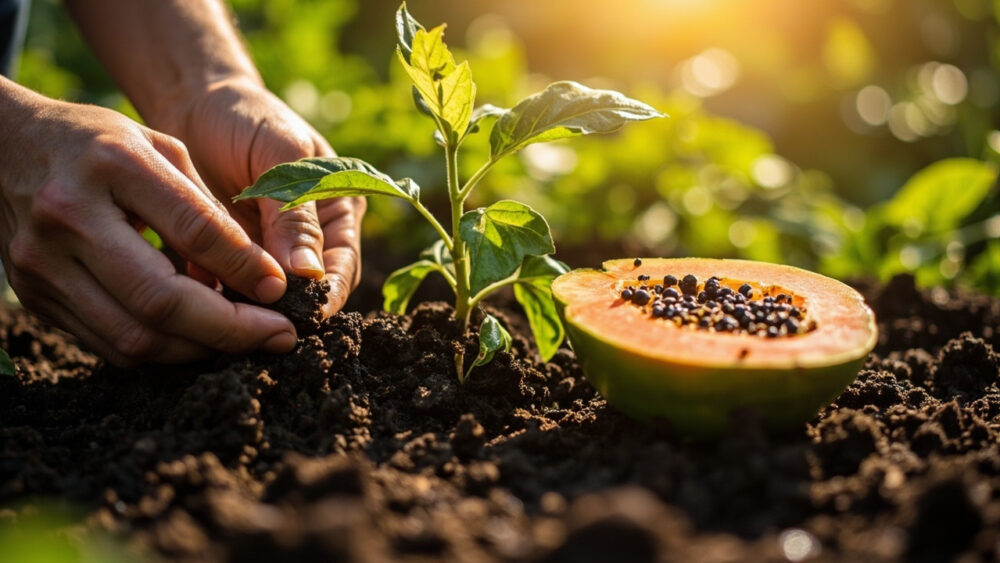
You can grow papayas from seed by pulling ripe seeds straight out of a store-bought fruit, drying them for a few days, and sowing them a half inch deep in warm, well-draining soil once temperatures stay reliably above 65°F. Germination takes two to five weeks, and if you keep the plants happy, you can be harvesting fruit twelve to fifteen months from sowing. That is the whole arc, but the details decide whether you end up with a productive tree or a leggy stick that never flowers.
The mistake that kills most attempts happens before the seed ever goes in the dirt: skipping the fermentation and gel-removal step, which leaves a germination inhibitor on the seed coat that can stall sprouting for months or stop it entirely. There is also a sign nearly everyone misreads once seedlings are up, mistaking normal seedling wobble for damping-off disease and yanking healthy plants. And there is a question you are about to ask yourself around month six: is this a male, a female, or the good kind, and can you even tell before it flowers.
All of that gets sorted out below, section by section, and the whole thing gets boiled down into a save-able Papayas at a Glance card at the very bottom of this page.
When to Start Papaya Seeds
Papayas are tropical and have zero frost tolerance, so timing is less about a calendar date and more about soil and air temperature. Start seeds indoors six to eight weeks before your last expected frost if you are anywhere outside true tropical or subtropical zones, which covers most of the United States. In zones 9b through 11 with warm winters, you can direct sow outdoors once nighttime lows stay above 60°F and the soil has warmed past 65°F, usually a few weeks after your last frost date.
If you garden in zone 9 or colder, plan to grow papaya as a container plant you can move indoors, because outdoor plantings there rarely survive winter.
Get the timing right and the sowing itself is simple, which is exactly where the next mistake usually happens.
Sowing Papaya Seeds Step by Step
This is where that fermentation step earns its keep. Skip it and you are rolling the dice on germination; do it and you dramatically shorten the wait.
1. Extract and ferment the seeds
Scoop seeds from a ripe papaya, rinse off the pulp, and let them sit in a small jar of water for two to three days at room temperature, swirling once a day. This breaks down the gelatinous sarcotesta coating that inhibits germination.
2. Rinse, dry, and select
Rub the seeds between your fingers under running water until they feel gritty, not slippery. Discard any that float, since floaters are usually not viable. Spread the rest on a paper towel and air dry for a day, no longer, since fully dried-out seeds lose vigor.
3. Sow at the right depth
Plant seeds a half inch deep in a well-draining seed-starting mix, two seeds per 3 inch pot to hedge against a no-show. Papayas hate wet feet, so a mix heavy in perlite or coarse sand beats dense potting soil.
4. Give them heat and light
Keep the medium at 75 to 85°F, using a seedling heat mat if your house runs cooler, and keep it evenly moist but never soggy. Light matters less before germination than after, but once sprouts appear they need bright light immediately, either a sunny south window or a grow light kept close.
Now comes the waiting, and this is exactly where most first-time growers start second-guessing themselves.
Germination: What to Expect and When to Worry
Expect sprouts anywhere from two to five weeks after sowing, with fresher seed and warmer soil trending toward the faster end. A seedling that emerges will send up a thin stem topped by two narrow seed leaves before the first true, lobed papaya leaf appears about a week later.
If you assumed a wobbly, floppy-looking seedling means diseasethat guess causes more needless plant tossing than any actual pathogen does. Young papaya stems are naturally soft and a little droopy for the first couple of weeks; they firm up as the second and third true leaves come in.
What actually signals trouble is a seedling that collapses at the soil line, turns black or mushy at the base, or simply topples over dead, which is classic damping-off from soggy soil or poor airflow. If nothing has emerged by six weeks in consistently warm soil, the seed batch likely was not viable and it is time to resow rather than keep waiting.
Once your seedlings clear that hurdle, the next test is getting them outside without shocking them.
Hardening Off and Transplanting
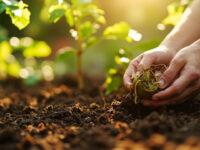
Papaya seedlings are thin-skinned and sunburn easily, so hardening off is not optional. Starting seven to ten days before transplant, set seedlings outside in a shaded, wind-protected spot for an hour or two, adding an hour of exposure and a bit more sun each day.
By the end of that stretch they should be tolerating several hours of direct sun without wilting.
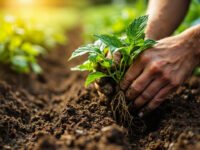
Transplant only after nighttime lows hold above 60°F for good and the seedlings have three to four true leaves, usually 8 to 12 weeks after sowing. Space plants 6 to 10 feet apart in full sun with soil that drains fast, since papaya roots rot quickly in standing water. Raised beds or mounded planting sites solve this in heavier soils.
Getting them in the ground is only half the job, because papayas are hungry, thirsty growers for the rest of the season.
Season-Long Care
Papaya trees grow fast and want consistent moisture, roughly the equivalent of 1 to 2 inches of water a week, more in hot, dry stretches, always draining away from the base rather than pooling. Feed monthly with a balanced fertilizer or one slightly higher in potassium once flowering starts, since undernourished plants produce small, sparse fruit.
Mulch around the base, but keep it a few inches back from the trunk to avoid rot.
Watch for yellowing lower leaves, which usually means overwatering rather than a nutrient problem, and for stunted, distorted new growth, which can signal aphids or mites transmitting a virus. Cultural controls and, if needed, a labeled insecticidal soap applied per the product instructions are the right first response.
Feed and water consistently and most healthy plants start showing flowers by month four or five, which brings up the question you were bound to ask.
When Papayas Flower and Fruit
Here is the honest answer to that lingering question about male, female, and hermaphrodite plants: you genuinely cannot tell from a seedling, and you will not know for certain until flowers open around month four to six. Female flowers are larger, sit close to the trunk on short stalks, and swell into fruit on their own. Male flowers dangle on long, branching stems and never set fruit.
Hermaphrodite flowers, common in many popular papaya varieties, self-pollinate and are what most home growers actually want.
Because you cannot sex a seedling in advance, the standard trick is to start several seeds and keep the two or three most productive plants once flowering reveals their sex, culling extra males but keeping one nearby if you have only female plants, since they need a pollinator.
Fruit takes another five to nine months after pollination to mature, so from seed to first harvest generally runs twelve to fifteen months in warm climates, longer in marginal ones. You will know fruit is ready when the green skin starts breaking to yellow at the blossom end and gives slightly under gentle thumb pressure, much like a ripening avocado.
That long timeline is exactly why the quick reference below is worth saving before you close this page.
Papayas at a Glance
- When to plant: start seeds indoors 6 to 8 weeks before last frost, or direct sow outdoors once soil holds steady above 65°F and nights stay above 60°F.
- Seed prep: ferment fresh seeds in water 2 to 3 days to remove the gel coating, rinse, and dry briefly before sowing.
- Depth and spacing: sow a half inch deep, then space mature plants 6 to 10 feet apart in full sun with fast-draining soil.
- Germination: 2 to 5 weeks at 75 to 85°F soil temperature, with 6 weeks of no growth meaning the batch failed.
- Transplant timing: move outside after hardening off, once nights hold above 60°F and seedlings show 3 to 4 true leaves, usually 8 to 12 weeks after sowing.
- Water and feed: 1 to 2 inches of water weekly, more in heat, with a balanced or potassium-rich fertilizer monthly once flowering begins.
- Time to harvest: flowers appear at 4 to 6 months, fruit matures 5 to 9 months after that, for a total of roughly 12 to 15 months from seed.
Papaya is a fast, forgiving grower once it is past the seedling stage, but almost every failure traces back to skipped seed prep or wet, cold roots.
Get the seed clean and the drainage right, and the tree does most of the rest of the work on its own.