Growing watermelon from seed comes down to this: start seeds indoors two to three weeks before your last frost, or direct sow once soil hits 70 F, then give each plant 4 to 6 feet to sprawl and roughly 65 to 90 days to ripen depending on variety. That’s the whole arc. The details are what separate a hollow, waterlogged fruit from one that cracks open sweet and dense right on schedule.
Most people who fail at watermelon fail at one of three moments, and none of them are the obvious one. It isn’t the germination, watermelon seeds are actually forgiving. It’s the transplant shock from moving seedlings too casually, the watering habit that never changes even after the vine starts fruiting, and the harvest guess, which almost everyone gets wrong in the exact same way.
Stick with me through each stage and you’ll know precisely when to plant, how deep, how to read the seedlings, and the real signs of ripeness that have nothing to do with thumping. There’s a save-able Watermelon at a Glance card waiting at the bottom with every number in one place.
When to Start Watermelon Seeds
Watermelon hates cold soil more than almost any other garden fruit. Indoors, start seeds 2 to 3 weeks before your last expected frost, no earlier. This crop grows fast and resents sitting in a pot waiting for warm weather, so starting too early just gives you leggy, rootbound seedlings.
Direct sowing works better for most gardeners anyway, since watermelon roots dislike disturbance. Wait until soil is consistently at least 70 F, which is usually 2 to 3 weeks after last frost in most zones. Cold, wet soil rots seeds before they ever sprout.
The mistake almost everyone makes here is planting by the calendar instead of the soil thermometer.
Sowing Watermelon Seed Step by Step
1. Prep the spot or the pot
Watermelon wants full sun and loose, well-drained soil rich in organic matter. Work in compost before planting. In containers, use a seed-starting mix, never garden soil, which compacts and smothers young roots.
2. Depth and spacing
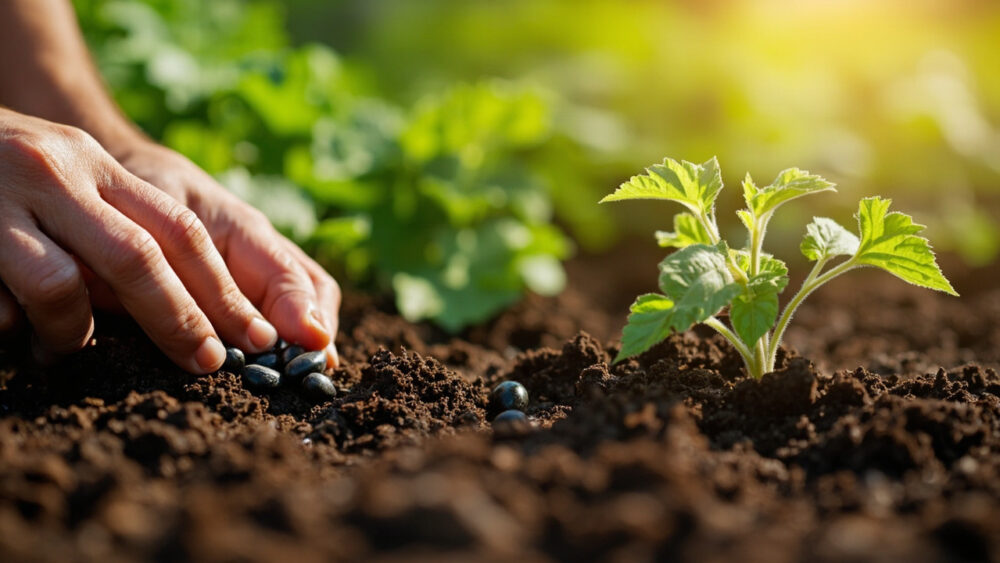
Plant seeds 1 inch deep, 2 to 3 seeds per hill if direct sowing, hills spaced 4 to 6 feet apart in rows 6 to 8 feet apart. Vining watermelon genuinely needs that room, it is not an exaggeration.
3. Temperature and light
Soil temperature between 70 and 95 F gives the fastest, most reliable germination. Below 65 F, expect slow, patchy sprouting or none at all. Once seedlings emerge, they need strong direct light, a south-facing window is usually not bright enough alone.
Get the depth and warmth right and the next stage takes care of itself.
Germination: What’s Normal and What Means Trouble
Expect sprouts in 3 to 10 days at ideal soil temperature. If it’s been two weeks and nothing has broken the surface, the seed likely rotted from cold or overly wet soil, not from being planted wrong.
The honest answer to the question you’re probably about to ask: no, you generally cannot save a rotted seed by waiting longer. Pull it, check for a soft, dark, mushy spot, and if you find one, resow fresh seed in warmer soil rather than gambling another two weeks on it.
Healthy seedlings show two rounded seed leaves first, followed by true crinkled leaves within a week. Thin hills down to the strongest one or two seedlings once true leaves appear, crowding stunts all of them equally.
Getting past germination feels like the hard part is over, but transplanting is where most seedlings actually die.
Hardening Off and Transplanting
If you started indoors, harden seedlings off over 5 to 7 days: a few hours outside in filtered light the first day, building up to a full day in direct sun and wind before transplanting. Skip this and the leaves scorch or the whole plant wilts flat within a day of going in the ground.
Watermelon has a touchy root system, so transplant carefully and only after nighttime lows are reliably above 55 to 60 F. Handle the root ball, not the stem, and set it at the same depth it grew in the pot, no deeper.
This is the mistake that quietly ends more attempts than bad seed ever does: transplanting too early into cold soil, or planting too deep and burying the crown. Either one stalls growth for weeks, and a watermelon vine that stalls in its first month rarely catches back up before frost.
Once the plant takes root and starts pushing out new leaves, the real growing season begins.
Care Through the Season
Watermelon wants consistent moisture, about 1 to 2 inches of water per week, more during fruit set in hot weather. Water at the soil line, not overhead, to keep foliage dry and cut down on fungal disease.
Here’s the habit that needs to change and usually doesn’t: cut back watering once fruits reach full size and start ripening. Continuing full irrigation right through ripening is exactly what waters down the flavor and can split fruit at the worst moment. Let the soil dry out somewhat in that final stretch.
Feed with a balanced fertilizer at planting, then switch to something lower in nitrogen and higher in potassium once vines start flowering, heavy nitrogen late in the season grows leaves at the expense of fruit. Mulch heavily to hold moisture and keep developing melons off bare, wet soil.
Watch for cucumber beetles and squash bugs, and for powdery mildew on leaves in humid weather. Cultural fixes, good airflow and spacing, prevent most of it. If mildew takes hold anyway, a labeled fungicide applied exactly per the product instructions is the next step.
All that care is building toward one moment, and reading it correctly is the last skill you need.
When Watermelon Reaches Harvest
Most people rely on thumping the melon and listening for a hollow sound, and that guess is unreliable even for experienced gardeners. The real signs are visual and tactile, not audible.
Look for the tendril closest to the fruit’s stem to turn brown and dry, the pale ground spot where the melon touches soil to shift from white to creamy yellow, and the skin surface to dull from glossy to matte. Most varieties reach harvest 65 to 90 days from sowing, depending on the variety, so track your planting date alongside these visual cues.
Cut, don’t twist, leaving an inch or two of stem attached. Unlike some fruits, watermelon does not continue ripening once picked, so a melon pulled too early stays underripe for good.
Get that timing right once and you’ll never trust a thump test again, and everything you need to remember for next season is right below.
Watermelon at a Glance
- When to plant: start indoors 2 to 3 weeks before last frost, or direct sow when soil is consistently at least 70 F.
- Depth and spacing: sow 1 inch deep, thin to 1 to 2 plants per hill, hills 4 to 6 feet apart, rows 6 to 8 feet apart.
- Germination window: 3 to 10 days at 70 to 95 F soil temperature, slower or absent below 65 F.
- Water needs: 1 to 2 inches per week during growth, tapering off once fruit begins ripening.
- Days to harvest: roughly 65 to 90 days from seed depending on variety.
- Ripeness signs: browning tendril near the fruit stem, ground spot turned creamy yellow, skin gone matte rather than glossy.
- Harvest method: cut the stem, don’t twist, and know that watermelon will not ripen further after picking.
If you remember one thing, remember this: watermelon punishes cold soil and rewards patience at both ends, planting and picking.
Get the soil temperature right at the start and the ripeness cues right at the finish, and everything in between mostly takes care of itself.