Learning how to grow blueberries comes down to one thing most people get wrong before they even plant: soil acidity. Blueberries need soil in the pH 4.5 to 5.5 range, and they need at least two compatible varieties nearby to fruit well. Get those two things right, plant at the right depth and spacing, and you’re most of the way to a real harvest.
Here’s what trips people up after that. The mulch everyone recommends can actually starve a young plant if you use the wrong kind. The leaves turning red in midsummer look like a disease but usually mean something else entirely. And the honest answer to “when will I get fruit” is not what the plant tag tells you.
Stick with me through the soil, planting, feeding, and problem sections below, and I’ll hand you a save-able Blueberries at a Glance card at the very bottom with every number in one place.
When to Plant Blueberries
Plant blueberries in early spring, two to four weeks before your last frost date, once the soil is workable and not waterlogged. In mild-winter regions (zones 7 and warmer), fall planting also works well and lets roots establish before summer heat. Bare-root plants go in earlier than container plants since they’re dormant and can handle cooler soil.
Blueberries are hardy roughly zones 3 through 9 depending on type. Northern highbush varieties handle cold down to zone 3 or 4. Southern highbush and rabbiteye types suit zones 7 through 9 and need far less winter chill.
Soil temperature matters less than soil workability here since blueberries are planted dormant, but avoid planting into soil below about 40°F or into mud.
Timing gets the plant in the ground, but the soil it lands in decides whether it lives.
Choosing the Spot and Prepping the Soil
Blueberries want full sun, six or more hours a day, and soil that drains well but holds moisture. Soil pH is the make-or-break factor. Most garden soil sits at 6.5 to 7.0, which is too alkaline for blueberries and will stunt them for life if you don’t correct it first.
Test your soil before planting. If pH is above 5.5, work in elemental sulfur or an acidifying soil amendment the season before if you can, since it takes months to shift pH. Amend a wide area, not just the planting hole. Blueberries have shallow, fibrous roots that spread out more than down.
Work in peat moss, pine bark fines, or compost to loosen the soil and boost acidity and drainage together. Raised beds or mounded rows solve drainage problems fast in heavy clay.
Get the bed right before the plant goes in, because you can’t fix pH easily once roots are established.
Planting Blueberries Step by Step
Plant at least two different varieties, even of the same type, so they cross-pollinate. A single blueberry bush alone will often fruit poorly or not at all.
Steps to plant
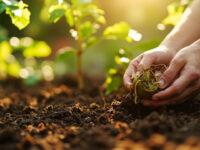
- Dig a hole twice as wide as the root ball but no deeper, so the crown sits at the same depth it was growing in the pot.
- Space plants 3 to 4 feet apart for highbush types, up to 5 to 6 feet for vigorous rabbiteye varieties, with rows 8 to 10 feet apart.
- Loosen the root ball gently and tease apart any circling roots before setting it in the hole.
- Backfill with your amended acidic soil mix, firming gently, and water in deeply right away.
- Mulch with 2 to 4 inches of pine bark, pine needles, or wood chips, keeping mulch a couple inches clear of the stem.
That mulch choice matters more than people think. Fresh hardwood mulch or anything alkaline can undo your soil prep over time, while pine-based mulch reinforces the acidity blueberries need.
Planting is the easy part, the next few months of watering and feeding are where plants either take off or stall.
Watering and Feeding Through the Season
Blueberries have shallow roots and dry out fast, especially the first two seasons. Water deeply once or twice a week rather than lightly every day, aiming for about 1 to 2 inches of water weekly between rain and irrigation. Soil should feel moist an inch down but never soggy.
Skip regular garden fertilizer. Blueberries need an acid-forming, nitrogen-based feed made for acid-loving plants, applied lightly in early spring and again right after bloom. Overfeeding, especially with high-nitrogen lawn-type fertilizer, burns the shallow roots and can kill a young plant outright.
If lower leaves turn a deep red or purple in midsummer heat, that’s not always disease. It’s often a sign of phosphorus deficiency or simple heat and moisture stress, particularly in a plant that’s fruiting hard.
Consistent, moderate watering fixes more blueberry problems than any fertilizer ever will.
Problems That Actually Show Up
The biggest early threat isn’t a pest, it’s wrong pH drifting back upward over a season or two as amendments break down. Retest soil yearly and reapply sulfur as needed, since alkaline soil is the slow killer behind stunted, yellowing plants that never seem to thrive.
Birds are the biggest threat to your actual harvest. Netting draped over the bushes as berries start to blush is the most reliable fix, put it up before the fruit turns blue, not after.
Watch for yellowing leaves with green veins, a classic sign of iron chlorosis from soil that’s still too alkaline, not a nutrient you can fix by feeding more.
Mummy berry and other fungal issues can appear in wet springs, showing as shriveled, discolored fruit. Remove and destroy affected berries and any fungicide use should follow the product label exactly.
Aphids and scale show up occasionally but rarely threaten an established plant; a strong water spray or insecticidal soap handles most light infestations.
Handle the soil chemistry and the birds, and most other blueberry problems take care of themselves.
When and How to Harvest
Blueberries bloom in mid to late spring and ripen 60 to 75 days later, meaning most gardeners are picking from early summer into mid or even late summer depending on variety and climate. Don’t trust color alone.
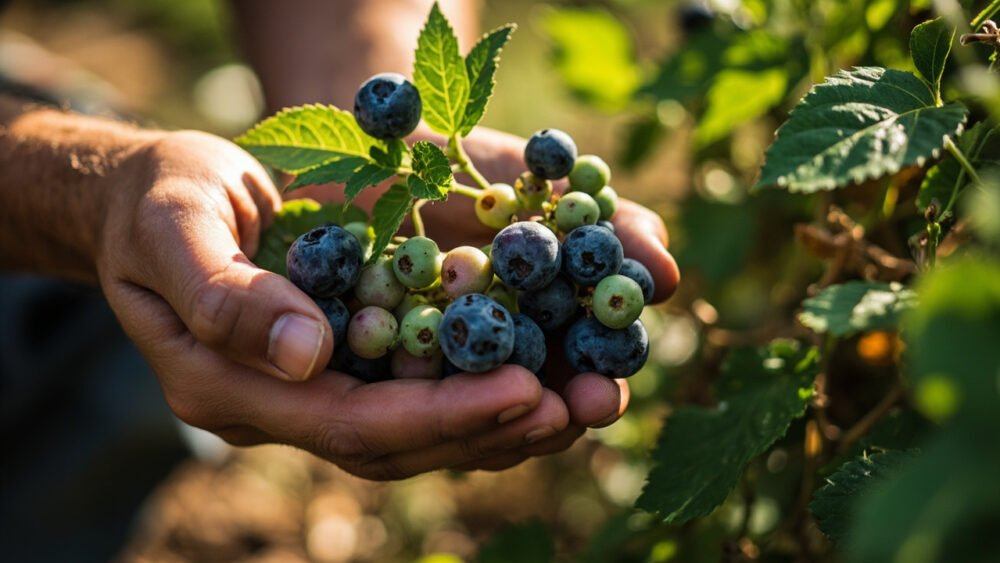
A berry that’s fully blue can still be tart and underripe. Wait 2 to 3 days after it turns blue, then test by rolling it gently between your fingers, ripe berries release with almost no resistance. If you have to tug, give it more time.
Pick every few days through the season since berries ripen unevenly on the same bush. Expect only a light handful the first year or two, real production kicks in around year three, and full-size harvests arrive by year four to six as the bush matures.
That slow start is the honest answer nobody puts on the plant tag, but a well-sited bush will keep producing for decades once it gets there.
Blueberries at a Glance
- When to plant: early spring, two to four weeks before last frost, or fall in zones 7 and warmer.
- Soil needs: pH 4.5 to 5.5, loose, well-draining, amended with peat or pine bark.
- Spacing: 3 to 4 feet apart for highbush, 5 to 6 feet for rabbiteye, rows 8 to 10 feet apart.
- Planting depth: same depth as the nursery pot, crown at soil level, never buried deeper.
- Watering: 1 to 2 inches per week, deep and consistent, never let roots dry out or sit wet.
- Feeding: acid-forming fertilizer for acid-loving plants, applied early spring and after bloom.
- Harvest window: 60 to 75 days after bloom, pick a few days after berries turn fully blue.
Get the pH right before you plant and pick two varieties, and everything else about blueberries is forgiving.
The bush that seems slow for two years is doing exactly what it should before it rewards you for the next twenty.