Here is how to grow everbearing strawberries in one sentence: plant them two to four weeks before your last frost, give them full sun and loose, rich soil, space the crowns 12 inches apart with the crown sitting right at soil level, and pinch off the first flush of blooms so the plant builds roots instead of berries. Do that and you get two or three separate harvests between early summer and fall instead of one big June flush. Skip that pinching step, which almost everyone does, and you will get a handful of berries and a weak plant that struggles the rest of the season.
There are a few other places this crop trips people up. One is planting depth, and it is not intuitive: bury the crown even a half inch too deep or too shallow and the plant just sits there sulking. Another is the assumption that “everbearing” means constant berries all summer, which is not what actually happens and changes how you should plant and space them. And there is a watering habit that looks responsible but slowly starves the roots of oxygen.
Stick with me through planting, feeding, and the trouble spots, and at the bottom you will find a save-able Everbearing Strawberries at a Glance card with the numbers you’ll want pulled up on your phone next time you’re standing in the garden center or kneeling in the bed.
When to Plant Everbearing Strawberries
Plant bare-root or potted crowns two to four weeks before your average last frost date, as soon as the soil can be worked and isn’t waterlogged. Strawberries tolerate a light frost once established, so you don’t need to wait for guaranteed warmth the way you would for tomatoes. Soil temperature matters more than the calendar: aim for at least 40 to 45 F at planting, with active root growth kicking in once soil hits the 50s.
In cold-winter regions (roughly zones 3 to 5), a spring planting is really your only good option. In milder zones (7 and warmer), you can also plant in fall, six to eight weeks before your first hard freeze, and the plants will establish over winter and take off fast in spring.
Everbearing types don’t actually bear “ever.” They typically give a modest spring crop, a bigger flush in early to midsummer, and another round in early fall, with a lull in between, especially during the hottest weeks of summer.
Get the timing right and the next decision is where you put them.
Choosing the Spot and Prepping the Soil
Strawberries want full sun, at least 6 to 8 hours a day. Less than that and you’ll get more leaf than fruit.
Soil needs to drain well. Strawberry crowns and roots rot fast in heavy, wet clay, so if your soil stays soggy a day after rain, build a raised bed or raised row 6 to 8 inches high. Work in 2 to 3 inches of compost or aged manure across the bed before planting.
Aim for a slightly acidic soil pH, around 5.8 to 6.5. Most garden soil falls in range without adjustment, but a cheap soil test is worth doing once if you’ve never grown berries there before.
Avoid any spot where tomatoes, peppers, eggplant, or other strawberries grew in the last two to three years. Those share soil diseases that can wipe out a new planting before it establishes.
Once the bed is ready, the actual planting is where precision starts to matter.
Planting Step by Step
This is the part most guides rush, and it’s also where a lot of first attempts go sideways. Crown depth is unforgiving in both directions.
1. Trim and soak bare-root plants
If roots are longer than 5 to 6 inches, trim them back. Soak bare-root crowns in water for 20 to 30 minutes before planting so they don’t dry out while you work.
2. Dig a hole with a center mound
Dig wide enough to spread roots out, with a small mound of soil in the center so roots drape downward and outward rather than bunching.
3. Set the crown at soil level
The midpoint of the crown, where roots meet leaves, should sit exactly level with the surrounding soil. Too deep and the crown rots. Too shallow and exposed roots dry out and the plant fails to establish. This single detail causes more dead strawberry plants than any pest ever does.
4. Space plants correctly
Set crowns 12 to 18 inches apart in rows, with rows 2 to 3 feet apart. Tighter spacing looks productive at first but crowds roots and invites disease by midsummer.
5. Water in immediately
Soak thoroughly right after planting to settle soil around the roots and knock out air pockets.
Get the crown depth right and you’ve cleared the hardest hurdle in growing this crop.
The Blossom-Pinching Trick Nobody Wants to Do
If you assumed more flowers early on means more berries later, that instinct is exactly backward for a new planting. Pinch off all flowers for the first four to six weeks after planting, even though it feels like you’re throwing away fruit.
A young strawberry plant that’s allowed to fruit immediately spends its energy on berries instead of roots and runners. You end up with a weak, shallow-rooted plant and a disappointing plant the following year. Established plants from a previous season don’t need this treatment, only new transplants going in this year.
It’s a genuinely hard thing to do on purpose, and it’s the single most guessable-wrong step in this whole process.
Once roots are established, watering and feeding correctly is what keeps the harvests coming.
Watering and Feeding Through the Season
Strawberries need about 1 to 1.5 inches of water per week, delivered consistently rather than in one heavy soak. Shallow, frequent sprinkling looks attentive but keeps roots near the surface and weak. Water deeply enough to soak the top 6 inches, then let the top inch of soil dry before watering again.
Drip irrigation or a soaker hose beats overhead watering, since wet foliage overnight is an invitation to fungal disease.
Feed with a balanced fertilizer (something like 10-10-10, or a formula labeled for fruiting plants) at planting, then again every four to six weeks through the growing season since everbearing types are producing multiple flushes and pull nutrients out of the soil continuously. Too much nitrogen produces lush leaves and disappointing fruit, so don’t overdo it.
Mulch with straw or pine needles once plants are established, 2 to 3 inches deep. This is where the “straw” in strawberry supposedly comes from, and it keeps berries clean, suppresses weeds, and moderates soil moisture.
Feed and water right and the plant will hold up its end, but you still need to watch for what wants to take it down.
Problems That Actually Show Up
Most everbearing strawberry failures trace back to a short list of repeat offenders.
- Gray mold (botrytis): fuzzy gray coating on berries, usually after wet weather. Improve air circulation, avoid overhead watering, and remove infected fruit immediately.
- Slugs: ragged holes in ripening berries, worse in damp mulch. Keep mulch from staying soggy and hand-pick at dusk if it’s bad.
- Birds: the most reliable pest of all. Netting over the bed once berries start coloring is the most dependable fix.
- Spider mites and aphids: stippled or curled leaves, worse in hot, dry stretches. A strong water spray or insecticidal soap, applied per the label, usually handles light infestations.
- Verticillium wilt and root rot: sudden wilting or collapse, usually tied to poor drainage or planting where tomatoes grew recently. There’s no cure once a plant is infected; pull it and don’t replant strawberries in that spot for a few years.
Catch problems early and there’s little standing between you and an actual harvest.
When and How to Harvest
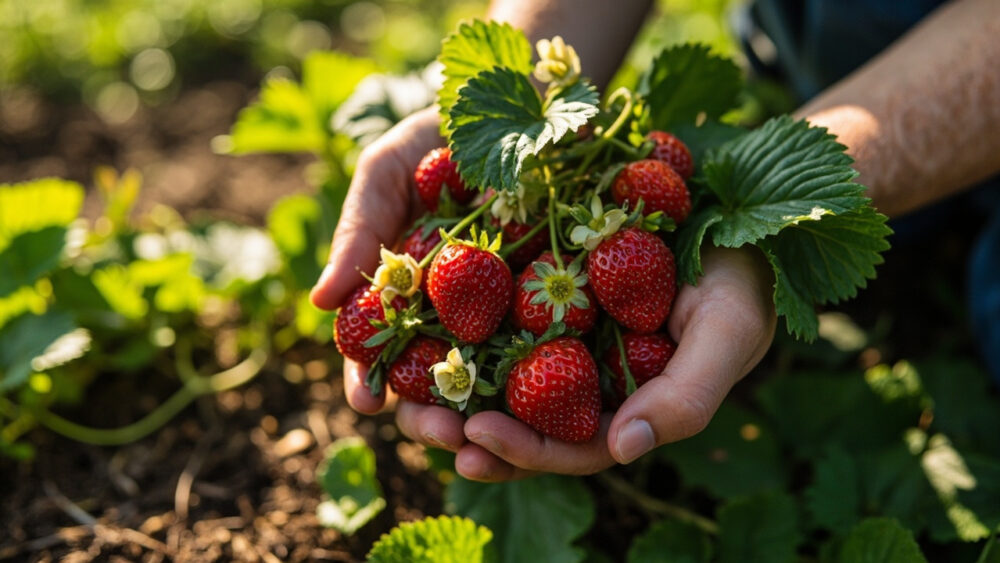
Pick berries when they’re fully red, right up to the shoulders near the stem, with no white or green left. Strawberries don’t ripen further once picked, unlike tomatoes, so an early pick is a permanently underripe berry.
Expect your first light harvest 4 to 6 weeks after that initial bloom flush you allowed (so, roughly 10 to 12 weeks after spring planting for the earliest berries), then a heavier midsummer flush, then a smaller autumn round as temperatures cool.
Pick every two to three days during a flush, using your thumbnail to snap the stem rather than tugging the berry itself, which bruises it. Morning picking, once dew has dried, gives you the firmest fruit and the best flavor before the day’s heat softens things.
Once you’ve got that rhythm down, the rest of the season is mostly maintenance.
Everbearing Strawberries at a Glance
- When to plant: two to four weeks before your last frost in spring, or six to eight weeks before first fall frost in mild climates.
- Sun and soil: full sun, 6 to 8 hours minimum, well-drained soil with pH 5.8 to 6.5.
- Planting depth: crown exactly level with the soil surface, not buried, not exposed.
- Spacing: 12 to 18 inches between plants, 2 to 3 feet between rows.
- Watering: 1 to 1.5 inches per week, deep and consistent, avoid overhead watering when possible.
- First-year care: pinch off blossoms for the first four to six weeks to build strong roots.
- Harvest timing: light crop in early summer, main flush by midsummer, smaller round in early fall, pick only when fully red.
Get the crown depth and that first month of blossom-pinching right, and almost everything else is just consistent watering and patience.
Do that, and the plant will keep paying you back in fresh handfuls clear into fall.