The fastest way to narrow fifteen cherry varieties down to one is deciding sweet or sour first, because that single split determines everything else: chill hours needed, pollination requirements, and whether you’re eating that fruit fresh off the branch or cooking it down into pie filling. Sweet cherries need a second variety nearby for pollination in most cases and want a longer, warmer growing season. Sour cherries are self-fertile, more cold-hardy, and forgive a lot of neglect.
Most people default to Bing because it’s the cherry they know from the grocery store, which is exactly the wrong reason to plant one on a small property, since Bing needs a pollinator partner and plenty of space. Meanwhile the growers who’ve been doing this a while quietly reach for a variety most beginners have never heard of, one that fruits on a tree barely taller than a person.
Number 13 on this list is the one gardeners misjudge almost every time, assuming it’s a novelty when it’s actually one of the most reliable producers here. The last few entries and the full method for picking the right cherry for your yard are waiting at the bottom, so keep scrolling before you decide anything.
Classic Sweet Cherries
These are the eating cherries, the ones you want ripening warm off the tree in early to midsummer.
1. Bing
The dark red standard everyone pictures when they hear “cherry.” Bing needs a pollinator like Rainier or Van nearby, wants full sun and a long warm season, and struggles in short-summer climates where the fruit never fully sweetens.
2. Rainier
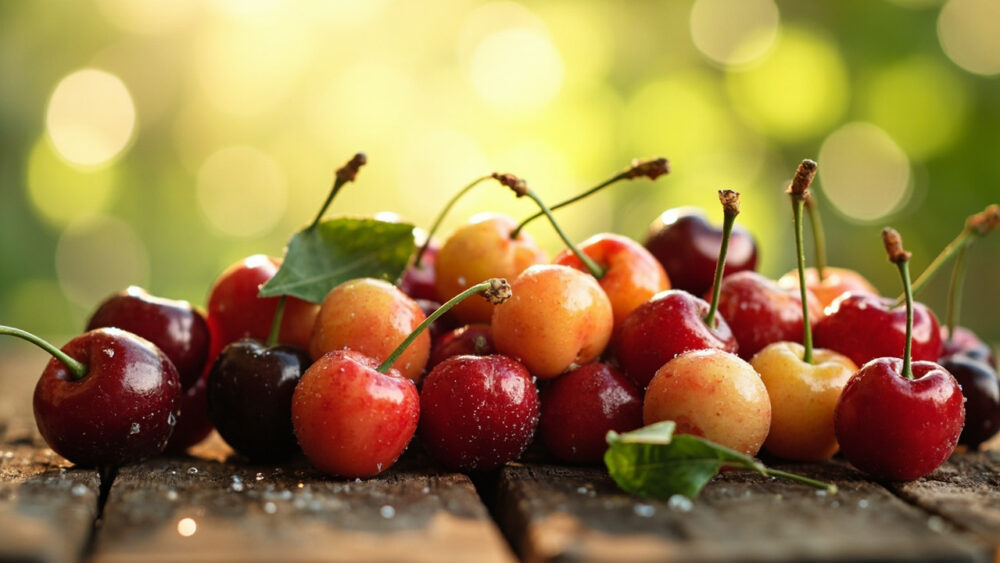
Yellow-blushed-pink skin hides a cherry that’s sweeter than Bing to most palates, but it bruises easily and cracks if rain hits right before harvest. Good as a pollinator for Bing, better if you can pick it the day it’s ready and eat it that afternoon.
3. Lapins
Self-fertile, which makes it the easiest sweet cherry for a single-tree yard. Large, firm, dark red fruit with good crack resistance, and it doubles as a pollinator for other sweet varieties if you plant more later.
4. Stella
An older self-fertile variety that paved the way for Lapins, with softer flesh and a shorter storage window. Still a solid choice if you find a tree locally and want proven cold tolerance in zone 5.
5. Sweetheart
Ripens two to three weeks after Bing, which stretches your harvest window if you already have an early variety. Self-fertile, heavy-bearing, and the fruit holds on the tree longer than most without splitting.
Sweet cherries get the attention, but the toughest, lowest-maintenance cherries on this list are the sour ones coming up next.
Sour and Pie Cherries
These are self-fertile, cold-hardy down to zone 4 in most cases, and built for baking rather than snacking off the branch.
6. Montmorency
The pie cherry nearly every commercial sour cherry orchard grows, bright red, tart, and ready in early summer on a tree that tolerates real winter cold without complaint. If you want cherry pie filling and nothing else, this is the one variety on this list you shouldn’t overthink.
7. North Star
A genuine dwarf, topping out around 8 to 10 feet, which makes it the sour cherry for anyone short on space. Self-fertile, very cold-hardy, and the fruit is a touch less acidic than Montmorency straight off the tree.
8. Meteor
Bred specifically for cold climates that Montmorency finds tough, Meteor holds its own in zone 3 gardens. Medium-sized, bright red, and reliable even after a hard winter that sets other cherries back.
9. Balaton
Darker and firmer than Montmorency, with a wine-red color that bleeds less in baking and a flavor balance that leans less sharply tart. Worth seeking out if you’ve grown Montmorency before and want something with more depth for sauces.
If your yard is small or your growing season short, the next category solves both problems at once.
Compact and Container Cherries
Bred for patios and tight urban lots, these trade some yield for a footprint that actually fits.
10. Compact Stella
A true dwarf sweet cherry reaching only 8 to 10 feet, self-fertile, producing full-size sweet fruit despite the small frame. It still needs full sun and well-drained soil, but it’s the sweet cherry answer to a yard that can’t fit two full-size trees.
11. Black Tartarian
An heirloom sweet cherry from the 1800s, deep purple-black skin, rich flavor, and a vigorous but manageable habit. It also blooms early and pollinates a wide range of other sweet varieties, so it earns a spot even in a small orchard as the workhorse tree.
12. Carmine Jewel
A bush cherry, not a tree at all, staying under 7 feet and taking up roughly the same footprint as a large shrub. Self-fertile, extremely cold-hardy into zone 2, and bred for growers who want sour-cherry flavor without any tree at all.
13. Nanking Cherry
The one gardeners underestimate constantly, mistaking it for an ornamental shrub instead of a serious fruit producer. It’s a multi-stemmed bush, self-fertile, absurdly cold-hardy, and loads itself with small tart-sweet cherries by its third or fourth year, ready for jam, syrup, or eating fresh once you get past the small pit-to-flesh ratio.
Two more varieties round out this list, and one of them solves a problem the other fourteen can’t touch.
Specialty and Late-Season Picks
These fill gaps: extending harvest, tolerating wetter climates, or working where full-size trees simply won’t.
14. Regina
A late-ripening sweet cherry prized for one specific trait: it resists rain-cracking far better than Bing or Rainier. If you garden somewhere with unpredictable early-summer rain, this is the variety that won’t split open on you the week before harvest.
15. Skeena
A firm, late-season dark cherry that stores and ships better than most sweet varieties, which also means it holds up longer on the tree and in your kitchen. Self-fertile-friendly when paired with another late bloomer, and a good closer to a mixed cherry planting that started with an early variety like Black Tartarian.
How to Choose the Right One
Run through these in order and you’ll land on the right tree faster than by reading reviews.
- Measure your space first: full-size sweet cherries need 25 to 35 feet between trees, while dwarf and bush types fit in 6 to 10 feet.
- Check your winter cold and summer length: sour cherries and bush types like Nanking or Carmine Jewel handle zone 3 and 4 winters that stall out sweet cherries.
- Decide purpose before variety: fresh eating points toward Bing, Rainier, or Lapins, baking points toward Montmorency or Balaton.
- Confirm pollination needs: most sweet cherries want a second compatible variety blooming at the same time, while sour and bush cherries are self-fertile and can stand alone.
- Be honest about your care appetite: sweet cherries demand more pruning, pest watching, and rain-crack management than sour or bush types, which mostly take care of themselves.
- Match ripening time to your patience: stagger an early variety with a late one like Regina or Skeena if you want fresh cherries over a longer stretch instead of all at once.
Pick based on your winters and your patio, not the cherry you remember from the produce aisle.
Any of these fifteen will reward you with fruit for decades once established, so the only real mistake is choosing one that doesn’t fit your space or your climate.