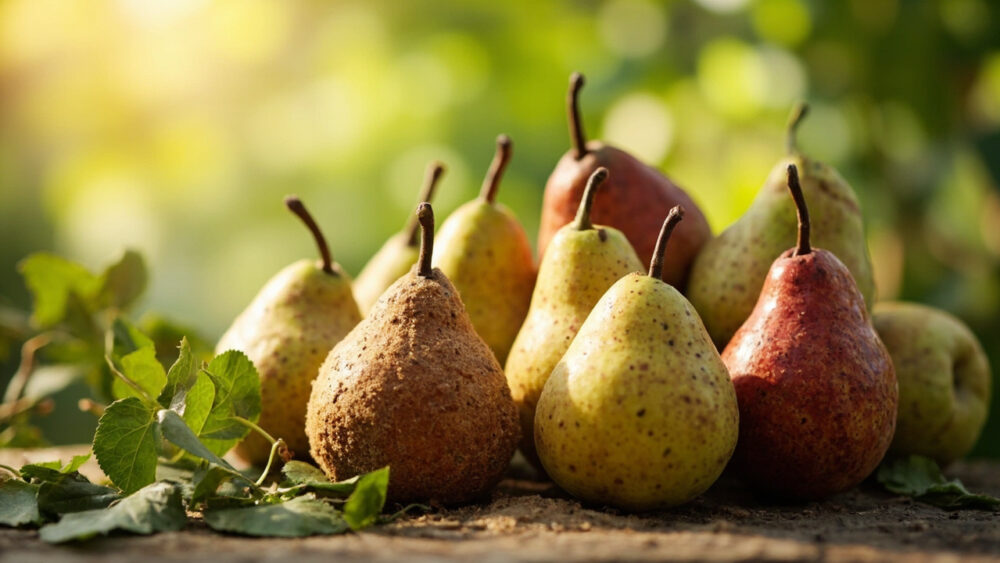
The fastest way to narrow fifteen pear varieties down to one is deciding what you actually want from the fruit: soft and buttery for eating fresh off the tree, or firm and crisp for cooking, canning, or storing through winter. That single split, European dessert pear versus firm Asian pear versus cooking pear, does more work than any other fact on this page. Get that right and the rest is just matching hardiness zone and pollination needs to your yard.
Most first-time buyers grab whatever pear tree the nursery has in stock, usually Bartlett, without realizing it needs a second pear variety nearby to fruit well and that it drops its crop over a narrow window that punishes anyone who cannot pick fast. Meanwhile the pear experienced growers quietly plant more of is one most people walk past because it looks nothing like a supermarket pear.
Number 13 on this list is the one gardeners misjudge most, usually written off as a novelty when it is actually one of the easier pears to grow well. The last few entries below, plus a straight method for choosing among all fifteen, are waiting at the bottom, so keep scrolling before you commit to anything.
Classic European Dessert Pears
These are the soft, juicy, fully ripen-off-the-tree pears most people picture when they hear the word.
1. Bartlett
The default choice for a reason, Bartlett is the pear you have eaten canned, dried, and fresh without knowing it. It ripens in late summer, needs a second variety like Anjou or Bosc nearby for good pollination, and turns from green to golden yellow as it finishes ripening indoors at room temperature after picking, not on the tree. Hardy in zones 5 through 8, it is vigorous and reliable but drops its whole crop in a tight two to three week window, so you need a plan for using or preserving a lot of pears fast.
2. Anjou
The pear that stays green when ripe, Anjou confuses first-time growers because the skin barely changes color even at peak eating quality. Check ripeness by pressing gently near the stem, it should give slightly. It stores longer in the refrigerator than Bartlett, often two to three months, which makes it the better choice if you want fresh pears well into winter rather than a fast late-summer glut.
3. Bosc
Recognizable by its long tapered neck and russet brown skin, Bosc has dense, firm flesh even when fully ripe, which makes it the pear that holds its shape best in tarts and poaching. It is slower to come into bearing than Bartlett, sometimes taking four to six years, and needs a pollination partner. The flavor is spicier and less sweet than Bartlett, which some gardeners actually prefer.
4. Comice
Widely considered the best-tasting dessert pear, Comice has a squat round shape, thin skin, and flesh so soft and buttery it barely survives shipping, which is exactly why you almost never see it in stores and why growing your own is the only reliable way to eat one properly ripe. It is more disease-prone than Bartlett and wants a warm sheltered spot, zones 5 through 8, with good air circulation.
5. Seckel
The smallest pear on this list, Seckel produces fruit barely bigger than a golf ball but intensely sweet and spicy, sometimes called the sugar pear. The tree itself stays more compact than most European pears and tolerates a bit more cold, into zone 4 with the right siting. It is a good pick for small yards or container growing where a full-size Bartlett tree would overwhelm the space.
Dessert pears cover the soft, sweet, eat-fresh end of the spectrum, but firmness and crunch live in a completely different category next.
Asian Pears for Crunch and Juice
These ripen fully on the tree, stay crisp like an apple, and are eaten firm rather than soft.
6. Hosui
A bronze-skinned Asian pear with juice that runs down your wrist, Hosui is sweet, aromatic, and ready when the skin turns a solid russet gold, unlike European pears you never pick it early and let it finish indoors. It self-pollinates partially but fruits far better with a second Asian pear nearby. Hardy in zones 5 through 9, it is one of the earlier Asian varieties to ripen, often by mid to late summer.
7. Chojuro
A flatter, apple-shaped Asian pear with russet skin and a mild, almost caramel-toned sweetness, Chojuro stores noticeably better than most Asian pears, holding good texture in the refrigerator for a month or more. It is a dependable, heavy-bearing tree that benefits from thinning fruit early so the branches do not snap under the load.
8. Shinseiki
The Asian pear for gardeners who want yellow, apple-crisp fruit without russet skin, Shinseiki is mild, very juicy, and ripens earlier than Hosui or Chojuro. It is self-fertile, which makes it a workable single-tree option if you genuinely have room for only one pear tree and still want a real crop.
9. Shinko
Known for strong resistance to fire blight, a disease that kills back whole limbs on more susceptible pears in wet, humid springs, Shinko is the practical choice for growers in the humid Southeast or anywhere fire blight has been a repeat problem. The fruit is russet-skinned, sweet, and crisp, and the tree pairs well with Hosui or Chojuro for pollination.
If crisp, apple-like pears sound better suited to your climate than soft dessert pears, the next category flips the purpose entirely toward cooking.
Cooking and Baking Pears
Bred and selected for firm flesh that holds together under heat rather than for eating raw off the tree.
10. Warren
A Southern favorite with excellent fire blight resistance, Warren has smooth, buttery flesh similar to Comice but on a tougher, more forgiving tree. It is a strong choice for zones 6 through 9 where humidity makes disease-prone varieties a constant fight, and the fruit holds well in storage for a European pear.
11. Kieffer
Tough, gritty-textured, and nearly indestructible, Kieffer is not a pear you eat raw and enjoy, but it cooks down beautifully into preserves, pear butter, and baked desserts. The tree tolerates poor soil, drought, and neglect better than almost any other pear on this list, and it is a workhorse choice for someone who wants fruit without babying a tree.
12. Moonglow
Bred specifically as a reliable Bartlett pollinator with strong fire blight resistance, Moonglow produces soft, mild, slightly grainy pears that are decent fresh but really shine cooked or canned. It is one of the best early-bearing choices if your main goal is pollinating a Bartlett or Anjou rather than growing Moonglow fruit for its own sake.
The next two entries are the ones worth slowing down for, including the variety most people underestimate.
Underrated and Specialty Pears
These rarely show up at the garden center but reward gardeners willing to seek them out.
13. Nashi (Asian Pear, unnamed heirloom types)
If you assumed Asian pears are a modern hybrid novelty, that guess undersells a fruit that has been cultivated for centuries and is genuinely one of the easier, more forgiving pears you can grow. Nashi types are heavy, consistent bearers that fruit younger than European pears, often within three to four years, and their round, crisp, juicy fruit needs no ripening period at all, you eat it straight off the tree at peak flavor. The trees do need a pollination partner and thrive in the same zones 5 through 9 range as named Asian cultivars like Hosui.
14. Flemish Beauty
An old heirloom dessert pear with excellent cold hardiness, Flemish Beauty tolerates winters down into zone 4, colder than most European pears manage. The skin blushes red over yellow and the flesh is aromatic and juicy when picked at the right moment, but it bruises easily and turns mealy fast if left too long, so timing the harvest matters more here than with Bartlett or Anjou.
15. Seckel-Bartlett hybrids and dwarf grafted combos
Grafted multi-variety trees that put two or three pears on one trunk solve the pollination problem outright and suit small yards where planting several full-size trees is not realistic. You do lose some vigor compared to single-variety trees, and you need to prune carefully so one grafted variety does not outcompete and shade out the others.
Fifteen pears down, and the only thing left is matching one to your actual yard and habits.
How to Choose the Right One
- Check your space: standard pear trees reach 15 to 20 feet, dwarf and grafted combo trees stay closer to 8 to 10 feet, and most pears need a second variety within roughly 50 feet for pollination.
- Match your zone: European pears generally suit zones 4 through 8 depending on variety, Asian pears zones 5 through 9, and cold-hardy heirlooms like Flemish Beauty push furthest into cold winters.
- Decide fresh eating versus cooking: soft dessert pears like Comice and Anjou for eating raw, firm Asian pears for crisp fresh eating, and Kieffer or Moonglow if preserves and baking are the real goal.
- Weigh disease pressure: in humid climates with a history of fire blight, prioritize resistant varieties like Warren, Shinko, or Moonglow over higher-flavor but more susceptible types like Comice.
- Be honest about care appetite: Kieffer and Nashi types forgive neglect, while Comice and Bartlett reward attentive pruning, thinning, and pest management with noticeably better fruit.
- Plan the pollination pair before you plant: pick two compatible varieties that bloom at the same time, since a single unpaired tree of most types will flower heavily and produce very little fruit.
Pick based on what you will actually eat and how much fuss you want to put in, not on which pear looks best at the nursery.
Any of these fifteen will give you real fruit within a few years if the pairing and site are right.