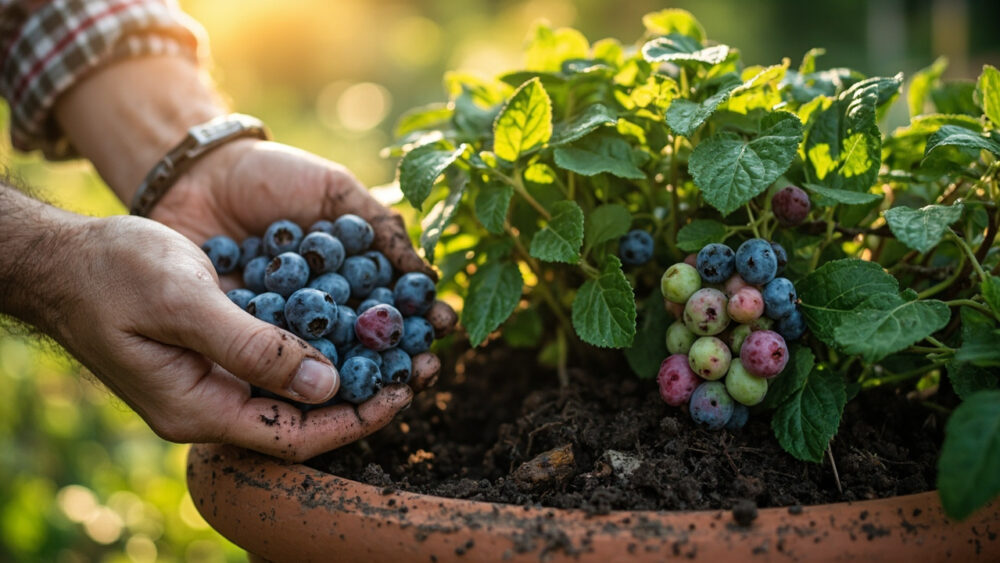
Growing blueberries in pots works because it solves the one thing blueberries demand and most yards can’t give them: acidic soil. Plant a two- or three-year-old potted bush in a 15 to 20 gallon container filled with an acidic mix, water it with rain or unsoftened water, and you can pick your first real harvest within one to two years. Container culture also lets you grow blueberries in zones where the native soil is alkaline clay, which would otherwise doom the whole project before it started.
Here’s the part almost nobody tells you upfront: the mistake that kills most potted blueberries isn’t watering or sun, it’s soil pH creeping upward over time from tap water and regular potting mix. The plant doesn’t collapse. It just slowly yellows and quits fruiting, and by the time you notice, you’re a year behind.
You’re probably also wondering whether one bush is enough, and whether that soil myth about coffee grounds actually does anything. Both get answered below. Stick around for the Blueberries at a Glance card at the bottom, it’s the version worth saving to your phone before you leave the nursery.
When to Plant Blueberries in Pots
Plant in early spring, two to three weeks before your last expected frost, or in fall once summer heat has broken. Container-grown nursery plants are forgiving because their roots aren’t touching frozen ground, but a hard freeze right after transplanting still stresses new roots.
Soil temperature matters less here than air temperature since you control the container mix. If you can work the soil without it being frozen or waterlogged, you can plant.
In zones 3 to 5, stick to spring planting so the bush has a full season to root in before winter. In zones 6 to 8, fall planting often works better because roots establish while it’s cool and the plant leaps forward come spring.
Timing gets the plant in the ground safely, but the container itself is what decides whether it thrives.
Choosing the Pot and Mixing the Right Soil
Blueberries need acidic soil, roughly pH 4.5 to 5.5, which is far more acidic than standard potting mix or garden soil. This is the non-negotiable part of the whole project.
Skip regular potting soil entirely. Mix equal parts peat moss (or a peat alternative) and a fine pine bark mulch or bark fines, with a smaller portion of coarse perlite for drainage. Some growers blend in a bit of acidic potting mix meant for azaleas or camellias, which works fine as a base.
Start young plants in a 5 to 10 gallon pot and move up to 15 to 20 gallons within a year or two as roots fill the container. Always choose a pot with real drainage holes, blueberry roots rot fast in standing water.
Set the pot where it gets 6 to 8 hours of direct sun. Part shade in brutal summer climates is fine, but too much shade means fewer flowers and weak, sparse fruit.
Get the mix right once and you’ll spend the rest of the season maintaining instead of fixing.
Planting Step by Step
- Depth: plant at the same depth the bush sat in its nursery pot, not deeper. Burying the crown invites rot.
- Spacing: one bush per 15 to 20 gallon pot. If you’re growing several in a large trough or raised container, space plants 30 to 36 inches apart.
- Technique: loosen the root ball gently before planting, teasing apart any tightly circled roots so they don’t keep spiraling in the new pot.
- Mulch: top the soil with 2 to 3 inches of pine bark or pine needle mulch immediately after planting to hold moisture and keep pH low.
- Water in: soak thoroughly right after planting until water runs from the drainage holes.
That first watering also starts the clock on the habit that keeps a potted blueberry alive for years.
Watering and Feeding Through the Season
Blueberry roots are shallow and fine, and container mix dries out faster than garden soil, so check moisture every day or two in warm weather. The soil should stay evenly moist, never soggy, never bone dry. Stick a finger an inch down; if it’s dry there, water.
If you assumed tap water is fine because it’s fine for everything else you grow, that assumption is exactly what raises soil pH over a season or two. Hard, alkaline tap water slowly neutralizes the acidity you worked to build. Rainwater is ideal. If you must use tap water, an occasional drench with a diluted vinegar solution or an acidifying fertilizer helps counteract it, and testing soil pH once or twice a year tells you if you’re losing ground.
Feed with an acid-loving plant fertilizer (the kind sold for azaleas, camellias, or rhododendrons) starting in early spring, following the label rate, and stop feeding by mid to late summer so new growth can harden off before cold weather.
As for coffee grounds: they’re mildly acidic but a weak, slow tool at best, nowhere near strong enough to substitute for the right mix and fertilizer.
Feeding and watering keep the plant alive, but a few predictable problems will test it anyway.
Problems That Actually Show Up
Yellowing leaves with green veins is the classic sign of pH drift, meaning the soil has gone too alkaline for the roots to absorb iron properly. This is that slow failure mentioned earlier, and it’s fixable with an acidifying treatment and a pH check, not a bigger dose of regular fertilizer.
Birds are the other real threatand they will strip a small potted bush of ripe fruit in a single morning. Bird netting draped over a simple frame before berries color up is the only dependable fix.
Watch for spider mites and aphids in hot, dry stretches, especially on plants kept too dry between waterings. A strong spray of water knocks most populations back; for anything persistent, an insecticidal soap applied per the label is the next step.
Root rot from overwatering or poor drainage is the quiet killer, showing up as wilting despite moist soil and a sour smell at the roots. There’s no reviving a bush that far gone, only repotting into fresh, well-draining mix and hoping you caught it early.
Get past these hurdles and the only thing left to figure out is when to actually start picking.
When and How to Harvest
Blueberries bloom in mid to late spring and ripen over four to six weeks starting in early to mid summer, depending on variety and climate. A newly potted bush may flower the first year, but let it focus on establishing roots. Pinch off blooms the first season if you want faster long-term growth, though most gardeners let a few berries develop just to taste them.
Color is a trap. Berries turn fully blue several days before they’re actually readyand picking on color alone gets you tart, underripe fruit. The real test is the tug: a ripe berry releases with the lightest pull and pulls off clean, while an unripe one holds on and resists.
Pick every 3 to 5 days through the season, since berries on the same cluster ripen at different times. A mature, well-fed potted bush can produce for 15 to 20 years, with yields increasing steadily through year five or six.
Once you’ve got that rhythm down, the only thing left to remember is the short version.
Blueberries at a Glance
- When to plant: early spring two to three weeks before last frost, or fall after summer heat breaks.
- Pot size: start at 5 to 10 gallons, move up to 15 to 20 gallons within one to two years.
- Soil: acidic mix of peat moss and pine bark fines with added perlite, target pH 4.5 to 5.5.
- Sun: 6 to 8 hours of direct sun daily for full fruiting.
- Water: keep evenly moist, check every one to two days, use rainwater when possible.
- Feeding: acid-loving fertilizer from early spring through mid to late summer, then stop.
- Harvest: early to mid summer, four to six weeks after bloom, judge by a gentle tug not color.
Get the soil acidity right at planting and keep it that way, and everything else about growing blueberries in pots is just routine maintenance.
That one habit is the difference between a bush that limps along and one that feeds you every summer for decades.