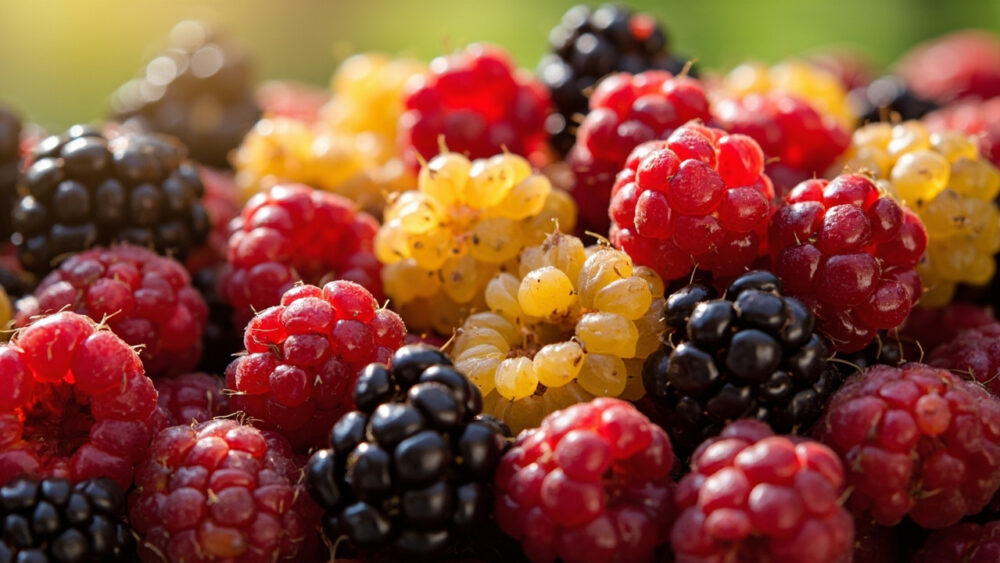
The fastest way to sort out the different types of raspberries is by when they fruit: summer-bearing types give you one big harvest in early to midsummer, while fall-bearing (everbearing) types crop on new canes from late summer into fall, and some do both. Get that distinction right and everything else, color, flavor, size, hardiness, falls into place behind it.
Most beginners grab whatever red raspberry is sitting at the garden center in spring, which is usually a fine but unremarkable summer-bearer, when a fall-bearing type would have suited their space and patience better. Experienced growers quietly favor a couple of the black and purple types most people walk right past.
Number 13 on this list is the one gardeners most often plant in the wrong spot and then wonder why it sulks for three years. Stick around for the last few entries and the simple method at the bottom for picking the right raspberry for your yard, your climate, and how much pruning you actually want to do.
Classic Red Raspberries
Red raspberries are the default for a reason: reliable, cold-hardy, and the flavor everyone expects.
1. Heritage
The everbearing standard that most nurseries stock because it just works. It fruits lightly in summer on old wood and heavily from late summer into fall on new canes, with firm, medium berries that hold up well for freezing. Hardy to zone 4, and forgiving of average soil.
2. Boyne
An early summer-bearer bred for the cold plains and prairies, producing a single heavy flush of soft, sweet berries. It suckers aggressively, so give it a dedicated bed and be ready to dig out wanderers. Excellent for jam because the berries soften fast off the cane.
3. Latham
An old-school variety still grown because it shrugs off harsh winters and mediocre soil. Berries are medium-sized, a little tart, and ripen in one main summer crop. A dependable choice if you want raspberries but do not want to fuss over them.
4. Killarney
A firm-berried summer type developed for short-season, cold climates, holding up to zone 3 with good snow cover. The fruit is smaller than Heritage but has a brighter, more acidic flavor that bakers like. Canes are sturdy and need less staking than most reds.
Reds are the safe bet, but the black and purple types below change the flavor conversation entirely.
Black Raspberries
Black raspberries are their own species, not a color variant of red, and they taste like it: deeper, winey, almost floral.
5. Bristol
The benchmark black raspberry for home gardens, with large, glossy, seedy-but-worth-it fruit in a single midsummer crop. Canes arch and root at the tips like blackberries, so plan for a trellis or let it sprawl into its own patch. Flavor is intense, closer to a wine grape than a red raspberry.
6. Jewel
A hardier alternative to Bristol with better disease resistance, especially against anthracnose, which black raspberries are prone to in humid climates. Berries are slightly smaller but sweeter, and the plant tolerates zone 4 winters without much dieback. A better pick if you garden somewhere wet.
7. Cumberland
An heirloom black type grown since the 1800s, valued for intense flavor over yield. It ripens a touch later than Bristol and produces less fruit per cane, which is why commercial growers dropped it and home gardeners kept it. Good for someone chasing old-fashioned flavor over volume.
Purple raspberries split the difference between reds and blacks, and they deserve more attention than they get.
Purple Raspberries
Purple types are hybrids of red and black raspberries, combining the vigor of one with the flavor complexity of the other.
8. Royalty
The purple raspberry most likely to be sold by name, producing very large, sweet berries with a mild version of that black raspberry depth. Canes are vigorous and tip-root like blackberries, needing the same kind of support. Best eaten fresh or made into preserves since the sugar content is high.
9. Brandywine
A tarter, firmer purple type that holds its shape better than Royalty, making it the better choice for pies and sauces rather than snacking off the cane. It is also more disease-resistant, which matters if your garden has struggled with cane blight before. Ripens midsummer, slightly later than most reds.
That covers the standard color categories, but the fall-fruiting types deserve their own close look.
Fall-Bearing (Everbearing) Types
These fruit on first-year canes in late summer and fall, which means you can mow them to the ground every winter and skip most pruning decisions entirely.
h3>10. Autumn Bliss
One of the earliest fall raspberries to ripen, often starting just six to eight weeks after new canes emerge in spring. That early timing makes it the right pick for short-season or northern gardens where frost can cut off a later variety before it finishes. Berries are large and the flavor is bright, not overly sweet.
11. Caroline
A heavy-yielding fall type with excellent flavor, often considered the best-tasting of the modern fall-bearing reds. It ripens a little later than Autumn Bliss, so it needs a longer frost-free stretch to finish its full crop. Where the season allows, it out-produces almost everything else on this list.
12. Anne
A yellow-fruited fall-bearer, and the answer for anyone who assumed all raspberries are red or black. The pale gold berries are exceptionally sweet and mild, with almost none of the tartness reds carry, and they are less visible to birds, which means less netting. Vigor and hardiness match the red fall types it was bred from.
13. Fall Gold
Another yellow everbearer, and the one most people plant in full shade because they assume, wrongly, that a delicate-looking gold berry wants a gentler spot than a red one. It needs the same six or more hours of direct sun as any raspberry or it will sulk for years with weak, seedy fruit. Give it full sun and it is genuinely one of the sweetest raspberries you can grow, closer to tropical fruit than tart red berries.
Two more entries left, including a trailing type most people have never heard of.
Specialty and Trailing Types
These are the raspberries for gardeners who want something beyond the standard upright cane.
14. Joan J
A thornless fall-bearing red, which matters more than it sounds like once you have hand-picked a thorny variety at 7am. Yield and flavor are comparable to Heritage, but the lack of spines makes it the practical choice for family gardens or anyone picking barefoot near a patio bed. It still needs full sun and consistent moisture to size up properly.
15. Tayberry
A raspberry-blackberry cross, not a true raspberry, but close enough in growing habit and appearance that it belongs on this list. The fruit is long, deep red to purple, tart-sweet, and the plant trails like a blackberry, needing a wire or fence to sprawl along. It is a good option if you already grow blackberries and want a flavor bridge between the two without adding a whole new trellis system.
How to Choose the Right One
Match the raspberry to your space and habits before you fall for a flavor description.
- Check your space first: upright reds and yellows fit a 3 to 4 foot row width, while black, purple, and trailing types need 6 to 8 feet and real trellis support.
- Confirm your climate: most reds and yellows handle zone 3 to 4, blacks and purples generally need zone 4 to 5 and better drainage, and fall types need enough frost-free days after midsummer to finish ripening.
- Decide your purpose: pick firm types like Brandywine or Killarney for baking and preserves, soft sweet types like Caroline or Anne for fresh eating.
- Be honest about pruning appetite: fall-bearers can be cut to the ground once a year in late winter, while summer-bearers need old fruited canes removed and new canes thinned each season.
- Watch your sun: every raspberry on this list wants six or more hours of direct sun, no exceptions, regardless of berry color.
- Consider pests and kids: thornless types and bird-resistant yellow varieties solve two of the most common backyard raspberry headaches.
Pick based on your space and season, not just the prettiest berry in the catalog photo, and the raspberry patch will still be feeding you a decade from now.