Learning how to grow raspberries starts with getting three things right: plant bare-root canes in early spring while they are still dormant, give them full sun and soil that drains fast, and space them 18 to 24 inches apart in rows 6 to 8 feet apart so air can move through. Do that and most of the work is behind you. The plants are perennial, the roots survive winters down to zone 3 or 4 depending on variety, and a healthy patch keeps producing for 10 to 15 years.
Here is what trips people up, though. Most first-time raspberry patches fail from overcrowding, not neglect. Canes send out underground runners and will happily turn an 18-inch row into a 4-foot thicket by year three if you let them, and a thicket gets mildew and stops fruiting well. There is also a pruning decision almost nobody explains clearly: whether your variety fruits on this year’s growth or last year’s, and cutting the wrong cane at the wrong time can erase an entire season’s crop.
I will walk through planting, feeding, the problems that actually show up, and exactly when those berries are ready to pick. Save the “Raspberries at a Glance” card at the bottom for the numbers you will want again next spring.
When to Plant Raspberries
Plant bare-root canes in early spring2 to 4 weeks before your last expected frost, as soon as the soil can be worked and is no longer waterlogged. In mild-winter regions (zone 7 and warmer) fall planting also works, giving roots a head start before spring growth. Avoid planting into soil that is still cold and soggy; roots sit and rot before they ever push new growth.
Potted, actively growing canes from a nursery are more forgiving and can go in anytime spring through early fall, as long as you keep them watered while they establish. Bare-root is cheaper and honestly grows just as well if you plant it while dormant.
Timing is the easy part, though.
Choosing the Spot and Prepping the Soil
Raspberries want full sunat least 6 hours a day, and soil that drains well even after heavy rain. Standing water around the roots for more than a day or two is one of the fastest ways to kill a new patch. If your yard holds puddles, build a raised bed or mounded row 8 to 10 inches high instead of fighting the drainage.
Work in 2 to 3 inches of compost or aged manure across the planting row before you plant, down 8 to 10 inches deep. Raspberries like slightly acidic soil, around pH 5.6 to 6.2, and they are heavy feeders once established, so this is the one chance to build fertility into the ground before roots are in it.
Skip a site near wild blackberries or old raspberry patches if you can. They share diseases, and planting downwind or downhill of them just imports problems you have not had yet.
Get the bed right now and the next ten years get a lot easier.
Planting Raspberries Step by Step
1. Soak bare-root canes
Soak roots in water for 1 to 2 hours before planting if they look dry. Do not let them sit exposed to air and sun while you dig.
2. Dig the hole or trench
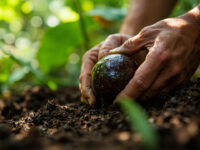
Dig wide enough to spread the roots out flat, not crammed into a narrow hole. Depth should put the crown, where roots meet cane, about 1 to 2 inches below the soil surface.
3. Space correctly
Set canes 18 to 24 inches apart within the row, with rows 6 to 8 feet apart. This feels sparse on planting day and crowded by year two, which is exactly right.
4. Backfill and firm
Fill in with the amended soil, firm it gently with your hands to remove air pockets, and water in thoroughly right away.
5. Cut back the cane
Trim the top of the cane down to about 6 inches after planting. This looks brutal but it forces the plant’s energy into root establishment instead of trying to support top growth it cannot yet feed.
6. Set up support now
A simple two-wire trellis, one wire at 3 feet and one at 5 feet, strung between end posts, keeps canes upright once they load up with fruit. Put it in at planting time, not after the canes flop over.
The planting itself takes an afternoon. What happens next decides whether it thrives.
Watering and Feeding Through the Season
New canes need consistent moisture, about 1 to 1.5 inches of water a week, more during fruit set and in hot weather. Water the soil, not the foliage: wet leaves sitting overnight are how fungal disease gets started.
A 2 to 3 inch layer of mulch, straw or wood chips, holds moisture and keeps root competition from weeds down. Keep it a couple inches back from the base of each cane.
Feed established plants in early spring with a balanced fertilizer or a shovelful of compost per plant, and again lightly after harvest if growth looks thin. Too much nitrogen produces lush leaves and weak, disease-prone cane growth, so resist the urge to overfeed.
This is also where the crowding problem starts, and it is worth handling before it becomes a real fight.
The Pruning Decision Nobody Explains Well
If you assumed all raspberries get pruned the same way, that guess is what wrecks most home patches. It comes down to fruiting type, and getting it backwards means cutting off next season’s entire crop.
Summer-bearing varieties fruit once, in early to midsummer, on canes that grew the previous year (called floricanes). After those canes finish fruiting, cut them to the ground; they will not fruit again. Leave this year’s new green canes alone, they are next year’s crop.
Fall-bearing (everbearing) varieties fruit on first-year canes in late summer through fall. The simplest approach: cut the entire patch down to the ground each winter or early spring. You lose the small early summer crop those canes could have given, but you get a bigger, cleaner fall harvest and far fewer disease problems.
Whichever type you have, thin the row every spring to 4 to 6 healthy canes per foot of row and pull out any runners sprouting outside the row. This single habit is what keeps a patch productive instead of turning into an unmanageable bramble by year three.
Get the pruning right and most of your other problems shrink on their own.
Problems That Actually Show Up
Raspberries are tough plants, but a few issues are common enough to plan for rather than panic over.
- Spur blight and cane blight: fungal diseases that show up as dark blotches or cankers on canes, worse in crowded, poorly ventilated rows. Thin canes for airflow and remove infected wood promptly. A fungicide labeled for the disease can help if cultural fixes fall short, applied exactly per the label.
- Raspberry cane borer or fruitworm: look for wilted cane tips or small holes in developing berries. Cut and destroy wilted tips a few inches below the damage.
- Japanese beetles: skeletonized leaves in midsummer. Hand-pick into soapy water in the morning when they are sluggish, or use a labeled insecticide for heavy infestations.
- Root rot: yellowing, wilting canes in poorly drained soil. There is no cure once it takes hold badly. The fix is prevention through drainage, which is why the bed prep step matters so much.
- Birds: the most reliable “pest” of all once berries ripen. Netting over the row is the only fix that consistently works.
Handle drainage and airflow up front and most of this list stays theoretical.
When and How to Harvest
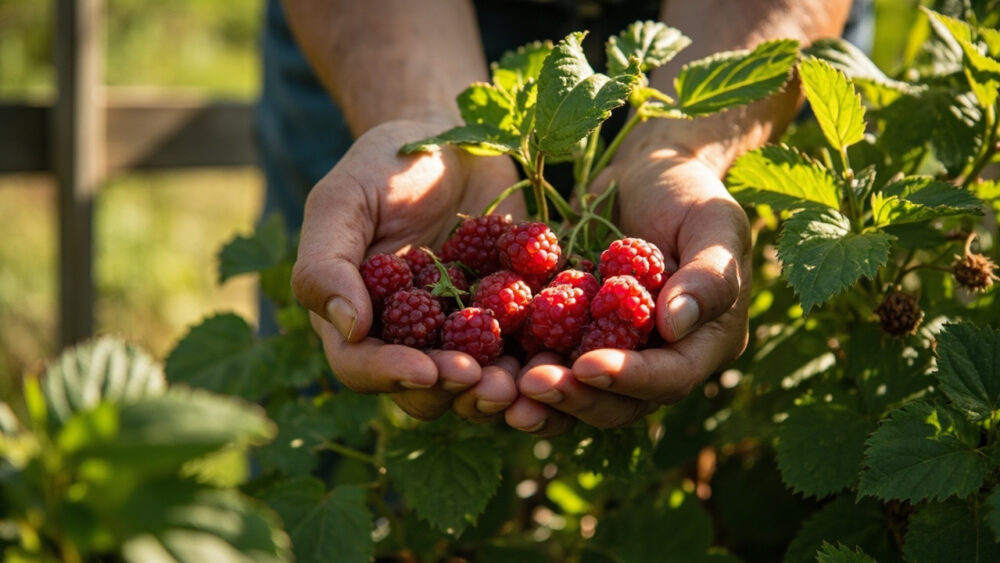
Berries are ready when they pull away from the core easily with a gentle tug and the color has gone fully deep, whether that is red, black, purple or gold depending on variety. If it resists, it is not ripe. Raspberries do not ripen further once picked.
Summer-bearing types ripen over a 3 to 4 week window in early to midsummer. Fall-bearing types start in late summer and keep producing until frost knocks them back. Either way, expect to pick every 2 to 3 days once the patch gets going. Ripe berries hold on the cane for only a day or two before softening.
Pick in the cool morning if you can, into shallow containers so you are not stacking berries deep and crushing the bottom layer. They are fragile and do not store long, plan to eat or preserve them within a few days of picking.
That first handful of warm berries off the cane is the whole reason to grow them, and here is everything worth keeping close at hand for next season.
Raspberries at a Glance
- When to plant: bare-root in early spring, 2 to 4 weeks before last frost, or potted canes anytime through fall in mild climates.
- Spacing and depth: 18 to 24 inches apart in rows 6 to 8 feet apart, crown 1 to 2 inches deep.
- Site needs: full sun, at least 6 hours daily, well-drained soil, pH 5.6 to 6.2.
- Water: 1 to 1.5 inches per week, more during fruiting, always at the soil not the leaves.
- Pruning rule: summer-bearing, remove spent canes after harvest. Fall-bearing, cut the whole patch to the ground each winter.
- Harvest window: summer-bearing fruits 3 to 4 weeks in early to midsummer, fall-bearing from late summer until frost.
- Patch lifespan: 10 to 15 productive years with annual thinning to 4 to 6 canes per foot of row.
Get the drainage, spacing, and pruning type right, and the rest of raspberry growing takes care of itself.
Everything else is just picking, and eating them warm off the cane before they make it to the kitchen.