Learning how to grow lychees starts with accepting one fact up front: this tree needs a genuine winter chill to flower and a genuine tropical warmth to fruit, so you plant it in full sun in rich, well-drained, slightly acidic soil sometime after your last frost, then you wait. Most grafted trees take four to six years to bear their first real crop, and that wait is where most attempts quietly fall apart.
The mistake that sinks more lychee trees than any pest ever does is planting one in soggy, alkaline, or heavy clay soil and expecting patience to fix drainage. There is also a sign almost everyone misreads in year two or three, when a healthy young tree refuses to flower and gets blamed for “not being ready” when the real problem is temperature, not age.
And there is a question you are about to ask the minute your tree finally sets fruit: how do you know it is actually ripe, since lychees do not ripen after picking the way a banana does. Stick with me through planting, feeding, and problems, and you will get a straight answer to that one too, plus a save-able Lychees at a Glance card at the very bottom with the numbers worth keeping on your phone.
When to Plant a Lychee Tree
Plant lychees only after all frost danger has passed and nighttime temperatures reliably stay above about 40°F, since young trees have almost no cold tolerance. Soil temperature matters less here than air temperature, but you want the ground workable and warm, generally once daytime highs sit in the 70s consistently.
This is strictly a warm-climate tree. It grows outdoors long-term only in USDA zones 10 and 11, meaning south Florida, coastal southern California in favorable spots, Hawaii, and similar subtropical to tropical climates.
Everywhere colder means container growing, with the pot moved indoors or into a greenhouse well before the first fall frost.
Get the timing right and you have already dodged the first real failure point.
Next comes the part that decides whether that tree ever fruits at all: the spot you choose.
Choosing the Spot and Prepping the Soil
Lychees want full sun, at least six to eight hours a day, and they want soil that drains fast. Heavy clay that holds water around the roots is the single most common killer of young trees, causing root rot before the tree ever gets a chance to establish.
Test your drainage before you plant: dig a hole a foot deep, fill it with water, and if it has not drained within a couple of hours, amend heavily with coarse sand, aged bark, or compost, or build a raised mound instead of fighting the native soil.
Aim for a soil pH between about 5.0 and 6.5. Lychees genuinely dislike alkaline soil, and in soil above pH 7 you will see chronic yellowing no amount of fertilizer fixes, because the tree cannot take up iron and other micronutrients properly at that pH.
If you garden on limestone or coral-based soil common in parts of south Florida, plan on regular soil sulfur amendments or growing in a large raised bed with imported soil, because fighting native alkalinity every season is easier than losing the tree.
Also give it room. A mature lychee tree can reach 30 to 40 feet with a wide, dense canopy, so plant it at least 20 to 25 feet from structures, power lines, and other trees.
Get the ground right and planting day becomes the easy part.
Planting a Lychee Tree Step by Step
Buy a grafted tree from a reputable nursery rather than starting from seed. Seed-grown lychees take far longer to fruit, sometimes eight to twelve years or more, and often produce inferior fruit compared to named grafted cultivars like Brewster, Mauritius, or Hak Ip.
The planting steps
- Dig the hole twice as wide as the root ball and just as deep, never deeper. Planting too deep is a slow, quiet killer.
- Check the graft union and keep it well above the final soil line, several inches at minimum.
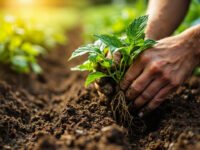
- Set the tree in the hole, backfill with native soil blended with compost, and firm it gently, no stomping.
- Water in immediately with several gallons to settle the soil and eliminate air pockets around the roots.
- Mulch generously, 2 to 4 inches deep, keeping it pulled back a few inches from the trunk itself.
- Stake young trees in windy sites for the first year until the root system anchors itself.
Space multiple trees 20 to 25 feet apart minimum, more if you have the room, since crowding leads to poor air circulation and weak fruiting later.
Once it is in the ground, the real work shifts from digging to feeding.
Watering and Feeding Through the Season
Young lychee trees need consistent moisture, watering deeply two to three times a week through their first year, tapering as the root system matures. Established trees tolerate short dry spells but drop fruit and flowers under real drought stress, so do not let a mature tree go bone dry during flowering or fruit development.
Feed lightly and often rather than heavily and rare. Use a balanced fertilizer formulated for citrus or other acid-loving fruit trees, applied every six to eight weeks during the growing season, tapering off in fall so the tree can slow down before any cool weather arrives.
Here is the guess that trips people up: if a lychee is not flowering, most gardeners assume it needs more fertilizer, more water, or more time to mature. Often none of that is true.
Lychees need a genuine cool, relatively dry period, typically several weeks with nighttime temperatures in the 40s to 50s, to trigger flower bud formation. In a climate that stays warm and humid year round with no real winter dip, a healthy, well-fed, mature tree can simply refuse to bloom.
This is a climate limitation, not a feeding problem, and no amount of extra fertilizer will force flowers that temperature has not triggered.
Get the chill your tree needs and it will find its own way to fruit, but first let’s talk about what else can go wrong.
Problems That Actually Show Up
Root rot from wet soil is the most common killer, showing up as yellowing leaves, dieback, and a generally sickly tree despite normal watering. The fix is prevention: drainage before planting, not treatment after.
Mites and scale insects are the most frequent pests, appearing as stippled, bronzed leaves or small bumpy growths along stems. Horticultural oil or insecticidal soap applied per the product label handles most infestations if you catch them early.
Anthracnose and other fungal leaf spots appear in humid climates as dark blotches on leaves and can affect flowers and young fruit too. Good airflow from proper spacing, avoiding overhead watering late in the day, and a fungicide labeled for fruit trees, used strictly per its label, keep this in check.
Fruit drop before ripening is common and often weather-related, tied to sudden temperature swings, drought stress during fruit set, or inconsistent watering. Steady moisture and mulch to buffer soil temperature help more than any spray.
Cold damage is the one true emergency. A hard freeze can kill a young tree outright, so cover or move container trees well before temperatures drop into the 30s.
Head off drainage and cold problems early and most other issues stay minor.
Now, the payoff you have been waiting for: how to actually tell a lychee is ready to pick.
When and How to Harvest Lychees
Lychees ripen roughly 100 to 120 days after flowering, typically in late spring to midsummer depending on your climate and cultivar. Unlike bananas or tomatoes, lychees do not ripen after harvest, so the fruit on the tree is as good as it will ever get.
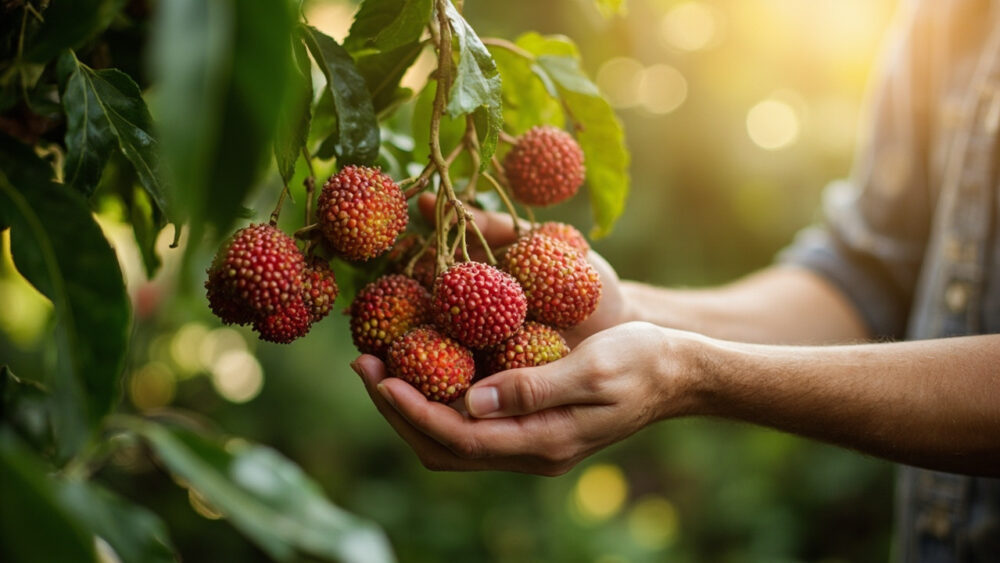
Judge ripeness by color and feel, not by the calendar. The bumpy skin turns from green to a deep pink or red, sometimes with rosy-brown patches depending on variety, and the fruit should feel slightly firm but give a little under gentle pressure.
Taste-test one before committing to a full harvest. Ripe lychee flesh is translucent white, juicy, and sweet with a floral edge; underripe fruit tastes thin and sour.
Cut clusters from the tree with pruning shears rather than pulling, which tears bark and damages next year’s fruiting wood. Harvest in the cool morning hours when possible, since the fruit holds quality better before the day heats up.
Fresh lychees hold in the refrigerator for about one to two weeks in a perforated bag, but flavor and texture are always best within the first few days off the tree.
That is the whole arc from bare ground to full basket, and here is the short version worth saving.
Lychees at a Glance
- When to plant: after all frost danger passes, once nights stay reliably above 40°F, in USDA zones 10 to 11 or in containers elsewhere.
- Spacing: 20 to 25 feet apart minimum, since mature trees reach 30 to 40 feet wide and tall.
- Soil: fast-draining, slightly acidic, pH 5.0 to 6.5, amended heavily if you have clay or alkaline ground.
- Sun: full sun, six to eight hours daily minimum.
- Water and feed: deep watering two to three times weekly for young trees, balanced acid-fruit fertilizer every six to eight weeks in the growing season.
- Flowering trigger: several weeks of cool nights in the 40s to 50s, without which a healthy tree may not bloom at all.
- Harvest window: about 100 to 120 days after bloom, judged by deep pink or red color and a slight give, since fruit will not ripen further once picked.
Get the drainage and the chill hours right and the rest of this tree mostly takes care of itself.
Everything else is patience, and a good pair of pruning shears when that first real harvest finally comes.