If you want to know how to grow figs successfully, the short version is this: plant a dormant, bare-root or container tree in early spring after the ground has thawed and drained, give it full sun and sharp drainage, water it deeply but rarely, and skip the nitrogen-heavy feeding that everyone reaches for first. Figs are forgiving about soil quality and brutal about two things: cold roots and wet feet. Get those right and the rest of the plant mostly takes care of itself.
Here is what trips people up though. Most first-year fig failures have nothing to do with the tree and everything to do with planting too deep or watering on a schedule instead of by feel. There is also a sign on the trunk that tells you exactly how much winter damage you took, and almost nobody checks for it until it is too late to fix that season.
Stick around for the honest answer on how long you will actually wait for fruit, because it is longer than the nursery tag implies. Save-able specifics, spacing, depth, feeding numbers, and the whole thing on one card, are waiting at the bottom once you have the full picture.
When to Plant Figs
Plant in early spring, once the soil is workable and no longer waterlogged, roughly two to four weeks before your last expected frost if you are setting out a dormant bare-root tree. Figs tolerate light frost once dormant, so you do not need to wait for frost-free nights the way you would for tomatoes.
In zones 8 and warmer, fall planting also works well because winters stay mild enough for roots to establish. In zones 6 and 7, spring planting only is safer, since a young tree needs a full season to get established before its first real winter test.
Container-grown fig trees are more flexible and can go in anytime from spring through early fall, as long as you give them six to eight weeks before hard frost to settle in.
Timing gets the roots started right, but where you put the tree decides whether it thrives for the next twenty years.
Choosing the Spot and Prepping the Soil
Figs want full sun, at least six to eight hours a day, and a spot with a hard rain drains from within an hour or two, not one where puddles sit overnight. A south-facing wall or fence is close to ideal in cooler zones because it holds heat and blocks wind.
Drainage matters more than fertility. Figs are famously unfussy about soil richness, they will grow in average, even sandy soil, but wet, compacted clay rots the roots fast. If your soil is heavy clay, plant on a slight mound six to ten inches high or amend generously with coarse compost.
Aim for a soil pH between 6.0 and 6.5. Figs tolerate a wider range, but that band keeps nutrients most available.
Skip the raised mound thinking you are being extra careful, and a wet spring will show you exactly why that step existed.
Planting Figs Step by Step
1. Dig the hole wide, not deep
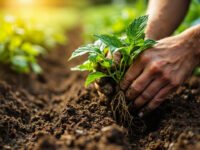
Make the hole about twice the width of the root ball or container but no deeper than the root ball itself. Planting too deep is the single most common mistake, it smothers the crown and stalls growth for a year or more.
2. Set the depth at the same soil line
The point where the trunk met soil in the nursery pot should sit level with, or very slightly above, your native soil line once you are done. Settling will pull it down slightly over time.
3. Space trees 10 to 20 feet apart
Standard fig varieties spread wide, 10 to 15 feet is typical for a maintained tree, more if left unpruned. If you are training one against a wall or keeping it as a large shrub, 8 to 10 feet is workable.
4. Backfill and water in immediately
Fill with native soil, tamp gently to remove air pockets, and water deeply right away, 2 to 3 gallons for a young tree. Do not fertilize at planting, fresh roots do not need the push and can burn.
Getting the tree in the ground correctly buys you an easy first season, watering it right buys you every season after.
Watering and Feeding Through the Season
Water deeply once or twice a week through the first growing season, enough to soak the root zone 12 to 18 inches down, then let the top few inches dry before watering again. Once established, mature figs handle short dry spells well and actually produce sweeter fruit under slightly restricted water late in the season.
If you assumed more water equals more figs, that is the guess that costs people their crop. Overwatering, especially in heavy soil, causes fruit drop and root rot far more often than drought does.
Feed lightly. A balanced fertilizer applied once in early spring is usually enough, or a half-strength dose split between early spring and early summer if your soil is very sandy. Too much nitrogen gives you a jungle of leaves and few figs.
Mulch 2 to 3 inches deep around the base, kept a few inches off the trunk, to steady soil moisture and insulate roots going into winter.
Good watering habits keep the tree alive, but it is the problems below that decide whether it fruits.
Problems That Actually Strike Fig Trees
Winter dieback is the big one outside zone 8. After a hard winter, scratch the bark with a fingernail partway up the trunk, if it is green underneath, that section is alive; brown and dry means dieback, and you cut back to live wood in spring. This is the sign most people never check, they just wait for leaves and assume the worst when the tree is slow to wake up.
Fig rust and leaf spot show up as yellow-brown spots on leaves in humid summers. They rarely kill the tree but do weaken it over years. Clean up fallen leaves in fall and improve airflow by thinning crowded branches.
Root-knot nematodes and root rot both trace back to soil problems, drainage for rot, sandy infested soil for nematodes. There is no home cure for either once established, prevention through good siting is the real fix.
Birds and squirrels will take ripe fruit before you do if you let them, netting over a small tree is the most reliable control.
If any dieback, rot, or pest problem looks severe or is spreading fast, a local extension office or nursery can confirm what you are dealing with before you cut into healthy wood by mistake.
Handle these threats early and the tree rewards you with the part everyone has been waiting for.
When and How to Harvest Figs
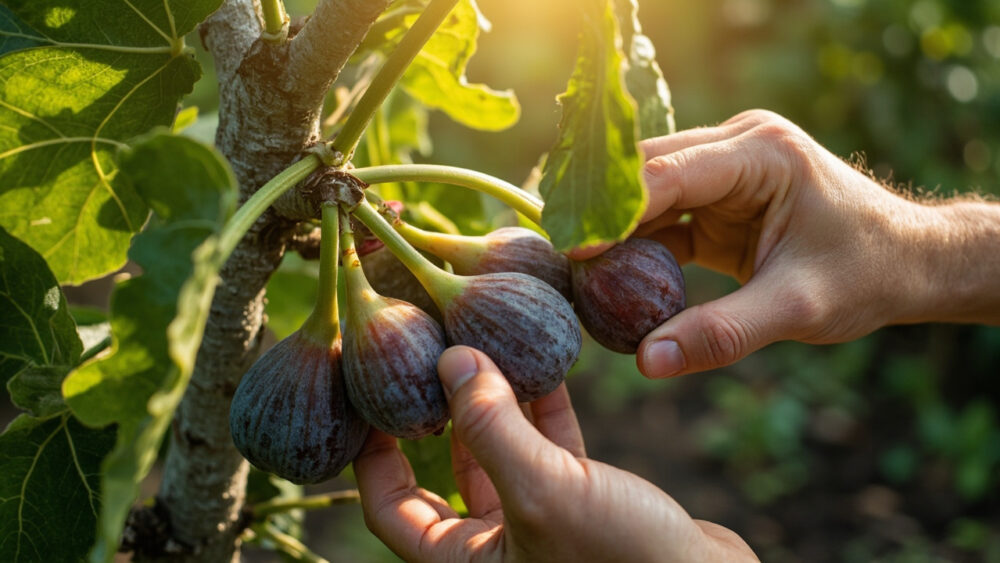
Figs are ripe when they soften, droop slightly on the stem, and the skin color deepens fully for the variety, often with a small crack or bead of nectar at the eye end. Color alone lies, a fig that looks ripe but still stands firm and upright is not ready.
The honest timeline nobody puts on the tag: a young tree planted this spring may give you a light taste by its second or third year, but a full, reliable harvest usually takes three to five years. Container trees and warm climates trend toward the faster end.
Most varieties bear over several weeks, not all at once, so you will be picking every day or two once the main flush starts, typically mid to late summer for the main crop, with some varieties adding a smaller early summer crop on the previous year’s wood.
Pick by hand with a gentle twist, figs do not ripen further once removed from the tree. Handle them carefully, they bruise fast and do not store long, a day or two in the fridge is about the limit for peak quality.
That is the whole cycle from bare root to full basket, now here is everything worth saving in one place.
Figs at a Glance
- When to plant: early spring, two to four weeks before last frost for bare-root trees, or fall in zones 8 and warmer.
- Site: full sun, six to eight hours minimum, sharp drainage, south-facing wall helpful in cooler zones.
- Soil: average fertility is fine, pH 6.0 to 6.5, mound planting in heavy clay.
- Spacing and depth: 10 to 20 feet apart, planted at the same depth as the nursery pot, never deeper.
- Watering: deep soak once or twice weekly while young, then tolerant of dry spells once established.
- Feeding: light, once in early spring, more nitrogen means more leaves and fewer figs.
- Harvest: when fruit softens and droops, mid to late summer for the main crop, three to five years to full production.
Get the drainage and planting depth right and figs mostly grow themselves.
Everything else on this list is just protecting that good start.