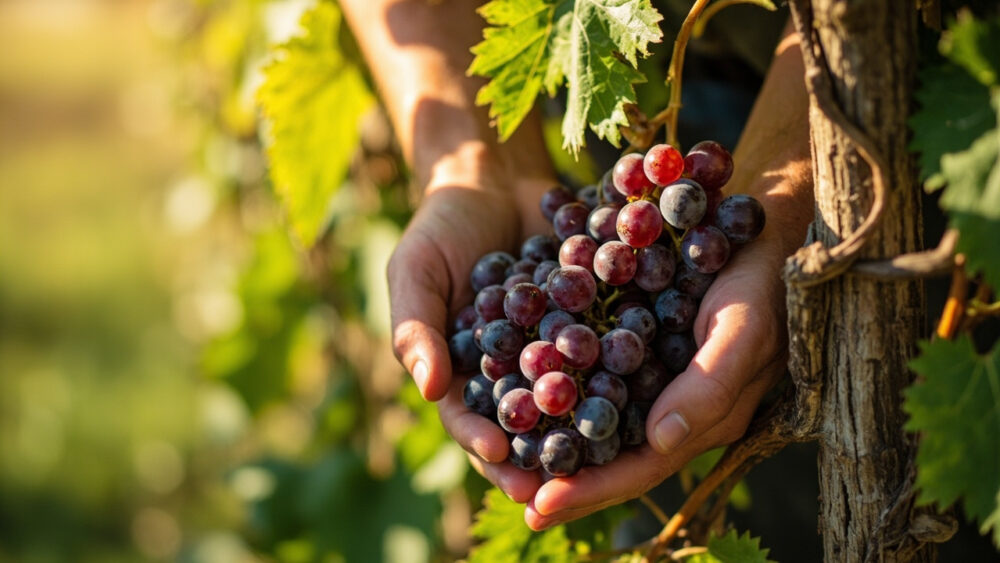
Growing muscadine grapes starts with planting dormant, bare-root vines in late winter to early spring once the soil can be worked, spacing them 16 to 20 feet apart on a sturdy trellis in full sun, and then giving them two to three years of patient training before you see a real crop. That timeline surprises people who expect grapes fast. Muscadines reward patience with something no other grape can match: real heat and humidity tolerance and near immunity to the diseases that wreck bunch grapes in the Southeast.
Here is what nobody tells you up front. The mistake that costs most beginners their first two seasons is not watering or feeding, it is pruning too gently because cutting back a vine feels wrong. There is also a sign on the vine everyone misreads as disease when it is actually normal, and a question about pollination that trips up almost every first-time grower with only one plant.
All of that gets answered below, in order, and at the bottom you’ll find a save-able Muscadine Grapes at a Glance card with the numbers you’ll want to check again next spring.
When to Plant Muscadine Grapes
Plant dormant bare-root vines in late winter to early spring, roughly four to six weeks before your last expected frost, as soon as the soil is workable and not waterlogged. Container-grown vines are more forgiving and can go in anytime from spring through early fall, though spring planting still gives the best root establishment before summer heat arrives.
Muscadines are native to the warm, humid Southeast and thrive in USDA zones 7 through 9, tolerating brief dips into zone 6 if you pick a hardy cultivar and give some winter protection the first year or two. In colder zones this vine will struggle and often fails to ripen fruit before frost, so be honest about your climate before you commit a trellis system to it.
Soil temperature matters less here than it does for vegetables, but wait until the ground has thawed and drained, not just thawed.
Get the site right before the vine ever goes in the ground, because that decision is permanent.
Choosing the Spot and Preparing the Soil
Muscadines need full sun, at least 7 to 8 hours a day, and good air movement to keep the foliage dry. Pick a spot with room for a permanent trellis, since these vines live and produce for decades once established.
Soil drainage is the real test. Muscadines tolerate poor, sandy, even slightly acidic soil far better than they tolerate wet feet. Dig a hole a foot deep before you commit to a site; if water stands in it after a heavy rain, move over or build a raised planting mound.
Aim for a soil pH between 5.5 and 6.5. Work compost into the planting area but skip heavy fertilizer at planting time, since it can burn young roots and push soft growth that winter will kill back.
Once the ground drains well and the sun is unobstructed, the next decision is how far apart to space each vine.
Planting Muscadine Grapes Step by Step
1. Set the trellis first
Install a single-wire or double-wire trellis, wires strung at about 5 and 6 feet high on sturdy posts, before you plant. Retrofitting a trellis around an established vine is a miserable job you only do once.
2. Space vines 16 to 20 feet apart
Muscadines are vigorous and will fill that distance within a few years. Crowding them closer just means constant fighting with tangled canopy and poor air circulation later.
3. Dig a wide hole, not a deep one
Dig about 12 to 15 inches deep and twice as wide as the root spread. Set the vine so the topmost roots sit an inch or two below the soil surface, the same depth it grew at the nursery.
4. Backfill, water, and cut back hard
Firm soil around the roots, water deeply to settle it, then prune the vine back to two or three strong buds. This feels drastic. It is exactly right, and it is the single step most beginners skip or do halfheartedly.
That first hard cutback is where the real training of the vine begins.
Watering and Feeding Through the Season
Water new vines deeply once or twice a week through their first summer, aiming for the top 6 to 8 inches of soil staying moist but never soggy. Established vines, three years and older, are drought-tolerant and usually need supplemental water only during extended dry spells or when fruit is sizing up.
Feed lightly. A balanced fertilizer applied in split doses in early spring and again after bloom is plenty; muscadines that get too much nitrogen grow lush leaves and weak, disease-prone canes instead of fruit.
Mulch 2 to 3 inches deep around the base, kept a few inches off the trunk itself, to hold moisture and choke weeds.
The training and pruning you do this season decides how much fruit you get for years afterward.
Training and Pruning: The Step Nobody Wants to Do Right
Muscadines fruit on new growth that comes off last year’s wood, so they need aggressive pruning every winter once established, cutting side shoots back to just two or three buds. Skip this and the vine turns into a tangled thicket that produces less fruit, not more.
In year one, train a single strong shoot straight up to the trellis wire and pinch off everything else. In year two, let two side arms develop along the top wire in each direction.
If you assumed a bigger, bushier vine means a bigger harvest, that guess is exactly backward with muscadines. An unpruned vine buries its fruiting wood in shade and produces small, scattered clusters instead of the heavy, exposed bunches a well-pruned vine sets.
Once the framework is trained, the next worry is usually something on the leaves or fruit that looks like trouble but often isn’t.
Problems to Watch For, and the Sign That Isn’t Actually a Problem
Muscadines resist the fungal diseases that plague bunch grapes, which is their whole reputation, but they are not bulletproof. Watch for black rot and bitter rot in wet years, especially with poor air circulation, and treat with a fungicide labeled for grapes, following the product label exactly on timing and rate.
Japanese beetles and grape berry moth can show up too. Handpicking beetles in early morning and keeping fallen fruit cleaned up from under the vine goes a long way before you reach for anything else.
Here’s the sign everyone misreads: muscadine skins are naturally thick, tough, and often develop small russeted or corky patches as fruit ripens. That is not disease. That is just how a healthy muscadine skin looks at full maturity.
The other question that trips people up has nothing to do with disease at all, it’s about pollination.
The Pollination Question Almost Everyone Gets Wrong
Many older and some modern muscadine cultivars are female-flowered only and cannot set fruit alone. If you planted a single vine of one of these types expecting grapes, you will get vigorous growth and no fruit, ever, no matter how well you tend it.
The fix is simple once you know it: plant a self-fertile (perfect-flowered) cultivar nearby, or plant at least one self-fertile variety within about 30 to 50 feet to pollinate any female types. Check the tag or catalog description before you buy, since this one detail decides whether your vine ever fruits at all.
Get pollination right and the only thing left to figure out is when those clusters are actually ready to pick.
When and How to Harvest Muscadine Grapes
Muscadines ripen in late summer to early fall, typically August through October depending on your climate and the cultivar, roughly three to four months after bloom. Unlike bunch grapes, muscadines ripen unevenly and drop individually from the cluster rather than all at once.
The real test is taste and drop. Pick a berry, taste it for full sweetness, and check whether ripe fruit releases easily from the stem with a gentle tug. Many growers simply spread a tarp under the vine and shake the trellis, collecting what falls, then repeat every few days as more berries ripen.
Expect your first meaningful harvest in year three, with vines hitting full production around year five to seven.
Everything above works better with the numbers in front of you, so here’s the card worth saving.
Muscadine Grapes at a Glance
- When to plant: late winter to early spring, four to six weeks before last frost, once soil drains well and is workable.
- Best zones: USDA 7 through 9, with some hardy cultivars tolerating zone 6 with winter protection.
- Spacing: 16 to 20 feet apart on a trellis, with wires set around 5 and 6 feet high.
- Planting depth: roots set an inch or two below soil level, same depth as at the nursery, then cut back to two or three buds.
- Sun and soil: full sun, 7 to 8 hours minimum, well-drained soil, pH 5.5 to 6.5.
- Pollination: confirm self-fertile versus female-flowered cultivars before buying. Plant a self-fertile variety within 30 to 50 feet if needed.
- Harvest window: late summer to early fall, three to four months after bloom, ripe fruit releases with a gentle tug.
Get the trellis, the spacing, and the pollination pairing right before you plant, and the vine does the rest on its own schedule.
The only thing left is the pruning shears every winter, and the nerve to actually use them.