To grow passion fruit from seed, soak fresh seed for 24 hours, nick or sand the hard outer coat, then sow it a quarter inch deep in warm, moist potting mix and keep it at 75 to 85°F. Germination is slow and uneven, anywhere from two weeks to two months, so patience matters more than skill here. Get past that stretch and you are looking at a vine that can flower within a year and bear fruit twelve to eighteen months after sowing, sometimes longer.
Most people who try this quit during germination because nothing seems to be happening, and that is the mistake that ends more attempts than any watering error or cold snap. There is also a step almost everyone skips that cuts weeks off the wait, and a sign at the base of the seedling that tells you whether it is actually growing or just sitting there stalled.
Stick around and you will get all of it, plus a save-able Passion Fruit at a Glance card at the bottom with the numbers you will want pulled up on your phone the day you actually sit down to plant.
When to Start Passion Fruit Seeds
Passion fruit is a tropical and subtropical vine, and it has zero tolerance for frost at any stage. Start seeds indoors about 8 to 10 weeks before your last expected frost date, so the seedling has real size on it by the time outdoor conditions are safe.
Direct sowing outside only makes sense in true tropical or near-tropical climates, USDA zones 10 and 11, where soil temperatures sit above 70°F for most of the year. Everywhere else, indoor starting under lights is not optional, it is the only path that works.
Soil needs to be reliably at or above 65°F before any seedling goes outside, and night air should stay above 50°F.
Timing the start is easy, getting the seed to actually sprout is the real test.
Sowing Step by Step
Here is the sequence that actually gets passion fruit seed to germinate instead of sitting in the pot doing nothing:
- Scarify the seed: rub each seed lightly on fine sandpaper or nick the coat with a nail file, this is the step almost everyone skips and it is the single biggest speed-up available to you.
- Soak 24 hours: warm water, room temperature is fine, this softens what scarifying opened up.
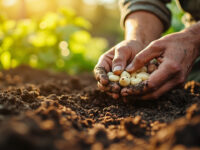
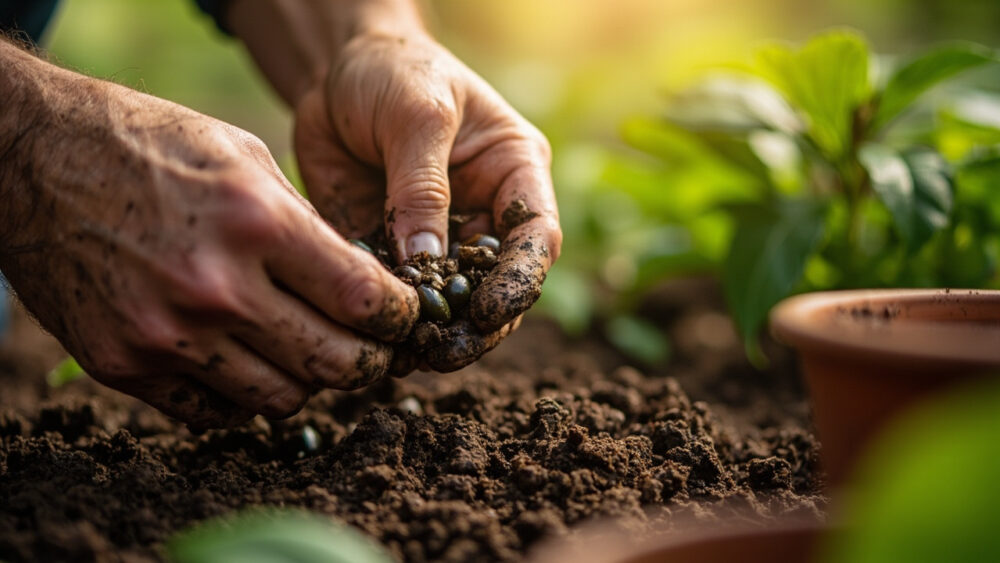
- Sow a quarter inch deep in a well-draining seed-starting mix, not garden soil, in small pots or cells.
- Keep medium moist, never soggy, covered loosely with plastic wrap or a humidity dome to hold moisture.
- Hold temperature at 75 to 85°F, a seedling heat mat is worth using here, this is tropical seed and it will not sprout in a cool room.
- Give bright indirect light until germination, then move to full light once sprouted.
Do all of that and you have removed every controllable variable, now it is just a waiting game.
Germination: What to Expect and When to Actually Worry
If you assumed germination would take a week like a tomato or a pepper, that guess is what causes most people to give up and toss the pot. Passion fruit routinely takes two to four weeks, and stragglers can take six to eight weeks even when everything was done right.
Uneven sprouting is normal. Seeds from the same fruit, sown the same day, in the same tray, will come up on wildly different schedules. That is not a sign of bad seed or bad technique, it is just how this plant behaves.
The real sign of trouble is not slowness, it is rot: a seed that goes soft, dark, or fuzzy in wet mix before it ever sprouts is done. If your mix stayed appropriately moist rather than wet and nothing has emerged by ten weeks, the seed likely was not viable, not that you failed the process.
Once a seedling is up, check the base of the stem, not the leaves, for the next milestone.
Hardening Off and Transplanting
The sign everyone misreads is leaf color. New passion fruit seedlings often have pale or slightly yellow-green new growth, and people read that as a nutrient problem and start feeding heavily right away. It is usually just juvenile foliage; the real thing to watch is whether the base of the stem is thickening and turning slightly woody, that is what tells you the plant is actually establishing.
Wait until the seedling has 4 to 6 true leaves and roots filling its pot before transplanting, usually 8 to 12 weeks after sowing.
Harden off over 7 to 10 days, starting with an hour or two of sheltered outdoor time and building up gradually, before any frost-free date arrives with soil consistently above 65°F.
Transplant into a spot with full sun, 6 or more hours a day, and rich, well-draining soil, spacing vines 8 to 15 feet apart if you are growing more than one.
A passion fruit vine transplanted without a trellis already in place is a vine you will be fighting all season.
Building the Trellis and Getting Through the First Season
This plant is an aggressive climber and it needs sturdy support in place at transplant time, not added later. A fence line, arbor, or heavy trellis at least 6 to 8 feet tall works, string or wire for the tendrils to grip.
Water deeply once or twice a week, more in real heat, less in cool or rainy stretches, letting the top couple inches of soil dry between waterings. Passion fruit hates both drought stress and waterlogged roots equally.
Feed with a balanced fertilizer every 4 to 6 weeks through the growing season, easing off nitrogen once vines are established since too much nitrogen buys you leaves at the expense of flowers.
Pinch or train the main leader onto the trellis early, and prune side shoots that wander off-structure to keep growth productive rather than tangled.
Growth through the first season is mostly about vine and root, the fruit comes later than most people expect.
Bloom and Harvest: The Honest Timeline
Here is the follow-up question every reader has by this point: how long until there is actual fruit. Vines grown from seed typically need 12 to 18 months to reach flowering size, sometimes longer in cooler climates or containers, compared to 6 to 12 months for a grafted or cutting-grown plant. That gap is the real tradeoff of starting from seed: it is cheap and satisfying, but it is the slow road.
Flowers appear as striking, complex blooms, usually opening for a single day. Fruit follows 60 to 90 days after successful pollination, and bees or hand-pollination help a lot since some varieties do not self-pollinate reliably.
Fruit is ripe when it drops from the vine on its own or the skin goes deeply colored and slightly wrinkled, never harvest it green and expect it to ripen well off the vine.
Once you know the wait is measured in seasons and not weeks, the whole project makes a lot more sense, and the card below is what to keep handy while you get there.
Passion Fruit at a Glance
- When to start seeds: indoors, 8 to 10 weeks before your last frost date, using bottom heat at 75 to 85°F.
- Depth and medium: a quarter inch deep in well-draining seed-starting mix, kept moist, not wet.
- Germination time: 2 to 8 weeks, uneven timing is normal, rot in the seed is the only real warning sign.
- Transplant timing: after hardening off, once soil holds above 65°F and nights stay above 50°F.
- Spacing and site: full sun, 6 or more hours daily, 8 to 15 feet between vines, sturdy trellis in place before transplant.
- Water and feed: deep watering once or twice weekly, balanced fertilizer every 4 to 6 weeks, light on nitrogen once established.
- Time to fruit: 12 to 18 months from seed to first harvest, fruit ripens 60 to 90 days after bloom.
The seed itself is the easy part, the trellis and the twelve-month wait are what actually decide whether you get fruit.
Get the scarify-and-soak step right and you have already skipped the mistake that stalls most attempts before they start.