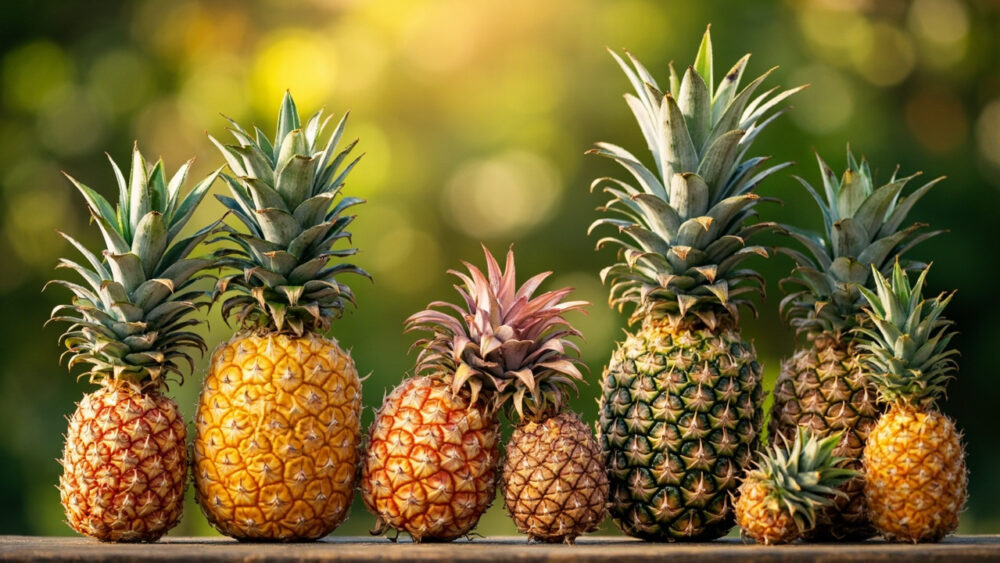
The fastest way to narrow down pineapple varieties is to decide whether you want fruit, foliage, or both, because the plants grown for eating and the plants grown for their leaves are often two different animals. Some pineapple varieties throw a five-pound fruit and forgettable leaves, others carry gorgeous striped foliage and a fruit not worth the wait. Whichever way you lean, the plant you pick has to survive the wait: a pineapple takes 18 to 24 months from planting to fruit, longer in a container than in the ground.
The variety almost everyone reaches for first is Smooth Cactus, mostly because it is what shows up at the grocery store, but it is not actually the easiest one for a home gardener to fruit in a pot. Meanwhile a few of the smaller ornamental types quietly outperform it for anyone growing on a patio or windowsill. Number 13 on this list is the one most people misjudge completely, assuming it is purely decorative when it is actually one of the better eating pineapples for tight spaces.
The last few entries below, plus a straightforward method for choosing between them, are sitting at the bottom of this list. Get through the categories first and you will know exactly which one matches your space and your patience.
Classic Eating Pineapples
These are the varieties bred and selected for fruit quality, the ones you grow if dessert is the whole point.
1. Smooth Cactus
The supermarket standard, Smooth Cactus has spineless leaves, a large cylindrical fruit, and mild sweetness with low acidity. It grows 3 to 4 feet tall and wide, wants full sun, and tolerates heat better than cold, making it solid for USDA zones 10 to 11 or a large container anywhere else.
2. Sugarloaf
The one grown for sweetness over shelf life, Sugarloaf has white to pale yellow flesh, almost no acid bite, and a fruit that bruises easily, which is why you rarely see it shipped commercially. It is worth growing at home specifically because you get to eat it at full ripeness instead of picking it green for transport.
3. Red Spanish
The tough, storage-friendly type, Red Spanish has a squat, barrel-shaped fruit with tart, fibrous flesh and reddish-orange skin. It handles drought and poor soil better than most eating varieties, which makes it a forgiving choice if your watering schedule is inconsistent.
4. Kona Sugarloaf
The Hawaiian selection prized for aroma, Kona Sugarloaf produces a cylindrical, nearly coreless fruit that is intensely fragrant and sweet with barely any tartness. It needs consistent warmth and humidity to perform, so it is a better match for a bright sunroom or greenhouse than a dry windowsill.
5. Natal Queen
The small, crisp-fleshed variety, Natal Queen produces a golden-yellow fruit with a distinct crunch and high sugar content, plus spiny leaves that mean gloves are non-negotiable at harvest. Its compact size, usually under 3 feet, makes it one of the better fruiting choices for a large pot.
Those are the pineapples people actually eat, but the ornamental side of the family plays a completely different game.
Ornamental and Variegated Types
Grown mainly for their striped or colored foliage, these varieties still fruit, but the leaves are the reason you keep them.
6. Ivory Coast (Variegated Smooth Cactus)
The white-striped showpiece, Ivory Coast has cream and green longitudinal stripes on spineless leaves, plus pink blushing when light is bright enough. It stays a manageable 2 to 3 feet, tolerates indoor light better than most fruiting types, and fruits with a rosy tint if you get it to bloom.
7. Tricolor
The most colorful houseplant pineapple, Tricolor layers pink, cream, and green in its leaves, with color intensifying under strong light and cooler nights. It rarely fruits well indoors, so treat it as foliage first and any fruit as a bonus, not the goal.
8. Champaca (Ananas bracteatus)
The one with genuinely sharp spines, Champaca has serrated red-tinged leaves and an ornamental fruit that is edible but sour and seedy, not worth eating fresh. It is grown almost entirely for its dramatic, spiky rosette, so give it space away from foot traffic and pets.
9. Pink Champaca
A softer-colored cousin of Champaca, this type carries rose and burgundy tones through the leaf margins and a small, tart fruit that is more decorative than delicious. It handles part shade slightly better than the fruiting types, which makes it useful for a bright but not blazing spot.
10. Striped Dwarf
The tabletop option, Striped Dwarf tops out under 12 inches with narrow cream-and-green leaves and a miniature fruit that is mostly for show. It is one of the few pineapples that genuinely thrives as a permanent windowsill plant without ever needing repotting into something enormous.
If foliage was your reason for clicking, one of those five earns a spot, but the miniature types below solve a different problem entirely.
Miniature and Container-Friendly Pineapples
These stay small on purpose, which matters if a full-size pineapple plant would eat your patio.
11. Pina Colina
A true dwarf bred for pots, Pina Colina rarely exceeds 18 inches and still produces a small, sweet fruit in proportion to its size. It is one of the more reliable choices for a sunny apartment balcony because it does not sprawl the way full-size types eventually do.
12. Ananas nanus
The species behind most miniature ornamental pineapples, Ananas nanus produces a fruit barely 2 to 3 inches long that is more novelty than food, tart and mostly seed. Its small scale and tolerance of bright indirect light make it one of the easiest pineapples to keep alive indoors year-round.
13. Queen Victoria (Baby Victoria)
This is the variety most people misjudge, assuming it is purely ornamental because of its small size and bright orange-yellow skin. It is actually one of the sweetest eating pineapples available, with tender, low-fiber flesh you can eat right to the core, and its compact 2 to 3 foot frame makes it genuinely practical for container fruiting, not just foliage.
14. Pygmy Pineapple (Ananas ananassoides)
The smallest true species in the group, Pygmy Pineapple stays under a foot tall with grassy, narrow leaves and a fruit the size of a golf ball. It suits a collector who wants the novelty of a fruiting pineapple in a 6-inch pot more than anyone after actual dessert.
Small varieties solve the space problem, but one more category solves the patience problem.
Fast-Fruiting and Beginner-Friendly Picks
If waiting two years feels like a dealbreaker, this last entry shortens the timeline the most reliably.
15. MD-2 (Golden Sweet)
The commercial hybrid bred for speed and consistency, MD-2 fruits somewhat faster than heirloom types under good conditions, with high sugar, low acid, and a bright golden color even before full ripeness. It is widely available as a store-bought crown to root, which makes it the easiest variety for a first attempt since you are not hunting down a specialty offset.
With all fifteen in front of you, the real question is which traits actually matter for your space.
How to Choose the Right One
- Measure your space first: anything under 2 feet at maturity, like Pina Colina or Striped Dwarf, works on a windowsill or small patio, while Smooth Cactus and Red Spanish need real floor space or a large tub.
- Match your climate: zones 10 to 11 or a heated greenhouse can grow any type outdoors year-round, while colder zones need a container that can move inside before nighttime temperatures drop below the mid-50s Fahrenheit.
- Decide if you want fruit or foliage: variegated types like Tricolor and Ivory Coast prioritize leaf color over fruit quality, while Queen Victoria and Sugarloaf prioritize flavor.
- Be honest about your patience: 18 to 24 months to first fruit is standard, so if that feels long, start with a rooted crown of MD-2 rather than starting from seed.
- Check your light: full sun for 6 or more hours a day is non-negotiable for fruiting varieties, while ornamental dwarfs tolerate bright indirect light if fruit is not the goal.
- Consider handling: spiny types like Champaca and Natal Queen require gloves at every stage, so a spineless Smooth Cactus is friendlier if kids or pets share the space.
Pick based on the space you actually have and the timeline you can actually stick to, not the variety that just happens to look best online.
Any of these fifteen will reward you if you match it to your light and your patience honestly.