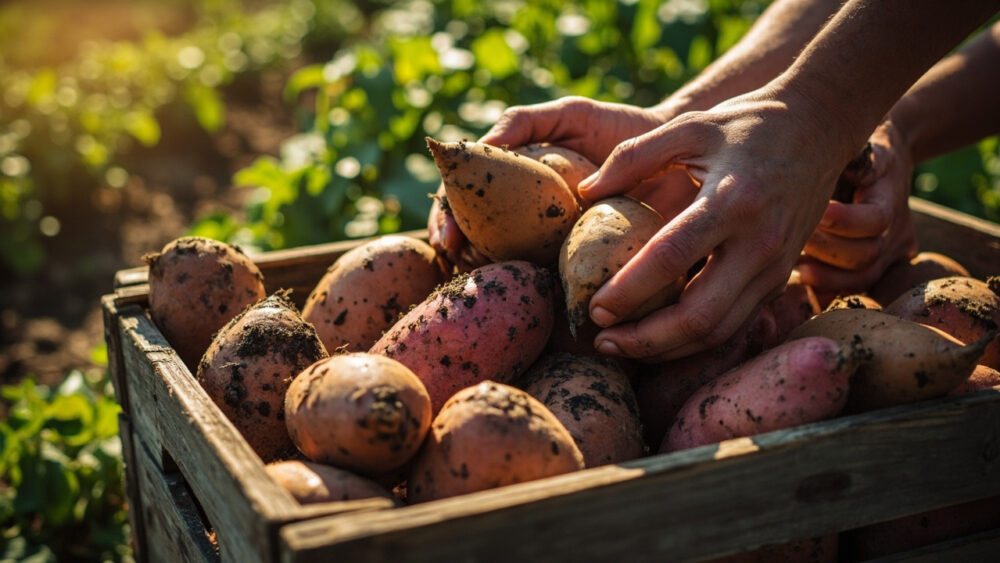
The right way to store sweet potatoes is cured first, then kept in a cool, dark, dry spot around 55 to 60°F, never in the refrigerator. Done right, they last 3 to 6 months on a shelf. Skip the curing step, and you are lucky to get a few weeks before they go soft and sprout.
Most of what ruins a batch happens before storage even starts. The mistake almost everyone makes is treating a sweet potato like a regular potato: washing it, cooling it fast, tossing it in the crisper drawer. That single move is the difference between a harvest that carries you to spring and one that turns to mush by Thanksgiving.
Below I will walk through curing, the actual storage method, how long each option really keeps, and the exact signs that tell you a sweet potato is done for. Stick around for the Sweet Potatoes at a Glance card at the bottom, it is the version worth saving to your phone before you forget any of this.
Curing: The Step That Decides Everything
If you grew your own or bought them fresh off a farm truck, curing comes first, before any storage decision matters. Curing means holding the roots at 80 to 85°F with high humidity for 4 to 7 days. This heals the skin, converts some starch to sugar, and thickens the skin so it resists rot.
A warm room, a spot near a furnace, or a greenhouse in early fall all work. No special equipment is required, just steady warmth.
Skip curing on grocery-store sweet potatoes, they are almost always cured commercially before they hit the shelf.
Curing is also where the “wash them first” instinct backfires.
Do Not Wash Before Storing
This is the guess almost everyone gets wrong. It feels responsible to hose off garden dirt before putting anything away, but with sweet potatoes that moisture is exactly what invites rot during storage.
Brush off loose soil dry, with your hands or a soft brush, and leave the skins on. Do not scrub, do not rinse, do not peel. Wash them only right before you cook them, not before they go into storage.
Blanching does not apply here either unless you are prepping cooked sweet potato for the freezer, which is a separate step covered below.
Dry roots and thick skins are your best defense, the next question is where to actually put them.
The Best Storage Method, Step by Step
Once cured (or store-bought and ready), sweet potatoes want a cool, dark, moderately humid spot, not the fridge.
- Choose a spot that stays 55 to 60°F: a basement, an unheated closet, a cool pantry, or a garage that does not freeze.
- Lay them in a single layer in a cardboard box, wooden crate, or paper bag, not sealed plastic.
- Keep them out of direct light, light encourages sprouting and greening.
- Do not stack them more than two or three deep, weight bruises the skin and bruises rot fast.
- Check every couple of weeks and pull any that are softening before they spread trouble to their neighbors.
That is the entire method, no bags of sand, no wrapping in newspaper required, though newspaper between layers helps if you are storing a large harvest.
How long that actually buys you depends on which storage route you take.
How Long Sweet Potatoes Actually Keep
Here is the honest breakdown, because “store them properly” means different things depending on the method.
- Cool, dark, cured storage (55 to 60°F): 3 to 6 months, sometimes longer in ideal conditions.
- Room temperature counter (68 to 75°F): 1 to 2 weeks before they start to soften or sprout.
- Refrigerator: a few days at most before the flesh turns hard and mealy and the flavor goes off, this is not a real storage option for raw sweet potatoes.
- Cooked and refrigerated: 3 to 5 days in a sealed container.
- Frozen, cooked and mashed or cubed: 10 to 12 months.
Notice the fridge is the shortest window of all, which surprises people who assume cold always means longer storage.
That assumption is worth unpacking, because it is the second big mistake.
Why the Refrigerator Is the Wrong Answer
If you assumed the fridge is always the safe choice for produce, sweet potatoes are the exception that proves that wrong. Temperatures below about 50°F cause chilling injury, a cold-damage reaction that turns the core hard, gives the flesh an off taste, and speeds internal decay you cannot see from outside.
Once chilled, a sweet potato does not recover even if you move it back to room temperature.
The fix is simple: raw, uncooked sweet potatoes belong in a cool room, not a cold appliance.
Cooked sweet potatoes are a different story entirely, and that is where the freezer earns its keep.
Freezing: Only After Cooking
Raw sweet potatoes do not freeze well, the texture turns watery and grainy once thawed. Cook them first: bake, boil, or roast until tender, then mash, cube, or puree before freezing.
Spread cubes on a tray to freeze solid before bagging, this keeps them from clumping into one frozen brick. Mash or puree can go straight into freezer bags or containers, pressed flat for faster thawing later.
Leave headspace in containers, the mixture expands slightly as it freezes.
Labeled and dated, frozen cooked sweet potato is the most forgiving storage option you have, but knowing when raw ones have already gone bad matters just as much.
The Signs a Sweet Potato Has Turned
A few sprouted eyes on an otherwise firm sweet potato is not a crisis, trim them and use the potato normally.
What is a real problem:
- Soft, mushy spots that give under light pressure, especially near the ends.
- A sour or musty smell when you bring it close, fresh sweet potatoes smell like nothing much at all.
- Dark, sunken patches on the skin, often with a slightly wet look.
- Visible mold, white, black, or greenish, anywhere on the skin.
- A shriveled, leathery feel all over, a sign it has dried out past the point of good eating.
Any one soft or moldy potato in a box should come out immediately, rot spreads to whatever it is touching.
Most of these signs trace back to a small handful of repeatable mistakes.
The Mistakes That Actually Ruin a Batch
In order of how often they wreck a storage attempt:
- Washing before storage. Trapped moisture is the single biggest cause of rot.
- Skipping the cure on homegrown potatoes. Uncured skins are thin and vulnerable, they bruise and rot fast.
- Refrigerating raw sweet potatoes. Chilling injury ruins texture and flavor permanently.
- Sealed plastic bags. No airflow means trapped humidity, and trapped humidity means mold.
- Bruised or nicked potatoes stored with the rest. Any broken skin is an open door for rot, sort those out and eat them first.
Fix these five and you have already solved most of what goes wrong in a root cellar or pantry.
The full method boiled down to one card is coming up next.
Sweet Potatoes at a Glance
- Curing: homegrown or freshly dug potatoes need 4 to 7 days at 80 to 85°F with high humidity before storage, skip this for store-bought.
- Best storage spot: cool, dark, and dry, 55 to 60°F, in a box or crate with airflow, never sealed plastic.
- Never refrigerate raw: below 50°F causes chilling injury, hard core, bad flavor, no recovery.
- Shelf life cured and stored right: 3 to 6 months, sometimes longer.
- Shelf life on the counter: 1 to 2 weeks before softening or sprouting.
- Cooked and refrigerated: 3 to 5 days, sealed container.
- Frozen after cooking: 10 to 12 months, cubed or mashed, never freeze raw.
Get the cure right and keep them out of the fridge, and the rest takes care of itself. Everything else on this list is just details around that one decision.