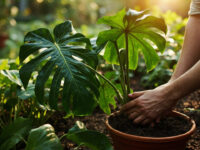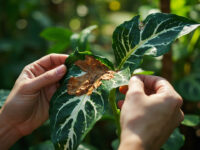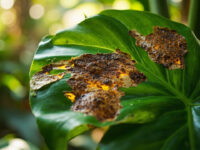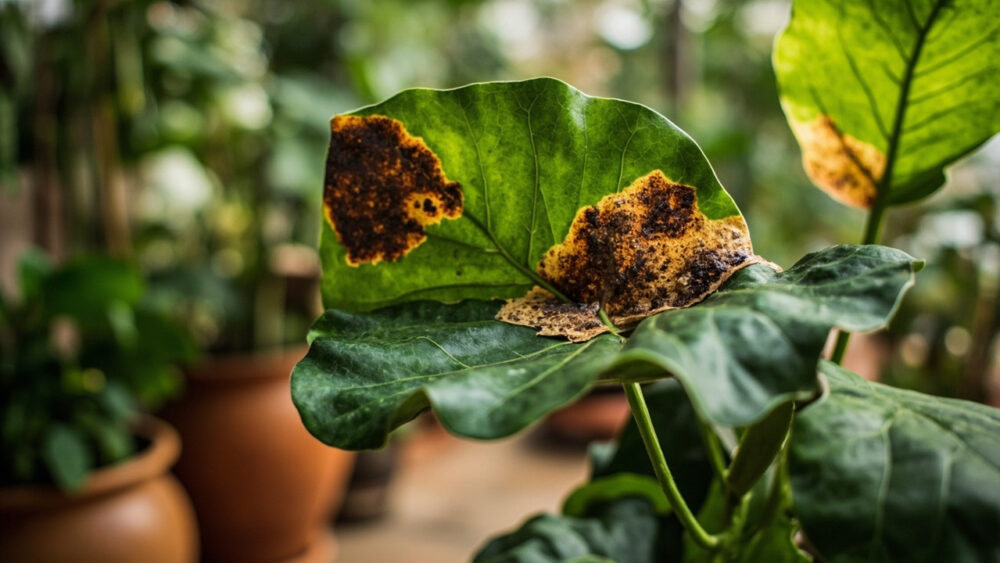
Nine times out of ten, brown patches on a fiddle leaf fig mean the roots are sitting in water they cannot drink fast enough, either from overwatering or from a pot with poor drainage. The fix is to stop watering on a schedule and start checking the soil, then correct the drainage if that is the real problem underneath. But that is not the only cause, and if the plant were sitting next to me right now, I would not guess. I would check three or four specific things on the leaves themselves before touching the watering can.
Most people blame low humidity the second they see brown edges, because that is the advice they remember from every houseplant article they have ever skimmed. It is usually not humidity. Fiddle leaf figs are more forgiving of dry air than their reputation suggests, and chasing humidity while ignoring the real cause is how a lot of these plants get worse instead of better.
The detail that actually tells you what you are dealing with is where the brown starts and which leaves it hits first, new growth at the top or old growth at the bottom, edges or center, spots or solid patches. Stick with me through the causes below and I will show you exactly what to look for, plus the honest odds that your plant bounces back. There is a two-minute diagnosis checklist waiting at the very bottom you can run right now, standing at the plant.
Most Likely Causes, Ranked
1. Overwatering and Root Rot
This is the cause behind most brown fiddle leaf fig leaves, and it is also the most damaging if it goes on too long. Confirm it by sliding the plant out of its pot and looking at the roots: healthy roots are firm and pale tan to white, rotting roots are dark brown or black, mushy, and may smell sour. Brown patches from root rot tend to be large, irregular, and can appear anywhere on the leaf, not just the edges.
Fix it by trimming away every rotten root with clean scissors, repotting into fresh, fast-draining potting mix, and choosing a pot with a real drainage hole. Water only when the top 2 to 3 inches of soil are dry going forward.
Get the roots right and everything else about this plant gets easier.
2. Underwatering and Drought Stress
If you have assumed the plant needs more water because brown leaves look thirsty, that guess is reasonable but often backwards. Underwatering does happen, especially in bright rooms with fast-draining pots, but it looks different from rot. Confirm it by checking soil moisture 2 to 3 inches down: if it is bone dry and has been dry for a week or more, and the leaves feel crispy and light rather than mushy, this is your cause.
Brown from drought usually starts at the leaf edges and tips and spreads inward, and the leaf often curls before it browns.
Fix it with a thorough soak until water runs from the drainage hole, then return to checking soil moisture weekly instead of guessing on a fixed schedule.
Water and rot cause opposite problems but they can look surprisingly alike from across the room, which is exactly why the next section matters.
3. Too Much Direct Sun or a Recent Light Change
Fiddle leaf figs want bright, indirect light, but a plant moved into a south-facing window or onto a sunny patio too fast can get sunburned. Confirm it by checking whether the brown patches sit only on the side of the plant facing the strongest light, and whether the damage is dry, papery, and bleached-looking rather than dark and soft.
Fix it by moving the plant back a few feet from direct sun or adding a sheer curtain, and reintroducing brighter light gradually over a couple of weeks if you want it closer to that window eventually.
Sun damage does not spread once you move the plant, which is a useful clue on its own.
4. Low Humidity and Dry Heat, Not the Main Cause but Real
This is the one everyone jumps to first, and while it is rarely the primary cause, it is a genuine contributor near heating vents, radiators, or forced-air ducts in winter. Confirm it by checking if the browning is concentrated on the newest leaves at the top, appears as crispy brown tips and margins, and correlates with the heat running more.
Fix it by moving the plant away from vents and drafts and running a humidifier nearby if your home regularly sits below 30 percent humidity.
If this is the only issue, it is the easiest one on this list to solve permanently.
5. Cold Drafts or Temperature Shock
Fiddle leaf figs are tropical and do not tolerate cold air, whether from a drafty window, an exterior door, or a recent move outdoors too early in spring. Confirm it by checking whether brown, sometimes water-soaked-looking patches appeared suddenly after a cold night, a car ride, or sitting against a cold window pane.
Fix it by relocating the plant away from drafts and keeping it above roughly 60°F consistently; damaged leaves will not heal but new growth should be fine.
Sudden and sudden-only is the giveaway with cold damage.
6. Fertilizer Burn or Mineral Buildup
Too much fertilizer, or fertilizer applied to dry soil, can scorch roots and show up as brown leaf edges days later. Confirm it by checking for a white or gray crust on the soil surface or pot rim, and recalling whether you fed heavily in the last few weeks.
Fix it by flushing the soil with plenty of plain water to leach out excess salts, and cutting back to a diluted feed only during active spring and summer growth.
Once you have been through all six, the next job is telling them apart on your actual plant.
How to Tell the Causes Apart
Location on the plant is the fastest tell. Bottom, older leaves browning first usually points to overwatering or root rot. Top, newest leaves browning first points more toward low humidity, heat stress, or fertilizer issues.
Texture matters as much as color. Mushy, dark brown patches mean too much water. Dry, crispy, papery brown means underwatering, sun, or dry air.
- Edges and tips only: underwatering, low humidity, or fertilizer burn.
- Large irregular patches anywhere on the leaf: overwatering or root rot.
- One-sided damage facing a window: sunburn.
- Sudden appearance overnight: cold shock.
Once you match the pattern, the prognosis is next, and it is not the same for every cause.
Will It Recover?
Brown leaf tissue never turns green again, on any plant, for any reason. What you are really asking is whether the plant stops losing leaves and starts growing new ones.
Root rot has the widest range of outcomes. Caught early with a handful of rotten roots, recovery odds are good after repotting. Caught late with most of the root system black and mushy, the plant may not make it, and that is worth saying plainly rather than promising a miracle.
Underwatering, sun, cold, and fertilizer burn all have good recovery odds once the cause is removed, because the roots themselves are usually undamaged. Expect a few weeks of no visible improvement before new growth appears.
Low humidity alone almost never kills the plant, it just leaves permanent brown tips on existing leaves until you trim them or new leaves replace them.
In every case, remove leaves that are more than half brown; they will not recover and the plant is better off redirecting energy to new growth.
Recovery is realistic far more often than not, but prevention is what keeps you from doing this diagnosis again next season.
How to Keep It From Happening Again
Check soil moisture with your finger, not a calendar. Water when the top 2 to 3 inches are dry, and let the pot’s drainage and your home’s light and heat decide the interval, not a fixed weekly habit.
Keep the plant in a pot with a drainage hole, always, and use a fast-draining potting mix rather than dense, water-retentive soil.
Place it in bright, indirect light, a few feet back from harsh south or west windows, and keep it away from heating vents, radiators, and cold drafty doors.
Feed lightly during spring and summer growth only, and always water the soil first if it is dry before fertilizing.
None of this is complicated, but skipping it is exactly how the same brown patches come back in a few months.
Diagnosis Checklist
- Check the soil 2 to 3 inches down: if it is soggy, suspect overwatering or root rot, if it is bone dry, suspect underwatering.
- Slide the plant from its pot if soggy: look for dark, mushy, foul-smelling roots to confirm rot.
- Note which leaves are affected: older bottom leaves point to water issues, newest top leaves point to humidity, heat, or feeding issues.
- Feel the brown tissue: mushy and dark means too much water, dry and crispy means underwatering, sun, or dry air.
- Check the pattern: one-sided damage facing a window means sunburn, sudden overnight damage means cold shock.
- Look for a white or gray crust on the soil surface: confirm fertilizer buildup if present.
- Confirm the pot has a drainage hole and the mix drains freely within a minute of watering.
- Trim any leaf that is more than half brown, then apply the matching fix and wait two to four weeks before judging results.
Run through that list once and you will know exactly which fix to make today.
Fiddle leaf figs are dramatic about stress but forgiving about correction, so a calm, specific fix almost always beats a fast, guessed one.