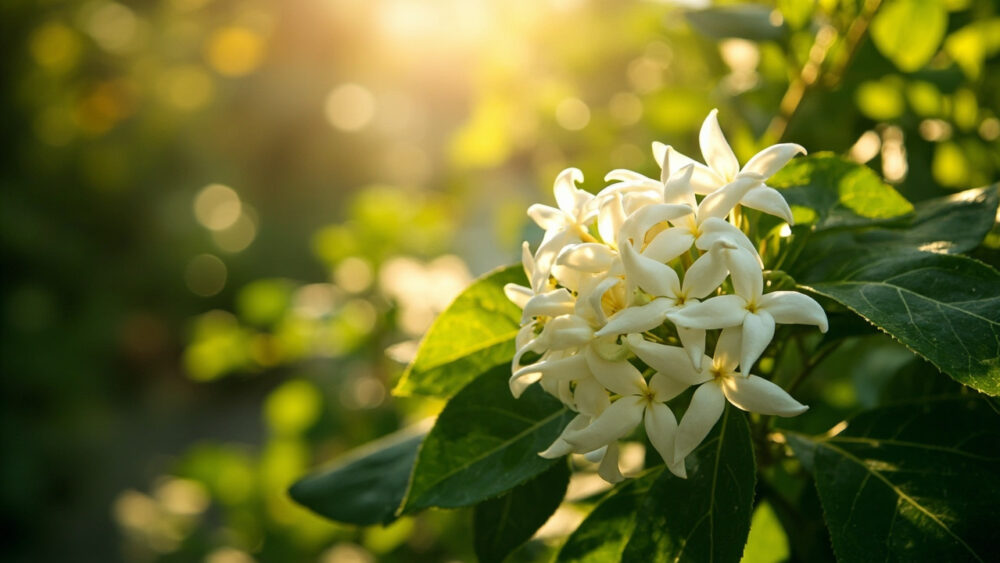
Star jasmine blooms in late spring into early summertypically a six to eight week window somewhere between April and June depending on your climate, with warmer regions starting earlier and sometimes squeezing out a lighter second flush in late summer or fall.
That is the honest range, but your particular vine might be running early, late, or not at all, and the reason usually comes down to one of a handful of specific, fixable things. There is also a real trick to stretching that bloom window longer than the plant would give you on its own, and a common misread of “no flowers” that has nothing to do with fertilizer, even though that is everyone’s first guess.
Stick with me through the sections below and I will show you how to read your own vine’s timing, what actually controls when star jasmine flowers, and how to push for more blooms instead of fewer. Save-able quick-reference card is waiting at the bottom.
The Bloom Window and How Long It Lasts
In mild-winter zones (roughly USDA 8 through 10), star jasmine usually starts flowering in April or May. In cooler pockets of its range, expect May into June instead.
The peak show lasts about three to four weekswith buds opening in waves rather than all at once, so the vine looks fullest in the middle of that stretch. Total flowering, including the slower start and tail end, runs six to eight weeks.
Established plants in full sun bloom hardest and most predictably. Younger vines, or ones in partial shade, often bloom lighter and a little later.
That timing is not fixed though, and a few conditions can shift it earlier, later, or shorter.
What Actually Controls When It Blooms
Star jasmine sets its flower buds based on a combination of day length and a cool-to-warm temperature shift, not a calendar date. That is why the same variety blooms weeks apart in different yards.
Sun exposure is the biggest lever you control. A vine getting six or more hours of direct sun blooms heavier and more on schedule than one tucked against a shady fence.
Winter chill matters too. Star jasmine wants a mild but genuinely cool winter to trigger strong spring bud set; in nearly frost-free climates with little winter temperature swing, bloom can be sparser and more spread out.
Plant age plays a role as well. A vine grown from a small nursery pot often takes two to three years to establish enough wood and root mass to flower heavily, so a young, sparse-blooming plant is not necessarily doing anything wrong.
If your vine is blooming light, the fix usually starts with where you planted it, not what you fed it.
How to Get More Blooms, or a Longer Show
If you assumed more fertilizer means more flowers, that guess backfires with star jasmine more often than it helps.
Heavy nitrogen pushes leafy growth at the expense of flowers. Feed lightly in early spring with a balanced or bloom-formulated fertilizer, and skip feeding entirely once buds appear.
Sun is still the strongest tool you have. If a struggling vine can be moved or has a nearby branch shading it out, opening up more direct light is the single biggest change you can make.
Water consistency also counts. Star jasmine blooms best when the soil stays evenly moist through the weeks leading into bloom, not bone dry and then flooded. Check the top two to three inches of soil; if it is dry there, water deeply rather than giving a light sprinkle.
Prune right after flowering ends, never right before. Cutting back in late winter or early spring removes the buds that were about to open, which is the single most common self-inflicted reason for a disappointing season.
Get the timing of that one pruning cut right, and next year’s bloom takes care of most of the rest itself.
Why It Might Not Be Blooming At All
A star jasmine with plenty of healthy green growth but no flowers usually has one of these going on:
- Not enough sun: fewer than four to five hours of direct light most days will suppress flowering even on an otherwise thriving vine.
- Wrong-time pruning: cutting back in winter or very early spring removes the season’s buds before they open.
- Too much nitrogen: lawn fertilizer runoff or heavy feeding nearby can push leaf growth over flowers.
- Still too young: vines under two to three years old, or recently transplanted ones, often skip or lighten a bloom cycle while they establish roots.
- Root stress: a pot that has become root-bound, or a new transplant still settling in, will often hold off blooming for a season.
None of these are usually fatal to the plant, just to that year’s flower count.
Once you know which one applies, the fix is almost always patience plus one specific change, not a full replant.
Deadheading and Aftercare to Stretch the Show
Star jasmine flowers do not rebloom individually the way roses do, so deadheading spent blooms will not trigger new buds the way it does on some other flowering plants.
What does extend the display is consistent watering and avoiding stress during the bloom weeks, since a vine under drought stress will drop flowers early and shorten the whole window.
After the main flush ends, a light shaping prune (not a hard cutback) tidies the vine and encourages the fuller growth that sets up next year’s bud count.
Keep an eye out for aphids or scale during and after bloom, since both are common on star jasmine and can stress a plant enough to affect next season’s flowering. Treat according to the product label if populations get heavy.
One more thing worth knowing if you have pets or kids around this vine, and it belongs right at the end.
One Safety Note Worth Knowing
Star jasmine (Trachelospermum jasminoides) is generally considered to have low toxicity but can still cause mild stomach upset if a pet or child eats a significant amount of leaves or flowers.
Watch for drooling, vomiting, or diarrhea after ingestion, and call your veterinarian or a poison control line if you suspect a pet has eaten a meaningful amount.
That is a minor footnote next to the bloom question, but worth knowing if this vine is planted near a play area or a curious dog.
Star Jasmine: Quick Reference
- Bloom window: late spring into early summer, roughly April through June depending on climate.
- Peak display: three to four weeks within a total six to eight week flowering period.
- Sun needs: six or more hours of direct sun for the heaviest bloom.
- Prune timing: right after flowering ends, never in late winter or early spring.
- Feeding: light, balanced fertilizer in early spring only, stop once buds form.
- Common no-bloom causes: too much shade, wrong-time pruning, too much nitrogen, young or root-stressed plants.
Get the sun and the pruning timing right, and the rest of the bloom season mostly takes care of itself.
Next year’s flush starts with the choices you make right after this year’s flowers fade.