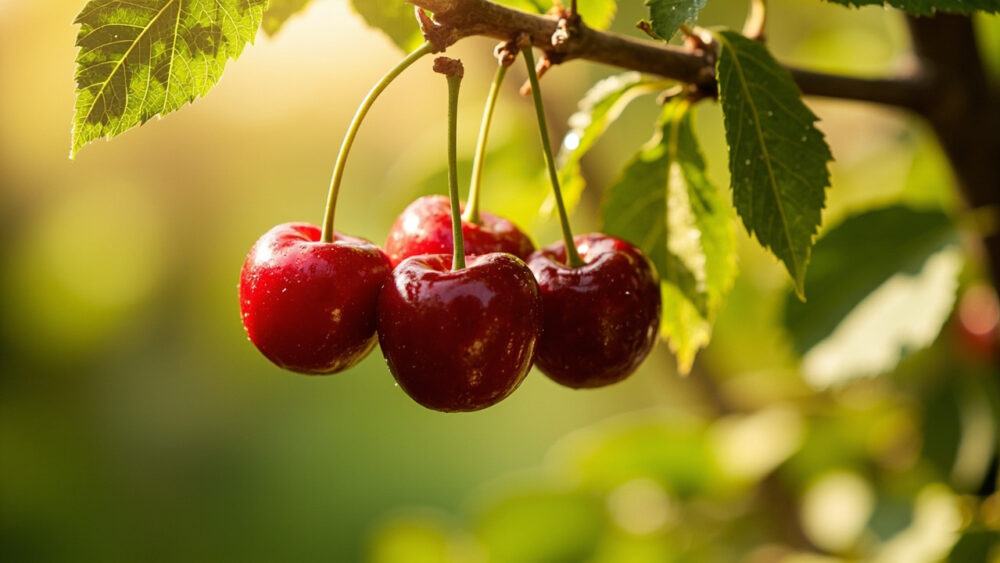
A cherry tree takes 3 to 5 years to produce its first real harvest after planting, and 7 to 10 years to hit full production. That is for a tree started from a nursery sapling, which is how almost everyone should start. If you’re growing from a pit, add years, and possibly a decade, before you see a single cherry.
That range is not a hedge, it is the actual honest spread, and which end you land on depends on things most people never check before planting: the rootstock the tree is grafted onto, whether it is sweet or sour, and how brutal your winters and summers really are on a young tree.
Stick around, because there is a fast trick that shaves real years off this timeline, a slow-start scenario that is completely normal and not a dying tree, and a saveable quick-reference card at the bottom with the numbers side by side.
The Realistic Timeline, Start to First Harvest
Here is the honest breakdown most nursery tags leave out. Year one is establishment: the tree focuses on roots, not fruit, even if it blooms. Years two and three bring more blooms and maybe a token handful of cherries you should mostly let go so the tree keeps building structure.
Years three to five is when sweet cherries typically give a real, pickable harvest for the first time. Sour cherries, like Montmorency, tend to arrive a year or so earlier in that window.
Full mature production, the kind where one tree feeds a family and the birds, takes 7 to 10 years. That is normal, not slow.
The variety you picked is quietly running this whole clock.
What Actually Controls the Speed
Rootstock is the biggest lever most beginners never pull. Dwarf and semi-dwarf rootstocks (like Gisela series for sweet cherries) push fruit years earlier, often by year 2 or 3, because the tree spends less energy growing huge and more energy fruiting. Standard, full-size rootstock trees are the slow ones, often 5 to 7 years to first fruit.
Sweet versus sour matters too. Sour cherries (Prunus cerasus) are faster and more forgiving. Sweet cherries (Prunus avium) are slower, pickier about pollination, and need a compatible pollinator variety nearby unless you bought a self-fertile type.
Climate and zone matter as much as genetics. Cherries need real winter chill (roughly 700 to 1,200 hours below 45°F depending on variety) to break dormancy properly and set fruit. Too little chill in a mild-winter yard stalls things for years, not months.
Your zip code and your rootstock tag are doing more to set this timeline than anything you do with a trowel.
Stage by Stage: What You Should Actually See
Knowing the calendar is one thing, knowing what the tree should look like at each point is what tells you if you’re on track.
- Year 1: mostly leaf and root growth, thin whip-like structure, maybe a few blooms you should pinch off.
- Year 2 to 3: visible branching, heavier bloom in spring, a scattering of fruit some years.
- Year 3 to 5: your first legitimate harvest, likely a few pounds, not a bucket.
- Year 5 to 7: harvests noticeably larger and more reliable year to year.
- Year 7 to 10: full mature yield, 30 to 50 pounds or more per tree for standard sweet cherries in good conditions.
If your tree is skipping stages faster than this, don’t worry, some dwarf rootstocks genuinely do run ahead of this chart.
How to Speed It Up, and What Doesn’t Work
If you assumed heavy fertilizing gets you fruit faster, that guess backfires more often than it helps. Excess nitrogen pushes leafy growth at the expense of fruiting wood, and can actually delay first bloom.
What genuinely works: buying a dwarf or semi-dwarf rootstock instead of standard, buying the largest healthy sapling you can afford instead of a tiny bare-root whip, and pruning correctly in the tree’s early years to build strong scaffold branches rather than letting it grow wild.
Consistent water in the first two years matters more than most people expect, a stressed young tree stalls its whole timeline. Full sun, at least 6 to 8 hours daily, is non-negotiable; shaded cherry trees fruit late and sparse no matter their age.
None of this makes a cherry tree fast. It just keeps it from being slower than it has to be.
When Slow Is Normal, and When It’s a Real Problem
A tree that is 4 years old and hasn’t fruited yet is not necessarily failing, that is still inside the normal window, especially for standard rootstock or sweet varieties without a pollinator partner nearby.
Real red flags look different: no growth at all season over season, dieback creeping in from branch tips, or a trunk that never thickens past its nursery size. Those point to root problems, poor drainage, or graft failure, not just a slow clock.
One more honest note: a lone sweet cherry tree with no compatible pollinator variety within reach of bees can bloom beautifully for years and never set real fruit. That is not a timeline problem, that is a pollination problem, and no amount of waiting fixes it.
The number you actually need to save is coming up right now.
Cherries: Quick Reference
- First harvest: 3 to 5 years after planting a nursery sapling, sooner on dwarf rootstock, later on standard rootstock.
- Full production: 7 to 10 years from planting.
- From seed or pit: add several years to a decade beyond the sapling timeline, and fruit quality is unpredictable.
- Sweet vs sour: sour cherries (Montmorency type) fruit earlier and more reliably than sweet cherries.
- Chill requirement: roughly 700 to 1,200 hours below 45°F needed for reliable fruiting, depending on variety.
- Pollination: many sweet cherries need a second compatible variety nearby, sour cherries and self-fertile sweet types do not.
- Fastest legitimate speedup: choose dwarf or semi-dwarf rootstock and give full sun plus consistent water in years one and two.
Cherries reward patience more than any fruit tree you’ll plant this year.
Pick the right rootstock now, and future you gets the shortcut.