From a bare-root or transplant, expect your first real strawberry harvest in about 4 to 6 weeks if you plant an everbearing or day-neutral type in spring, or wait a full year for a bigger crop from June-bearing varieties. Start from seed instead and you are looking at 12 to 14 months before you taste anything worth bragging about. So how long does it take to grow strawberries really depends on which starting point and which variety you are working with, and that one detail changes the answer more than anything else you will read on a seed packet.
There is also a gap between “the plant fruits” and “you get a real harvest,” and almost nobody tells you that part upfront. A strawberry plant can produce a handful of berries its first season and still be a full year away from its actual productive peak.
Stick around and I will show you how to read your own plants to know exactly where they stand, what actually speeds things up versus what just wastes your time, and how to tell a slow strawberry patch from a dying one. There is a save-able quick-reference card at the very bottom once you have the full picture.
The Honest Timeline, Start to Finish
Bare-root crowns or nursery transplants, planted in early spring once soil workable, typically root in and settle within 2 to 3 weeks. Day-neutral and everbearing varieties will often push out a light first flush of berries 4 to 6 weeks after that, right in their planting year.
June-bearing varieties are the patient ones. They spend their first season building roots and runners and generally should not be allowed to fruit heavily at all. Their real harvest arrives the following spring, roughly 10 to 12 months after planting.
Growing from seed adds real time up front. Strawberry seed is slow to germinate, often takes 2 to 6 weeks just to sprout, and the seedlings need another 3 to 4 months of growing before they are transplant-sized. Add it up and seed-grown strawberries usually do not fruit until their second calendar year.
Your variety choice just decided whether you are eating berries this summer or next.
What Actually Controls the Speed
Three things move this timeline more than anything else: variety type, planting method, and climate.
Variety type is the biggest lever. Day-neutral and everbearing types fruit on new growth within weeks of planting regardless of day length. June-bearing types are hardwired to fruit only once a year, triggered by day length, and no amount of good care rushes that internal clock.
Planting method matters almost as much. Transplants and bare-root crowns skip months of seedling development that seed-starters cannot avoid.
Climate sets the outer boundary. In zones with long, mild springs, plants establish faster and flower sooner. In short-season, cold-spring regions, expect everything to run 2 to 4 weeks behind the ranges above, and a hard late frost can knock out an early flush of blossoms entirely.
Next, here is what that timeline actually looks like week by week on the plant itself.
Stage by Stage: What You Should See and When
Knowing the visual checkpoints tells you if your plant is on schedule or falling behind.
- Weeks 1 to 3 after planting: new white roots anchor into soil, first new leaf unfurls from the crown, no fruiting yet.
- Weeks 3 to 6: plant bushes out, day-neutral and everbearing types begin sending up flower clusters.
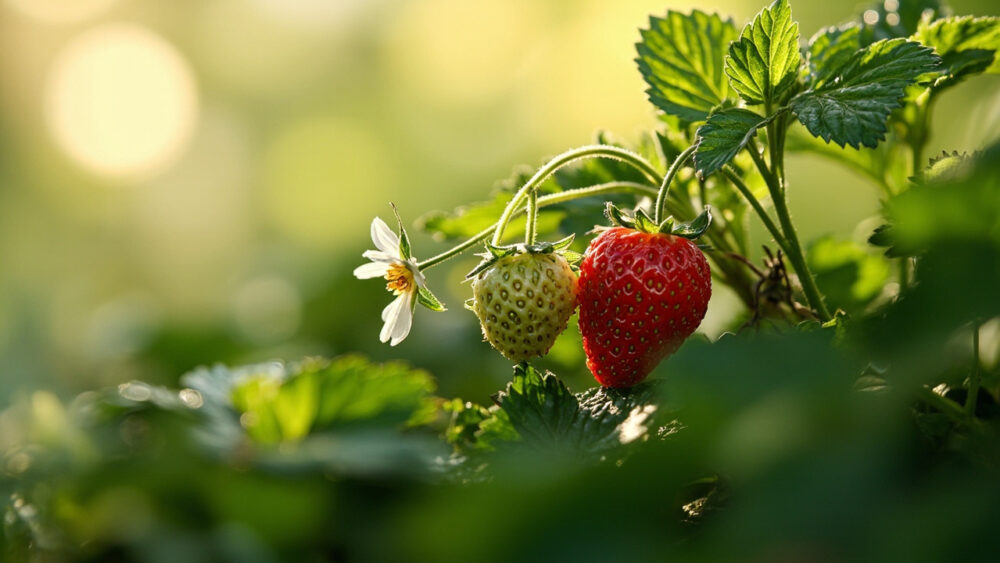
- Weeks 6 to 8: flowers open, pollinators (or hand pollination) set fruit, tiny green berries appear.
- 4 to 6 weeks after a flower is pollinated: berry swells and ripens from green to full color, ready to pick.
- Season one for June-bearing types: mostly runners and leaf growth, remove most or all blossoms to force energy into roots.
- Season two: full flower flush in spring, main harvest window over 2 to 3 weeks.
If your plant is stalled at one of these stages far longer than the range above, that is your cue to check the next section.
How to Legitimately Speed Things Up
Buying transplants instead of seed is the single biggest speed decision you can make. It cuts months off the front end with zero downside.
Beyond that, soil temperature does real work. Strawberries root and grow fastest once soil hits about 55 to 65 F. Black plastic mulch or simply waiting a bit longer into spring to plant will warm soil faster than bare ground.
Consistent moisture, about 1 to 1.5 inches of water a week, keeps growth steady since drought stress is one of the most common reasons a patch stalls out. Feeding with a balanced fertilizer at planting, then a lighter feed after the first flush, supports the next round of blossoms.
What does not help: high-nitrogen fertilizer pushed heavily, which grows lush leaves at the expense of flowers, and pinching or covering plants to “trick” June-bearers into fruiting early. Their flowering is triggered by day length and temperature, not by anything you do with a trowel.
Speeding up the good stuff is only half the job, you also need to know when slow is normal.
Slow and Normal vs Slow and In Trouble
A June-bearing plant with no berries its first year is not broken, that is the plan working correctly. Skip that step and you often trade a small harvest now for a much weaker one next spring.
If you assumed no flowers means a dead or defective plant, that guess causes more people to yank healthy first-year strawberries than any actual disease does.
Real trouble looks different: leaves that stay pale yellow past the first month (often nitrogen-hungry soil or poor drainage), a crown that rots at soil level (usually planted too deep or soil staying too wet), or flowers that form but never set fruit despite warm weather (frequently a pollination gap, fixable by attracting bees or hand-pollinating with a small brush). Persistent wilting despite regular water can signal root disease and is worth pulling one plant to check for reddish or mushy roots.
Normal slowness fixes itself with time. Real trouble needs a diagnosis, not more patience.
Strawberries: Quick Reference
- First harvest from transplants: 4 to 6 weeks for day-neutral or everbearing types, planted in spring.
- First real harvest from June-bearing types: the following spring, about 10 to 12 months after planting, first-year blossoms should be removed.
- Growing from seed: add 3 to 4 months of seedling growth before transplant size, expect fruit in year two.
- Ideal soil temperature for fast establishment: about 55 to 65 F.
- Water needs during establishment and fruiting: roughly 1 to 1.5 inches per week, consistent, not soggy.
- Time from open flower to ripe berry: about 4 to 6 weeks.
- Biggest speed decision: buying transplants or bare-root crowns instead of starting seed.
Plant a transplant this weekend and you could be picking berries before the month is out.
Plant a June-bearer and be patient, next spring’s harvest will thank you for it.