The method that actually works for propagating Chinese evergreen is stem cutting rooted in water or moist perlite, or division at the base if your plant has multiple crowns. Both work well on a plant this forgiving, but they are not interchangeable, and picking the wrong one for your specific plant is where most people lose their cutting. Division gives you an instant, already-rooted plant in about a minute of work. Stem cuttings take three to six weeks and reward patience with more plants from one parent.
Here is the part almost nobody tells you: the cutting that looks the healthiest, the thick leafy top with four or five leaves, is not always the one that roots fastest. There is a specific length of bare stem below the leaves that matters more than leaf count, and most people cut it too short.
There is also a rot problem specific to Aglaonema that catches people who have propagated pothos or philodendron successfully before, because the fix is the opposite of what worked on those plants. Stick with this, and by the bottom you will have the full Chinese Evergreen at a Glance card saved for your phone, the kind of thing you want open while you are standing over the plant with pruners in hand.
Why Stem Cuttings and Division Both Work, But Not for the Same Plant
Division only works if your Chinese evergreen already has more than one stem coming up from the soil. Many nursery pots hold two or three separate crowns grown together for a fuller look. If yours does, you can split the root ball by hand and pot each crown separately. No rooting hormone, no waiting, no risk.
If your plant is a single stem, division is not an option, and stem cuttings are your only real path. This is where most people who clicked in expecting one universal method get tripped up, because plenty of generic advice treats these as the same technique.
They are not. One separates an already-rooted plant. The other asks a leafless section of stem to grow roots from scratch, which is a slower and slightly less certain process.
Knowing which one your plant qualifies for decides everything that happens next.
Step by Step: Taking the Cutting or Division
Checking for division candidates
Slide the plant out of its pot and look at the base. If you see two or more distinct stems each with their own cluster of roots, you can divide.
Gently pull or tease the crowns apart by hand, keeping as much root attached to each section as you can. If they resist, a clean knife through the root mass works better than tearing.
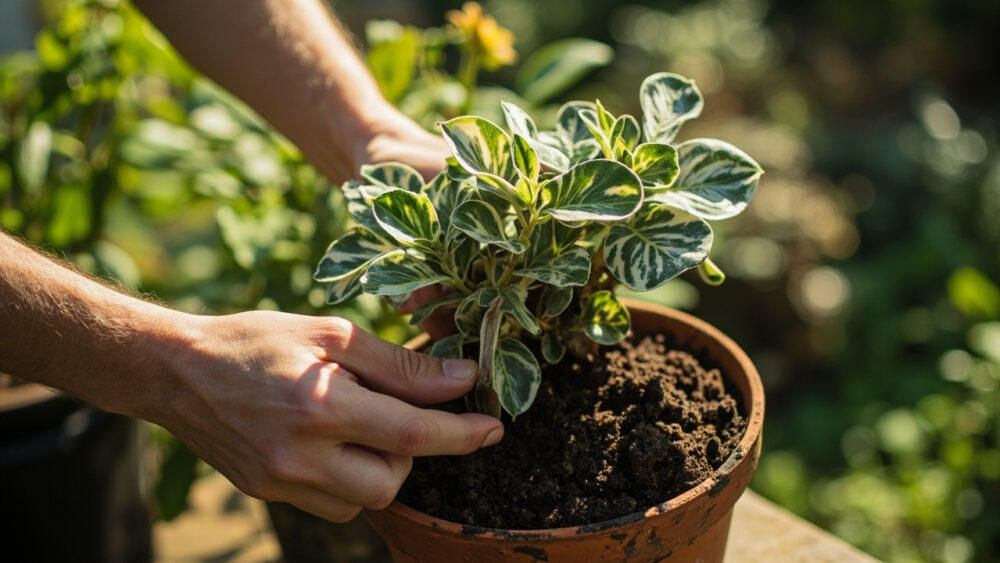
Pot each division into fresh potting mix at the same depth it was growing before, water it in, and treat it like an established plant, because it is one.
Taking a stem cutting
For a single-stem plant, look for a stem section with at least two nodes, the slightly raised bumps or leaf scars along the stem where roots will emerge. This is the detail most guides skip.
Cut a section that includes three to five inches of stem below the lowest leaf, not just a leafy tip with a short nub of stem attached. That extra bare length matters because roots form from nodes along the stem, and a cutting with only one node is gambling with one shot instead of two or three.
Make the cut with clean, sharp pruners just below a node, at an angle. Remove any leaves that would sit below the waterline or soil line, since submerged foliage rots and fouls the water fast.
You can also cut a cane, a leafless older stem, into two- to three-inch sections and lay them horizontally on top of moist perlite, half buried. Each node on that cane can send up its own new shoot, which is how you get several plants from one overgrown stalk.
Once the cutting is made, the medium you choose decides how the next few weeks go.
Rooting Medium and Conditions: Where the Rot Problem Actually Starts
Water rooting works fine for Chinese evergreen and lets you watch progress, which is satisfying and also where the trouble starts. Aglaonema stems are softer and more prone to rot in standing water than a pothos or philodendron cutting.
If you assumed more water means safer, faster rooting, that assumption is exactly what turns a healthy cutting to mush. The fix is the opposite of what works on those other houseplants: change the water every three to four days instead of letting it sit, and keep the container shallow enough that only the bottom node or two is submerged.
Moist perlite or a perlite and peat mix rooting medium is actually the more reliable route for this genus specifically, because it drains, holds humidity around the stem without waterlogging it, and lets you tug gently on the cutting to feel resistance from new roots without disturbing them.
Whichever medium you pick, keep the cutting in bright, indirect light, never direct sun, and in a spot that stays between 70 and 80°F. Cold windowsills slow rooting to a crawl or stop it entirely.
Get the temperature and light right and the timeline below becomes predictable instead of a guessing game.
Week by Week: What to Actually Expect
Week one looks like nothing. The cutting may look identical to the day you cut it, and that is normal, not a bad sign.
By week two to three, small white or pale root nubs start showing at the nodes in water, or you will feel slight resistance when you tug gently on a perlite-rooted cutting.
By week four to six, roots should be a half inch to an inch long, sometimes more in water where you can see them directly. This is your window to pot up, not sooner.
If nothing has happened by week six or seven, check the stem end. A soft, dark, or mushy tip means rot has beaten the roots to it, and that particular cutting will not recover.
Once roots hit that half inch to inch mark, the move to soil has its own right and wrong timing.
Potting Up: Timing the Move to Soil
Move the cutting once roots reach roughly an inch long, with at least two or three visible root branches, not just a single thread. Moving too early, when only a faint nub has formed, often stalls the plant because those first roots are fragile and easily damaged by the transition.
Pot into a well-draining mix, a standard houseplant potting soil with extra perlite works well, in a container barely larger than the root mass. A pot that is too roomy holds excess moisture around roots that are not yet established enough to use it, which invites the same rot you were trying to avoid at the cutting stage.
Water it in, then hold off on the next watering until the top inch or two of soil is dry. Keep it out of direct sun for the first couple of weeks while it adjusts.
New growth, a fresh leaf unfurling from the center, is your confirmation the plant has fully transitioned and is feeding itself again.
Why Most Attempts Actually Fail
The single biggest failure is a cutting with too little stem below the leaves, one node instead of two or three, leaving no backup if the first root site fails. The second is water left too long without changing, which suffocates the cut end and invites bacterial rot before roots ever get a chance to form.
Low light is the quiet killer that takes weeks to show. A cutting in a dim corner is not dying visibly, it is simply not generating enough energy to grow roots, so it sits unchanged for months and eventually softens.
Cold is the other slow one. Anything below about 65°F drags rooting out so long that rot or dehydration usually wins before roots do.
Fix the node count, the water changes, the light, and the temperature, and this plant roots about as reliably as any common houseplant does.
Note for households with pets or kids: Chinese evergreen contains calcium oxalate crystals and is toxic if chewed or ingested, causing mouth and throat irritation, drooling, and swelling. If you suspect a pet or child has eaten any part of this plant, contact a veterinarian or doctor rather than waiting to see what happens.
Chinese Evergreen at a Glance
- Best method: divide at the base if multiple stems are present, take stem or cane cuttings if it is a single stem.
- Cutting length: three to five inches of stem with at least two nodes, not just a leafy tip.
- Rooting medium: moist perlite or perlite and peat mix is more reliable than water for this plant, since Aglaonema stems rot easily.
- Ideal conditions: bright indirect light, 70 to 80°F, water changed every three to four days if rooting in water.
- Timeline: first roots in two to three weeks, ready to pot at four to six weeks with roots about an inch long.
- Pot up when: roots show two to three branches at roughly an inch long, into a barely-larger pot with well-draining mix.
- Toxicity note: toxic to pets and people if ingested, contact a veterinarian or doctor for any suspected ingestion.
Get the node count and the moisture balance right, and this is one of the most forgiving houseplants to multiply.
Everything else on this list is just protecting those two decisions.