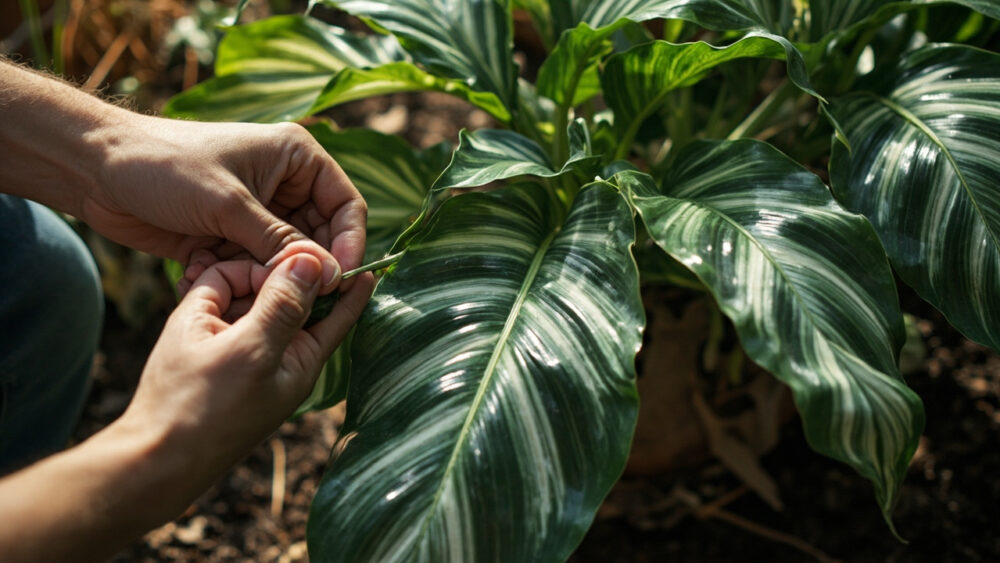
Chinese evergreen care comes down to four things: bright, indirect light (it tolerates low light but grows better in medium), water only when the top inch or two of soil is dry, temperatures above 60°F, and a well-draining potting mix. Get those right and it is one of the most forgiving houseplants you can own. Get them wrong and you will see it fast, usually in the leaves, and usually in a way that points you to the wrong fix.
Most people who kill a Chinese evergreen do it with kindness, watering on a schedule instead of checking the soil. There is also a leaf symptom almost everyone misreads, one that looks like a light problem but is almost always about water or salt buildup instead. And if you are wondering whether that new pale, almost white leaf coming in is a sign of stress, the honest answer surprises most first-time owners.
Stick with me through the sections below and you will know exactly what your plant is telling you. At the bottom is a save-able Chinese Evergreen at a Glance card with the numbers you will actually want to remember.
Light, Placement, and Temperature
Chinese evergreen is famous for surviving low light, but “surviving” and “thriving” are different plants. Give it bright, indirect light, a few feet back from an east or north window, or a filtered south or west exposure, and you get denser growth and better color, especially in variegated types like ‘Silver Bay’ or ‘Maria’. Deep low-light spots keep it alive but slow and less colorful.
Direct sun is the real danger. A few hours of harsh afternoon sun through unfiltered glass will scorch the leaves into brown, papery patches that never heal.
Keep it warm. Chinese evergreen wants 65 to 80°F and sulks below 60°F, with cold drafts near doors and single-pane windows causing dark, water-soaked-looking blotches on the leaves. Keep it away from AC vents and radiators too, since both extremes stress it the same way.
Where you place the pot matters almost as much as how you water it.
Watering: How Much, How Often, and How to Tell
Water when the top 1 to 2 inches of soil are dry, not on a fixed weekly schedule. Stick a finger in up to the second knuckle. If it comes out dry, water thoroughly until it runs from the drainage holes, then dump the saucer.
In an average home this lands somewhere between every 7 and 14 days, faster in summer heat and slower in winter when growth slows.
If you assumed the browning leaf tips meant it needed more water, that guess is the one that kills most Chinese evergreens. Overwatering is the far more common killer, and it shows up as yellowing lower leaves, a mushy or blackened stem base, or soil that stays wet a week after you watered it. The honest fix is less frequent, deeper watering and a pot that actually drains, not a heavier hand.
Brown, crispy tips with otherwise firm leaves usually mean low humidity or a buildup of mineral salts from tap water, not thirst.
Once watering settles into a rhythm, the potting mix underneath does the rest of the work.
Soil and Feeding
Use a well-draining, chunky potting mix, a standard indoor potting soil amended with perlite or orchid bark works well, roughly one part perlite to three or four parts potting soil. The goal is soil that holds some moisture but never turns to mud.
A pot with a drainage hole is not optional here. Chinese evergreen’s fleshy roots rot quickly sitting in stagnant water, and a cachepot with no hole is one of the most common reasons a plant that “gets watered correctly” still declines.
Feed monthly during spring and summer with a balanced liquid houseplant fertilizer diluted to about half strength, and stop entirely from late fall through winter when growth slows or stalls. Overfeeding shows up as crusty white buildup on the soil surface and burnt, brown leaf edges, which is easy to mistake for underwatering.
Feeding pushes growth, but growth is only useful if you keep the plant tidy while it happens.
Pruning, Repotting, and Cleaning
Chinese evergreen needs very little routine maintenance, which is part of its appeal. Prune only to remove yellowed or damaged leaves, snipping at the base of the stem with clean shears, and to control leggy growth by cutting a stem back to just above a node, which encourages a fuller shape.
Repot every 2 to 3 years, or sooner if roots are circling the drainage holes or the plant is drying out within a day or two of watering. Size up one pot diameter at a time, no more than 2 inches larger, and do this in spring or early summer so the plant recovers quickly.
Wipe the broad leaves every few weeks with a damp cloth. Dust blocks light and slows photosynthesis more than people expect from a low-light-tolerant plant.
Most of what goes wrong after this point is a pest or a leaf symptom you now know how to read.
Problems You Are Most Likely to See
Chinese evergreens are relatively pest-resistant, but not immune. Watch for these:
- Mealybugs: small white cottony clusters in leaf joints, treated with insecticidal soap or horticultural oil applied per the product label.
- Spider mites: fine webbing and stippled, dull leaves, usually in dry indoor air, treated the same way and helped by raising humidity.
- Root rot: mushy black stem base and collapsing leaves from overwatering, which requires unpotting, trimming rotted roots, and repotting into fresh dry mix, if caught in time.
- Curling or drooping leaves: usually a temperature swing or the soil going bone dry between waterings.
One more thing worth knowing plainly: Chinese evergreen is toxic to cats and dogs, and mildly irritating to people, due to calcium oxalate crystals in the sap. Chewing causes mouth and throat irritation, drooling, and swelling. If you suspect a pet has chewed on it, call your veterinarian rather than waiting to see what happens.
Once pests and rot are ruled out, most remaining leaf issues are just the plant telling you it wants a small adjustment, not an emergency.
How to Tell It Is Actually Thriving
A healthy Chinese evergreen pushes out a new leaf every few weeks during spring and summer, each one emerging tightly rolled and often paler than the mature leaves around it.
That pale, almost white new leaf is not a stress signal, it is normal. New growth on variegated types comes in lighter and develops its full pattern and color as it unfurls and matures over one to two weeks. Only worry if it stays translucent, goes limp, or fails to unroll at all.
Other good signs: leaves held upright and firm rather than drooping, consistent size on new leaves rather than each one coming in smaller, and no more than an occasional single yellow leaf being shed as the plant naturally retires old growth.
If your plant checks those boxes, you are already doing this right, and the card below is just there for the weeks you second-guess yourself.
Chinese Evergreen at a Glance
- Light: bright, indirect light for best color and growth, tolerates medium to low light but slower and less vibrant, no direct sun.
- Watering: water when the top 1 to 2 inches of soil are dry, roughly every 7 to 14 days, less in winter.
- Temperature: 65 to 80°F, avoid cold drafts and anything below 60°F.
- Soil: well-draining potting mix amended with perlite or bark, always in a pot with drainage holes.
- Feeding: half-strength balanced liquid fertilizer monthly in spring and summer, none in fall and winter.
- Repotting: every 2 to 3 years in spring, sizing up no more than 2 inches at a time.
- Toxicity: toxic to pets and mildly irritating to people, contact a veterinarian for any suspected ingestion.
Most Chinese evergreen problems trace back to one habit: watering by the calendar instead of by the soil.
Check the soil, respect the light range, and this plant will outlast almost anything else on your shelf.