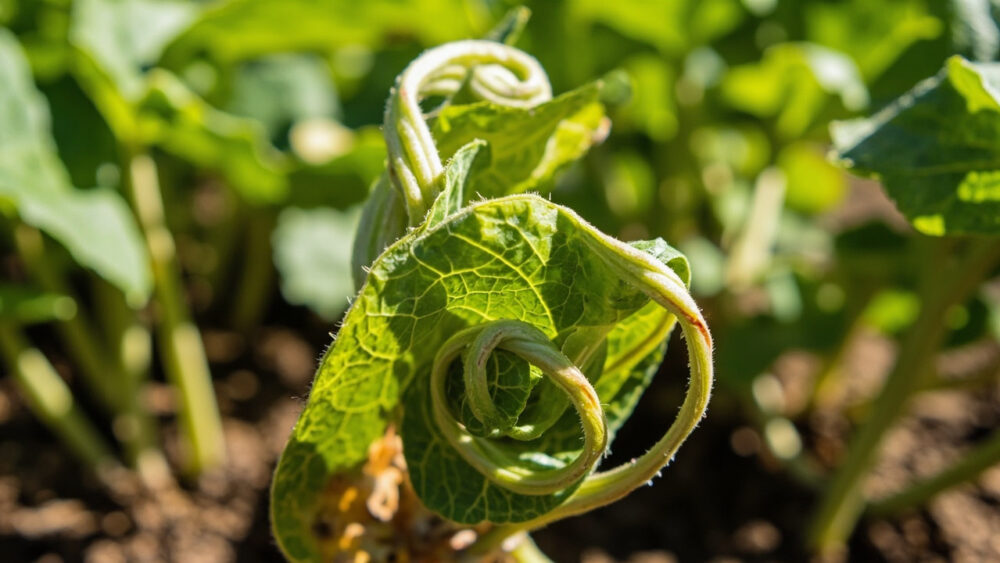
The most common cause of curling potato leaves is simple heat and water stress, the plant rolling its leaflets inward to cut down on moisture loss during hot, dry stretches. Check the soil two inches down. If it is dry and the curling shows up on the newest growth during the hottest part of the day, water deeply and you will usually see the leaves relax within a day or two.
But that is not the only cause, and it is not even always the right one. Everyone blames the weather first because it is the obvious answer, and about half the time that guess is wrong. The real cause could be a virus that never goes away, an aphid problem you have not spotted yet, or herbicide drift from three yards over that has nothing to do with anything you did.
The detail that actually tells you which one you have is not how curled the leaves are, it is where on the plant the curling starts and whether the leaf color and texture changed with it. Stick with this, because at the bottom you get a two-minute diagnosis checklist you can run right at the plant, step by step, no guessing.
Causes of Curling Potato Leaves, Most to Least Likely
1. Heat and Moisture Stress
Confirm it: curling appears on upper, newer leaves during afternoon heat and eases by morning. Soil an inch or two down feels dry to bone dry. No discoloration, just a tight inward roll.
This is the plant’s own defense, cutting leaf surface area exposed to sun. Fix it with a deep watering, about 1 to 2 inches per week during tuber bulking, delivered less often but more thoroughly rather than daily sips. Mulch with straw 2 to 3 inches deep to hold soil moisture and drop soil temperature.
If the leaves bounce back the next cool morning, you have your answer.
2. Overwatering or Waterlogged Soil
Confirm it: soil is soggy or has stayed wet for days, lower leaves are yellowing along with the curl, and the ground smells sour or feels compacted underfoot.
Potatoes hate wet feet. Roots suffocating from lack of oxygen will curl leaves upward or inward as a stress response that looks a lot like drought curling but comes with yellow, not green, tissue. Let the bed dry out, improve drainage with raised rows or added compost next season, and hold off watering until the top few inches dry.
This one is easy to mistake for the opposite problem, which is exactly why the soil feel test matters more than the leaf shape.
3. Aphids or Other Sap-Sucking Pests
Confirm it: flip the curled leaves over. Look for small green, black, or gray insects clustered on the undersides or in leaf axils, sometimes with a sticky residue (honeydew) or sooty black mold on the surface below.
Aphids feed by piercing leaf tissue and drawing out sap, which distorts new growth into a curled, puckered shape. A strong water spray knocks many off. For heavier infestations, insecticidal soap applied according to the product label works well, applied in the cool of the evening to avoid leaf burn and to spare pollinators that are active during the day.
If you found bugs, you are done guessing, but keep reading because timing matters for what comes next.
4. Potato Virus (PVY, PVX, or Leafroll Virus)
Confirm it: curling starts on lower or middle leaves first, leaves may feel leathery or brittle, and you see mottling, mosaic patterning, or a purplish tint along with the curl. Whole plants may look stunted compared to neighbors.
Leafroll virus in particular causes leaflets to roll tightly upward, starting low on the plant and moving up over time. These viruses spread by aphids and by infected seed potatoes, and there is no cure once a plant has one.
The fix is removal, not treatment. Pull the infected plant, do not compost it, and do not save its tubers as seed potatoes next year.
This is the cause that quietly ends the season for that plant, so knowing the tell early saves you from wasting water and fertilizer chasing it.
5. Herbicide Drift
Confirm it: curling is severe, twisted, and distorted rather than a simple roll, often affecting the whole plant at once and appearing suddenly, sometimes within a day or two of nearby spraying (lawn herbicides, roadside spraying, a neighbor’s yard treatment).
Broadleaf herbicides, especially growth-regulator types, cause dramatic twisting and cupping that looks nothing like a tidy stress curl. Potatoes are sensitive to drift even in small amounts.
There is no fix for the leaves already affected. Move future potato plantings away from spray zones and warn whoever is spraying nearby about drift-sensitive crops downwind.
Now that you have the list, here is how to actually tell them apart at a glance.
How to Tell the Causes Apart
Location on the plant is the fastest tell. Heat stress and pests usually start on new upper growth. Virus symptoms usually start low and move up. Herbicide damage often hits the whole plant simultaneously.
Speed of onset matters too. Heat curling appears and resolves within a day. Herbicide damage appears fast and never resolves. Virus and overwatering symptoms build gradually over a week or more.
Color is the final clue. Plain heat stress leaves stay green. Yellowing points to water or root trouble. Mottling or purple tint points to virus. Sticky residue or visible insects points to pests.
Once you know which category you are in, the recovery question gets a much more honest answer.
Will It Recover?
Heat and water stress: full recovery, often within 24 to 48 hours of correcting soil moisture. This is the best-case scenario and the most common one.
Overwatering: recoverable if caught early and drainage improves. If roots have already rotted, the plant will decline regardless of what you do afterward.
Aphids: recoverable. New growth comes in normal once the population is knocked back, though heavily curled existing leaves will not uncurl.
Virus: not recoverable. The plant will continue producing smaller, weaker tubers all season. Removing it protects the rest of your patch, which matters more than trying to save one plant.
Herbicide drift: existing damage is permanent, but if the dose was low, new growth several nodes above the damage can come in normal. Watch the next two to three weeks of new leaves to know for sure.
Recovery odds are good for three of these five causes, which is exactly why prevention is worth the ten minutes it takes.
How to Keep It From Happening Again
Water consistently rather than heavily and rarely. About 1 to 2 inches per week, split across two waterings, keeps soil moisture even through tuber bulking.
Mulch heavily. Straw or shredded leaves 2 to 3 inches deep buffer both soil temperature and moisture swings, which prevents most heat curling before it starts.
Buy certified seed potatoes rather than saving your own or using grocery store potatoes, since certified seed is tested for the viruses that cause leafroll curling.
Scout weekly. Turn over a few leaves on random plants every week during the growing season to catch aphids before the colony builds.
Know your neighbors’ spray schedules if you garden near lawns, farm fields, or roadsides, and plant potatoes upwind or with a windbreak between.
Run through the checklist below next time curling shows up, and you will have your answer before you finish the coffee you brought out to the garden.
Diagnosis Checklist
- Check the soil two inches down: if dry, suspect heat or water stress, water deeply and recheck tomorrow morning.
- Check the soil for sogginess or a sour smell: if wet and yellowing lower leaves are present, suspect overwatering, hold off watering and improve drainage.
- Flip several curled leaves over: if you see insects or sticky residue, suspect aphids, spray with water or labeled insecticidal soap.
- Note where curling started on the plant: if it began on lower or middle leaves with mottling or a purple tint, suspect virus, remove and discard the plant.
- Check how fast the damage appeared: if it showed up within a day or two of any nearby spraying and looks twisted rather than rolled, suspect herbicide drift, note the timing and protect future plantings.
- Recheck tomorrow morning: if the curl has relaxed overnight with no other symptoms, it was heat stress and you are done.
Most curling potato leaves are just the plant coping with a hot afternoon, nothing you need to lose sleep over.
Run the checklist once, fix what it points to, and your plant tells you the rest.