Whole, uncut cantaloupe belongs on the counter until it’s ripe, then in the fridge for up to a week. Once you cut it, everything changes fast: cut cantaloupe lasts only 3 to 5 days in the fridge, and only if you handle it right from the first slice. How to store cantaloupe well really comes down to timing two separate clocks, the ripening clock and the cut-fruit clock, and most people lose the fruit by mixing them up.
Here’s the mistake that ruins most melons before they even get cut: sticking a rock-hard cantaloupe straight in the refrigerator. Cold air stops ripening in its tracks, so a melon that needed three more days on the counter just stalls out mushy-on-the-outside, mealy-in-the-middle, and never gets sweet.
There’s also a sign of spoilage almost everyone misreads as ripeness, and a washing step people skip that genuinely matters for food safety, not just flavor. Stick around and I’ll get to both, plus the save-able Cantaloupe at a Glance card at the bottom with every timeframe in one place.
Step One: Ripen It Right, on the Counter, Not the Fridge
A cantaloupe ripens on the counter, out of the fridge, stem-end up, out of direct sun. Give it 2 to 4 days at room temperature if it’s still firm and pale green.
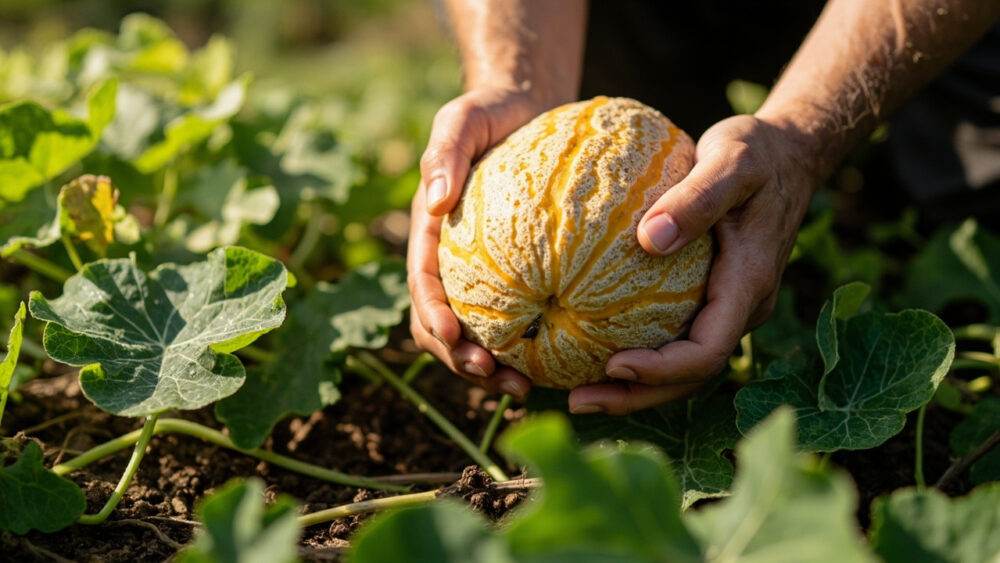
Check the blossom endthe spot opposite the stem, for gentle give under thumb pressure. Smell it too. A ripe cantaloupe smells sweet and a little musky right at the stem scar; no smell usually means no flavor yet.
Once it yields slightly and smells fragrant, it’s ready to eat or refrigerate. This is the step people rush, and rushing it is what makes so many store-bought melons taste like wet cardboard.
Ripe on the counter is where the real storage decision begins.
Whole and Uncut: How Long It Actually Keeps
A whole, uncut, ripe cantaloupe holds in the refrigerator for 5 to 7 days. Wrap it loosely in a plastic bag or leave it unwrapped on a shelf, either works, since the rind protects the flesh.
If it’s not yet ripe, do not refrigerate it. Let it finish on the counter first, then move it to the fridge once it gives slightly at the blossom end.
An unripe melon in cold storage never catches up. If you assumed the fridge just slows things down safely no matter what, that assumption is exactly what leaves you cutting into bland, starchy fruit later.
Cutting into it starts an entirely different countdown.
Cut Cantaloupe: The Part Where Most People Go Wrong
Once you slice a cantaloupe open, refrigerate the pieces within 2 hours, and eat them within 3 to 5 days. Store cut chunks or wedges in an airtight container, not loosely covered on a plate, since exposed melon dries out and picks up fridge odors fast.
Rind-on wedges keep marginally better than pre-cubed pieces because less flesh surface is exposed to air.
Wash the whole melon before you cut itnot after. Cantaloupe rind is netted and porous, and it can carry bacteria from the field or the store bin; scrub it under running water with a produce brush, then dry it before slicing. Skipping this step is a real food-safety mistake, not just a cosmetic one, because your knife drags whatever is on the rind straight into the flesh.
That same rind texture is also the reason cantaloupe behaves differently in the freezer.
Freezing Cantaloupe: What It’s Actually Good For
Cantaloupe freezes fine for smoothies and sorbet, but it does not freeze well for eating fresh once thawed. The high water content means thawed melon turns soft and watery, losing the crisp texture entirely.
To freeze it, cube the ripe flesh, spread pieces on a tray so they don’t clump, and freeze until solid before transferring to a freezer bag. Frozen this way, it keeps for 8 to 12 months.
Skip blanching entirely here. Blanching is for vegetables you plan to cook. Cantaloupe is eaten raw, and heating it before freezing just cooks the fruit and wrecks the texture further.
No curing step exists for cantaloupe either, unlike winter squash or onions. It’s a soft-fleshed melon, not a storage crop, and treating it like one is a wasted step that does nothing for shelf life.
Knowing what doesn’t help is only half the job. Knowing when the fruit has actually turned matters more.
The Sign of Spoilage Everyone Misreads
A strong, sweet, almost boozy smell coming through the rind is not a sign of peak ripeness, it’s a sign of fermentation starting. That’s the loop most people get wrong: they think “riper must mean more fragrant,” and by the time they cut in, the flesh is mushy and sour at the edges.
The real signs it’s turned are these:
- A sour, alcohol-like smell instead of a clean sweet one
- Soft, sunken, or wet-looking spots on the rind
- Slimy or weeping texture on cut flesh
- Mold, which can appear as white, green, or grayish fuzz, especially near the stem scar
- Cut fruit that’s been in the fridge longer than 5 days, even if it looks fine
If you see mold or smell fermentation, discard that piece. Do not taste-test a melon you suspect has turned. Cantaloupe rind has been linked to bacterial contamination in past outbreaks, and when in doubt, throwing it out costs you a few dollars, not a stomach bug.
Most spoiled melons, though, aren’t victims of bad luck, they’re victims of a handful of repeat mistakes.
The Mistakes That Ruin a Batch
These are the ones I see most often, and every one of them is avoidable.
- Refrigerating an unripe melon: it stalls and never sweetens properly.
- Cutting before washing: drags surface bacteria into the flesh.
- Leaving cut melon out past 2 hours: especially at room temperature on a hot day, this is when bacteria multiply fastest.
- Storing cut pieces uncovered: the flesh dries out and absorbs whatever else is in the fridge.
- Freezing it expecting fresh texture later: it comes out soft and watery, fine for blending, wrong for snacking.
- Ignoring the stem-end smell test: and cutting into a melon well past its window.
Fix these six habits and cantaloupe storage stops being a gamble.
Here’s everything worth saving, in one place.
Cantaloupe at a Glance
- Ripening: whole, unripe melon sits on the counter 2 to 4 days, stem-end up, out of direct sun, until it yields slightly at the blossom end and smells sweet.
- Whole and ripe, refrigerated: keeps 5 to 7 days, wrapped loosely or left unwrapped on a shelf.
- Cut and refrigerated: keeps 3 to 5 days in an airtight container, only if chilled within 2 hours of cutting.
- Frozen, cubed: keeps 8 to 12 months, best for smoothies and sorbet, not for eating thawed and fresh.
- Washing: scrub the whole rind under running water before cutting, every time, never after.
- Signs it’s turned: sour or alcohol-like smell, soft or sunken rind spots, slimy cut flesh, or visible mold.
- Never do this: refrigerate an unripe melon, leave cut pieces out past 2 hours, or expect frozen cantaloupe to taste fresh.
Get the ripening right on the counter, then respect the two-hour clock once you cut it. Everything else about how to store cantaloupe follows from those two habits.