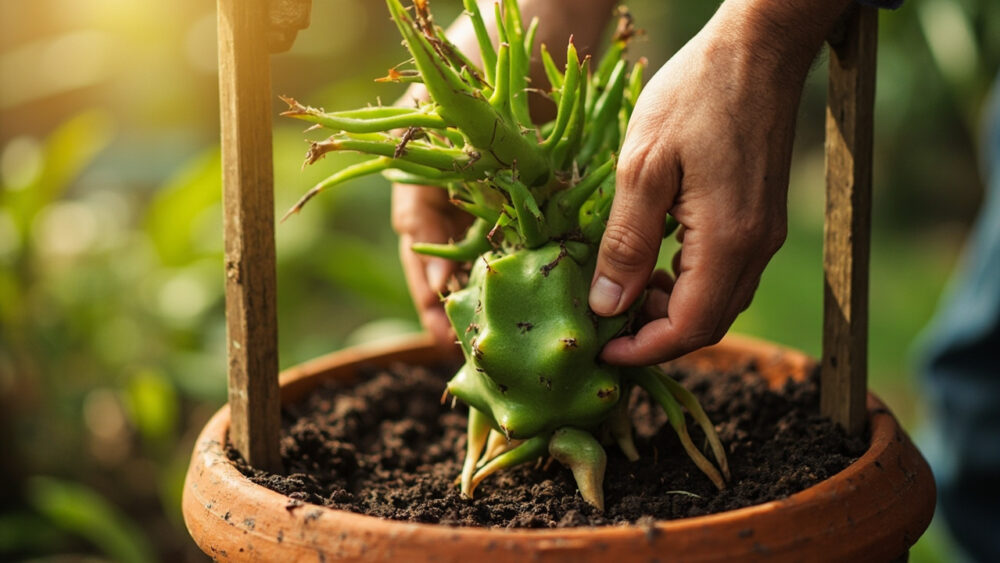
You grow dragon fruit in pots by planting a rooted cutting in a wide, deep container of fast-draining cactus soil, giving it a sturdy post or trellis to climb, and keeping it in full sun with water only when the soil has actually dried out. It is a climbing cactus, not a tropical houseplant, and treating it like one is exactly how to grow dragon fruit in pots the wrong way and lose it to rot within the first year.
Here is what nobody tells you upfront. The plant can sit for two or three years doing almost nothing dramatic, then suddenly throw six feet of growth in a single summer. There is one watering mistake that kills more potted dragon fruit than cold ever does, and it is not the one you think. And the flowers, when they finally show up, only open at night and die by morning, which catches almost everyone off guard the first time.
I will walk through timing, the pot and soil setup, planting, feeding, the real threats, and harvest. Stick around to the end for the Dragon Fruit at a Glance card, it is the short version worth saving to your phone before you head out to the nursery.
When to Plant Dragon Fruit in a Pot
Plant once nighttime temperatures are reliably staying above 50°F and there is zero frost risk left in the forecast. In most of the US that is late spring, roughly two to four weeks after your last frost date. Dragon fruit is a tropical cactus native to warm, humid parts of Central America, and it has no cold tolerance to speak of once it is young and unestablished.
Soil temperature matters more than the calendar. You want the potting mix to have warmed to at least 65°F before a cutting goes in, since cold, damp soil around fresh cut ends is exactly how rot starts. If you started a cutting indoors over winter, moving it outside can wait until night temps hold above 55°F.
Gardeners in zones 9 through 11 can eventually plant dragon fruit in the ground, but pots are the smart call everywhere else, since you can drag the whole thing into a garage or bright room before the first real cold snap.
Getting the timing right is only half the job, the container you choose decides whether any of this works long term.
Choosing the Pot and Building the Right Soil
Skip anything small. Dragon fruit gets heavy and top-heavy fast once it starts climbing, so you want a container at least 15 to 20 gallons, roughly 18 to 24 inches across and equally deep, with drainage holes you’d trust on a cactus. Terra cotta or a heavy plastic pot both work; what matters is weight and stability once you add a trellis.
The soil is where most people guess wrong. If you assumed a rich, water-retentive potting mix would help it grow faster, that guess is the single biggest killer of potted dragon fruit. This plant wants to dry out between waterings, and heavy soil holds moisture around the roots long enough to rot them from the inside.
Build a cactus-appropriate mix: roughly half standard potting soil, half coarse material like perlite, pumice, or coarse sand, with a handful of compost worked in for nutrition. You’re aiming for something that feels gritty and drains within seconds when you pour water through it.
Set the pot somewhere it will get six or more hours of direct sun daily; a south or west-facing spot on a patio or balcony is ideal.
Once the pot and soil are sorted, the planting itself is quick, but a couple of steps here decide whether your cutting roots or just sits and rots.
Planting Dragon Fruit Step by Step
Most home growers start from a cutting rather than seed, since cuttings root fast and fruit years sooner. A cutting 12 to 18 inches long, already callused (dried and sealed) at the cut end for five to seven days, gives you the best odds.
Step-by-step planting
- Set the trellis first: sink a sturdy post, a piece of rebar, or a purpose-built cactus trellis 6 to 8 inches into the soil, centered in the pot, before you plant anything around it.
- Dig a shallow hole: only 2 to 3 inches deep, just enough to stand the cutting upright and pack soil around its base.
- Plant one to a pot: a single cutting per 18 to 24 inch container is plenty. Crowding several in slows all of them down.
- Orient it the way it grew: keep the same top-to-bottom orientation the cutting had on the parent plant, it roots more reliably that way.
- Tie it loosely to the post: use soft garden twine or plant tape, leaving room for the stem to thicken as it grows.
- Water lightly once, then wait: a light watering right after planting settles the soil, then hold off on the next watering for a full week to let any cut surfaces heal instead of sitting wet.
From here the cutting will root in two to six weeks, and you’ll know it worked when new greenish growth starts pushing from the top.
Getting it in the ground correctly buys you nothing if the watering routine afterward undoes it, so that’s next.
Watering and Feeding Through the Season
Water only when the top 2 to 3 inches of soil are completely dry, which in a pot usually means every 7 to 10 days during summer heat and far less in cooler or overcast stretches. Cut back hard in winter, watering maybe once a month if the plant is overwintering indoors or in a protected spot.
The classic mistake is watering on a schedule instead of checking the soil. Dragon fruit stores water in its thick stems like any cactus. It can go weeks without a drink and shrug it off, but a few days of consistently soggy roots can finish it.
Feed lightly starting in the plant’s second growing season, using a balanced fertilizer formulated for cactus or succulents, or a low-nitrogen fruiting fertilizer, applied at roughly half the label’s suggested strength every four to six weeks through spring and summer. Skip feeding in winter entirely.
Established, healthy growth is bright green and firm. Growth that turns yellowish, mushy, or wrinkled is your soil or watering routine talking, not the plant needing more food.
Even with good watering habits, dragon fruit in a pot runs into a specific, predictable set of problems worth knowing before you see them.
The Problems That Actually Show Up
Stem rot, usually starting at the base or at a cut, is the most common issue, and it traces almost every time back to soil that stays wet too long or a pot without real drainage. Cut away any soft, discolored tissue immediately with a clean knife and let the wound dry in open air for several days before it touches soil again.
Scale insects and mealybugs show up as small white or brown bumps clustered on the stems. Wipe them off with a cloth dipped in rubbing alcohol for light infestations, or treat with an insecticidal soap labeled for cactus and succulents, following the product label exactly.
Sunscald is the other common surprise: a plant moved suddenly from shade into full afternoon sun can develop yellow or bleached patches on the stem. Move it gradually over a week or two instead of all at once, especially after winter indoors.
None of these are fatal if caught early, they’re all fixable with a dry-out, a trim, or a slower transition, not a reason to start over.
Handle the plant’s health and eventually you get to the part everyone was actually waiting for: flowers and fruit.
When and How Dragon Fruit Blooms and Fruits
Expect the first flowers two to three years after planting a cutting, not sooner, and that timeline surprises most first-time growers who assumed a fast-growing cactus meant fast fruit. The flowers are enormous, white, and famous for opening only at night, fully unfurling after dark and closing again by morning, often after just one night.
If two flowers open on the same night, hand-pollinate with a small brush, moving pollen between them, since many dragon fruit varieties won’t self-pollinate reliably and a failed pollination just means the flower drops with no fruit.
Harvest time comes 30 to 50 days after a successful bloom. You’ll know it’s ready when the skin turns fully pink or red or yellow, depending on variety, and the “wings” or scales along the fruit start to dry slightly and lose some of their bright green color.
Cut the fruit free with clean shears rather than twisting it off, leaving a short stub of stem attached.
That first harvest, however small, is the payoff for a couple of patient years, and here’s the whole process boiled down to what you actually need to remember.
Dragon Fruit at a Glance
- When to plant: two to four weeks after your last frost, once nights stay above 50°F and soil has warmed past 65°F.
- Pot size: at least 15 to 20 gallons, roughly 18 to 24 inches wide and deep, with real drainage holes.
- Soil mix: about half potting soil, half coarse perlite or pumice, plus a bit of compost, so it drains fast and never stays soggy.
- Planting depth: 2 to 3 inches for a rooted or callused cutting, set against a sturdy trellis or post from day one.
- Watering: only when the top 2 to 3 inches of soil are fully dry, roughly every 7 to 10 days in summer, much less in winter.
- Sunlight: six or more hours of direct sun daily, introduced gradually if the plant spent winter indoors.
- Time to first fruit: two to three years, with flowers opening only at night and fruit ready 30 to 50 days after bloom.
Get the drainage and the watering discipline right and the rest of this plant mostly takes care of itself.
Everything else, from trellising to that first strange midnight flower, is just patience doing its job.