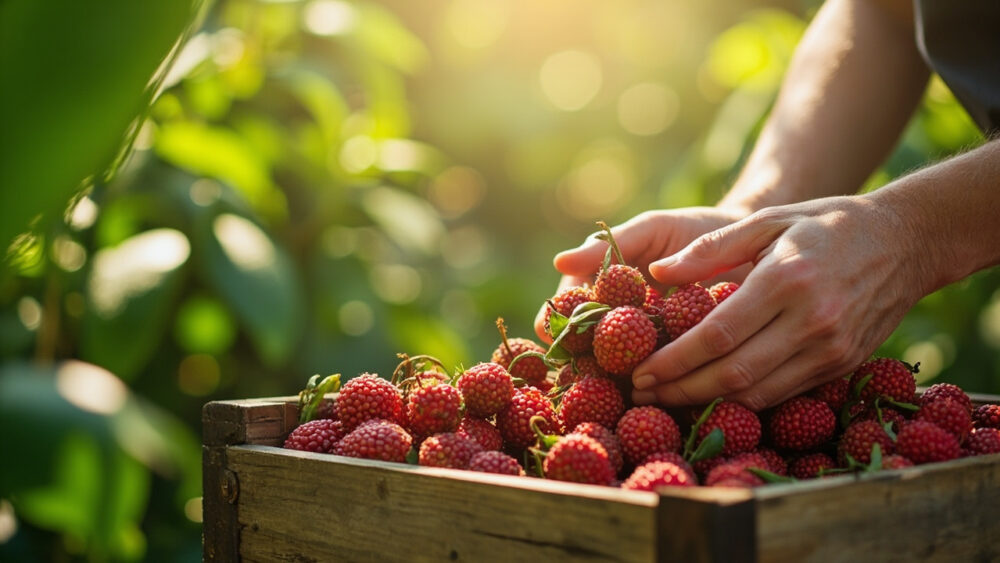
The fastest way to store lychees is unwashed, in a loose or perforated bag, in the crisper drawer of your fridge, where they hold for one to two weeks. Leave them on the counter and you get two or three days before the shells turn brown and papery. Get the method right and you can stretch fresh-tasting lychee flesh well past what most people think is possible.
Here is the part almost nobody gets right: browning shells do not mean the fruit inside is bad. That single misread costs more good lychees than actual spoilage does, and I will show you exactly what to check instead.
There is also a freezing method that works better than most fruits tolerate, a peeling mistake that speeds up rot instead of slowing it, and the honest answer to whether you should wash them before storing (it matters more than you would guess). Stick around for the Lychees at a Glance card at the bottom, it is the one worth screenshotting before you put the fruit away.
The Best Method: Fridge Storage Step by Step
Lychees are tropical fruit, but the refrigerator is still their best friend once picked. Do not wash them first. Surface moisture speeds up mold on the shell and softens it faster than dry storage does.
Sort through the batch and pull any fruit with cracked shells, soft spots, or a sour smell. Those go in a separate bag to eat today, not into cold storage with the rest.
Place the good fruit, still on or off the stem, into a perforated plastic bag or a container lined with a paper towel. You want airflow, not a sealed, sweaty bag.
Set them in the crisper drawer at around 35 to 40°F. Check every few days and pull out any fruit that starts to soften.
That drawer setting is doing more work than people realize, and it is also where the next mistake usually happens.
How Long Lychees Actually Keep, Method by Method
Counter storage is the shortest window by far. Room temperature lychees hold their quality for two to three days before the shells brown and the flesh starts to ferment slightly at the pit end.
Fridge storage in a perforated bag gets you seven to fourteen days, sometimes longer if the fruit was very fresh when picked and your fridge runs on the colder side.
Peeled and frozen lychees are the long game. Remove the shell and pit, lay the flesh on a tray so pieces do not touch, freeze solid, then transfer to a freezer bag. That gets you eight to twelve months with only minor texture softening on thaw.
Canned or syrup-packed lychees, if you go that route at home, keep for about a year sealed, and a week or so once opened and refrigerated.
Freezing sounds like the obvious answer for long storage, but the way you freeze them changes everything, and that is worth slowing down on.
The Freezing Method People Get Backward
Most people assume you freeze lychees shell-on, the way you might with grapes. That guess actually works against you here.
The shell traps moisture against the flesh as it freezes, which leads to a mushier, waterier thaw. Peeling first, removing the pit, and freezing the flesh loose on a tray gives you a firmer, better-textured fruit later.
If you want convenience over texture, whole shell-on freezing is not ruinous, it just costs you some bite. Either way, thaw in the fridge, not on the counter, or you get a mealy result fast.
Freezing solves the long-term question, but the short-term question, whether your fruit has already turned, is the one that trips people up first.
The Signs Lychee Has Actually Turned
Brown, dry shell alone is not spoilage, it is just moisture loss and normal color change once the fruit is off the tree. Plenty of perfectly good lychees look rough on the outside a few days in.
Real spoilage signs to check instead:
- A sour, fermented, almost winey smell when you crack the shell
- Flesh that has gone slimy, translucent, or gray instead of firm and white
- Liquid pooling inside the shell
- Visible mold, usually starting at the stem end
- A shell that feels wet or slick rather than dry and papery
If the shell is brown but the flesh smells clean and feels firm when you peel it, eat it. That fruit is fine.
Knowing what actually means spoiled matters, but most bad batches were doomed earlier, by how they were handled.
The Mistakes That Ruin a Batch
Washing before storage is the biggest one. That surface water sits against the shell and accelerates mold, especially in a sealed bag.
Sealing them airtight is the second. Lychees need airflow. A tightly sealed bag traps humidity and turns a two-week fridge fruit into a three-day moldy one.
Storing bruised fruit with good fruit spreads rot fast, lychees are thin-skinned once cracked and one bad piece can take down the rest of the bag within days.
Leaving them at room temperature past day two or three if you’re not eating them right away wastes the fridge window you had.
Peeling and refrigerating flesh without freezing it is the last trap. Peeled, unfrozen lychee flesh only holds a day or two in the fridge before it turns, so only peel ahead of time if you are eating soon or freezing immediately.
Avoid those five and you will get the full storage window every time, no guesswork needed.
Lychees at a Glance
- Counter storage: two to three days, quality drops fast after that.
- Fridge storage: seven to fourteen days in a perforated bag or vented container, unwashed.
- Best fridge temperature: around 35 to 40°F, in the crisper drawer.
- Frozen, peeled and pitted: eight to twelve months, thaw in the fridge, not on the counter.
- Washing: skip it until right before you eat them, moisture speeds up mold.
- Spoiled signs: sour smell, slimy or gray flesh, pooled liquid, visible mold, wet-feeling shell.
- Not spoiled: brown, dry, papery shell with clean-smelling, firm white flesh underneath.
Store them dry, cold, and loose, and check the flesh before you trust the shell.
Get that right and lychee season lasts a lot longer than three days on the counter.