If you want to know how to grow papayas, the short version is this: give them a frost-free spot with full sun, fast-draining soil, steady moisture, and heavy feeding, and a healthy plant will hand you ripe fruit in about 9 to 12 months from transplant. That is the whole game. The hard part is not the growing, it is the setup, because papayas punish bad drainage and cold faster than almost any other fruiting plant you’ll grow.
Most first attempts fail for one of three reasons, and they are rarely the ones people expect. There’s a mistake at planting depth that quietly rots the stem weeks later. There’s a sign of trouble in the flowers that most beginners completely misread as a pest problem. And there’s a question everyone asks around month six, which is why their papaya looks great but still has no fruit.
All of that gets answered below, in order, and I’ll flag the honest hard parts as we go. Stick with me to the bottom and you’ll find a save-able “Papayas at a Glance” card with the numbers you’ll actually want pulled up on your phone at the nursery or in the yard this weekend.
When to Plant Papayas
Papayas want warmth, full stop. Wait until nighttime temperatures are reliably staying above 55 to 60°F and all frost risk has passed, which usually means two to three weeks after your last spring frost date. Soil temperature matters more than the calendar: aim for at least 65 to 70°F at root depth before transplanting.
These are tropical plants through and through, happiest in USDA zones 9b through 11. In zone 9 and cooler pockets of 10, plan on growing papaya as an annual or moving a potted plant indoors before any cold snap, because a hard frost can kill it outright.
Started too early into cold, wet soil, a papaya just sits there and often rots before it ever grows.
Choosing the Spot and Prepping the Soil
Papayas need six or more hours of direct sun and shelter from strong wind, since the trunk is soft and hollow and snaps easily in a gust. Pick the warmest, most sheltered corner of the yard, ideally against a south-facing wall in cooler climates.
Drainage is non-negotiable. Papaya roots rot fast in soggy soil, so if you’ve got heavy clay, build a raised mound 12 to 18 inches high and 3 feet across rather than fighting the native soil. Work in generous compost and aim for a soil pH around 6.0 to 6.5.
If your yard holds water after rain for more than a few hours, that spot will kill a papaya no matter how well you feed it.
Planting a Papaya Step by Step
1. Start with the right stock
Grow from seed started indoors 8 to 10 weeks before your warm-up, or buy a nursery seedling 12 to 18 inches tall. Seedlings get you a head start of a season or more.
2. Space generously
Set plants 6 to 10 feet apart. Papayas get large fast, with leaves spanning several feet, and crowding cuts airflow and invites disease.
3. Plant at the same depth
This is the mistake that ruins most attempts. Plant at the exact same soil depth the papaya was growing at in its pot, never deeper. Bury that stem even an inch too deep and it will rot at the base within weeks, often after looking fine at first.
4. Water in, then back off
Soak thoroughly at planting, then let the top 1 to 2 inches of soil dry before watering again while roots establish.
Get the depth right and the plant takes off within days, so the next job is keeping it fed through a long growing season.
Watering and Feeding Through the Season
Papayas are thirsty but drainage-sensitive, so the goal is consistently moist, never waterlogged, soil. Water deeply once or twice a week depending on heat, checking that the top 2 inches feel dry before you add more.
Feed heavily. These are fast, hungry growers. Apply a balanced fruit fertilizer, or one slightly higher in potassium and phosphorus, every 4 to 6 weeks during active growth. A plant that isn’t fed on schedule stalls out and delays fruiting by months.
Mulch 2 to 3 inches deep around the base, keeping it a few inches clear of the stem itself to avoid rot.
Now for the part almost nobody sees coming: the flowers themselves are trying to tell you something.
The Flower Sign Everyone Misreads, and Other Problems to Watch
Papayas can be male, female, or bisexual, and only female and bisexual flowers set fruit. If your plant flowers heavily but sets nothing, the common guess is pests or poor pollination.
The real answer is usually sex. Male flowers are thin, on long dangling stalks, and drop off without swelling. Female and bisexual flowers sit closer to the trunk and have a visible swollen ovary at the base even before opening. Seed-grown plants are a genetic mix, so growing three or more seedlings improves your odds of getting fruiting types; if yours turns out male, it will never bear fruit no matter what you do.
Beyond that, watch for these common issues:
- Root rot: yellowing lower leaves and a soft, dark stem base, almost always from poor drainage or overwatering. There is no cure once the stem is mushy; prevention is the only fix.
- Papaya ringspot virus: mottled, distorted leaves and ring-shaped marks on fruit, spread by aphids. Remove and destroy infected plants. There is no treatment, only starting clean elsewhere.
- Mites and mealybugs: stippled or sticky leaves. Treat with horticultural oil or insecticidal soap, following the product label exactly.
- Wind damage: snapped trunks from unstaked plants in open sites. Stake young plants in exposed yards.
Papayas are toxic in a mild, low-concern way to pets mainly through the unripe fruit and seeds, which can cause digestive upset. If a pet eats a significant amount, call your veterinarian rather than waiting it out.
Get past flowering successfully and the countdown to harvest is short.
When and How to Harvest Papaya
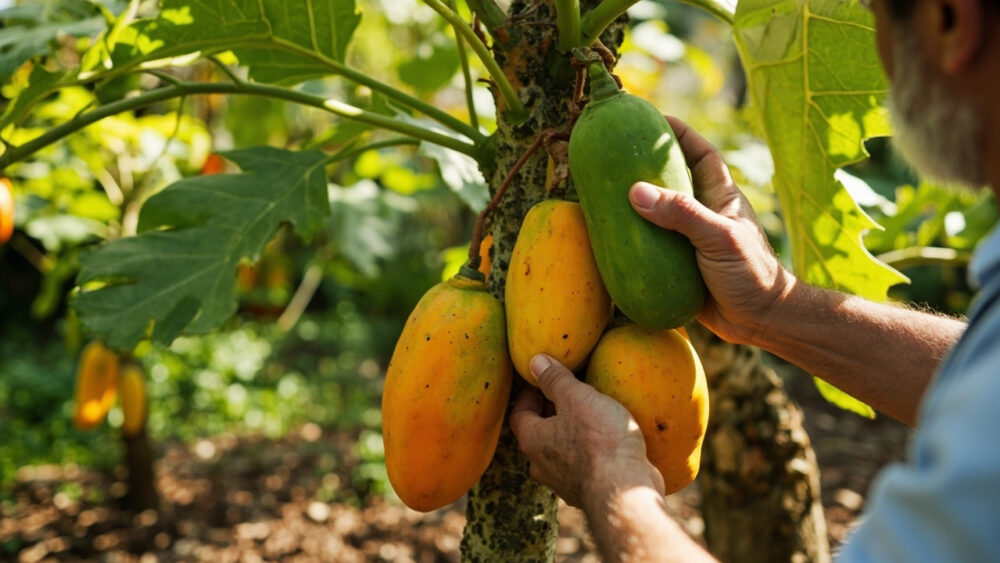
Most papayas mature 9 to 12 months after transplanting, with fruit ripening roughly 4 to 8 months after flowering depending on variety and warmth. Here’s the honest answer to the question everyone has by then: don’t wait for full ripeness on the tree.
Harvest when the skin starts turning from green to yelloweven just a blush of color at the blossom end, and let it finish ripening on the counter over a few days. Fully tree-ripened fruit is prone to splitting and attracts birds and fruit flies fast.
Cut the stem with a sharp knife rather than pulling, leaving a short stub attached to the fruit. A ripe papaya gives slightly to gentle thumb pressure, like a ripe avocado.
That’s the full cycle from planting to plate, and here’s the card to save before you head back out to the yard.
Papayas at a Glance
- When to plant: two to three weeks after last frost, once soil hits 65 to 70°F and nights stay above 55 to 60°F.
- Best zones: USDA 9b to 11 outdoors year-round, grown as an annual or containerized farther north.
- Spacing: 6 to 10 feet apart, full sun, sheltered from wind.
- Planting depth: same depth as the nursery pot, never deeper, to avoid stem rot.
- Water and feed: deep watering once or twice weekly, balanced fruit fertilizer every 4 to 6 weeks.
- Time to fruit: about 9 to 12 months from transplant, ripening 4 to 8 months after flowering.
- Harvest cue: pick at first yellow blush, finish ripening on the counter.
The whole crop rides on two things: perfect drainage and planting at the right depth. Get those right, feed it well, and a papaya will outgrow almost every other fruit tree you own.