Growing lemons from seed is simple to start and slow to finish: you plant a fresh seed about half an inch deep in moist potting mix, keep it near 70 degrees F, and you will usually see a sprout in two to four weeks. The catch nobody tells you at the click is timing to fruit, not timing to sprout. A seed-grown lemon tree commonly takes 8 to 15 years to produce fruit, and it may never taste like the lemon you took the seed from.
That is not a reason to skip it. It is a reason to know what you are actually signing up for, and there are a few places this project quietly goes wrong.
The seed prep step almost everyone skips ends up being the reason half of these seeds never sprout at all. The “sign of trouble” during germination that is actually completely normal trips up a lot of first-timers into pulling a perfectly good pot apart. And there is an honest answer coming about whether your seed-grown tree will ever taste like the lemon it came from, which changes how you should think about this whole project. Stick around for the Lemons at a Glance card at the bottom, it is the save-to-your-phone version of everything below.
When to Start Lemon Seeds
Lemon seeds do not care about frost dates the way tomatoes or peppers do, because this tree is going to live indoors or in a pot for years before it ever sees the ground. Start anytime, but late winter into early spring gives the seedling a full growing season of long daylight before its first winter indoors.
Skip direct sowing outside entirely unless you garden in USDA zones 9 through 11 with no real frost risk. Everywhere else, this is a container project from day one.
Fresh seed matters more than season. A seed pulled from a lemon and planted within a day or two germinates far better than one that sat on a counter drying out.
Get the seed prep right and you have already solved the biggest failure point before you even own a pot.
Sowing Lemon Seeds Step by Step
Most failed lemon seeds fail before they ever hit soil, and it is almost always because the seed dried out or still had its slick outer coating on. Here is the sequence that actually works.
Step by step
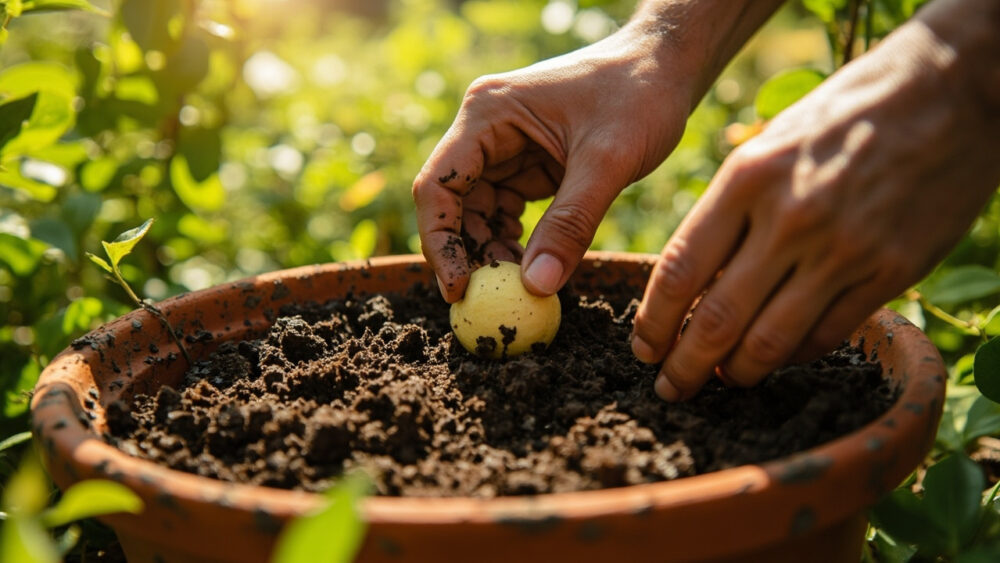
- Extract fresh: cut open a ripe lemon and pull seeds directly from the flesh, plump and pale, not shriveled or brown.
- Rinse and peel: rinse off the pulp, then gently peel the thin outer seed coat with your fingernail. This step alone dramatically improves germination odds.
- Soak overnight: soak the peeled seed in room-temperature water for 12 to 24 hours to soften it further.
- Plant immediately: sow about half an inch deep, pointed end down if you can tell which end that is, in a well-draining seed-starting mix or a mix of potting soil and perlite.
- Water and cover: water until evenly moist, not soggy, and cover the pot loosely with plastic wrap or a humidity dome to hold moisture in.
- Place somewhere warm: keep the pot near 65 to 75 degrees F. A spot on top of the refrigerator or near a heat mat works well.
- Light comes later: bright light is not necessary until the seed sprouts. Warmth matters more than light at this stage.
Once that seed is tucked in warm and moist, the waiting game starts, and knowing what normal looks like saves you from digging it up out of impatience.
Germination: What to Expect and When to Worry
Expect a sprout in 2 to 4 weeks under warm, consistent conditions, sometimes stretching to 6 weeks if the room runs cool. The first thing you will see is a pale, curled shoot, not green leaves right away.
If you assumed a white or yellowish shoot means something has gone wrong and the seedling is sick, that guess kills more perfectly healthy lemon sprouts than any actual disease does. New growth on a citrus seedling often emerges pale and only greens up once it hits light, which is exactly why light stays low-priority until this point.
Move the pot to bright light as soon as you see that shoot break the surface, whether that is a sunny south-facing windowsill or under a grow light for 12 to 14 hours a day. Remove the humidity cover gradually over a few days so the seedling adjusts to normal room air.
Real trouble looks different: a seed that sits untouched past 6 weeks in consistently warm soil, or a shoot that emerges then goes soft, brown, and mushy at the base. That is rot, usually from soil kept too wet, and it does not recover.
Once you have a sturdy little seedling with a few true leaves, the next test is getting it used to the real world.
Hardening Off and Transplanting
Lemon seedlings started indoors need a gradual introduction to direct sun and outdoor air, the same as any seedling, and skipping this step scorches leaves fast. Start hardening off once the seedling has 4 to 6 true leaves and outdoor temperatures stay reliably above 55 degrees F at night.
Set the pot outside in a shaded, wind-protected spot for an hour the first day, adding an hour or two daily over 7 to 10 days before it gets any direct midday sun.
Transplant into a larger container, moving up gradually rather than jumping straight into a huge pot. A 4-inch seedling pot moves to a 6 to 8 inch container, then up again as roots fill the space, roughly every year or two.
Use a well-draining citrus or general potting mix, never garden soil straight from the yard, which compacts and drowns citrus roots.
Citrus roots hate being disturbed, so handle the root ball gently and keep the same soil depth it was growing at before.
Get the tree through that first repot successfully and the real work becomes season-to-season care, which is where most of these trees are won or lost over the long haul.
Caring for a Lemon Tree Through the Season
Lemon trees want at least 8 hours of direct sun daily, whether that is a south-facing window, a grow light, or full sun outdoors in warm months. Less light means a leggy, sparse tree that struggles to ever flower.
Water when the top inch or two of soil feels dry to a finger, then water thoroughly until it drains from the bottom. Soggy, constantly wet soil rots roots faster than underwatering ever will.
Feed during active growth, spring through early fall, with a citrus-specific fertilizer following the product label rates, and ease off or stop feeding in winter when growth slows.
Move potted trees outdoors for summer once nights stay above 55 degrees F, then bring them back in before temperatures dip toward 50 degrees F in fall.
Watch the leaves for trouble signs: yellowing between green veins often points to a nutrient deficiency, while sudden leaf drop usually follows a big temperature swing or a move indoors. Scale and spider mites are the most common pests on indoor citrus, and insecticidal soap applied per the label handles most infestations if you catch them early.
Get the light, water, and feeding rhythm right for a few years running, and eventually this tree stops being a houseplant and starts acting like a fruit tree.
When Your Lemon Tree Blooms and Fruits
Here is the honest timeline: a seed-grown lemon tree typically takes 8 to 15 years to flower and fruit for the first time, sometimes longer indoors with imperfect light. Grafted nursery trees fruit in 2 to 3 years precisely because that long juvenile phase has already been skipped by grafting onto mature rootstock.
That is the real tradeoff of growing from seed, patience for a novelty tree versus a fast track to actual lemons.
And here is the follow-up question you were probably already forming: no, the fruit will very likely not taste exactly like the lemon the seed came from. Most lemons are hybrids or grown from trees that do not breed true, so a seedling is a genetic gamble, sometimes sour, sometimes surprisingly good, occasionally rough and bitter.
Fragrant white flowers are the first real sign you are close, and they can appear any time once the tree matures, not on a fixed calendar.
Small green fruit follows bloom by several months, then slowly ripens to yellow over another few months depending on variety and climate.
None of that changes the fact that a mature lemon tree, even a seed-grown one, is a genuinely handsome plant worth the wait for its glossy leaves and scent alone.
Lemons at a Glance
- When to plant: anytime indoors, ideally late winter into early spring, using a fresh seed pulled straight from ripe fruit.
- Depth and medium: about half an inch deep in a well-draining seed-starting mix or potting soil with added perlite.
- Ideal temperature: 65 to 75 degrees F for germination, with bright light only needed once a shoot appears.
- Germination time: 2 to 4 weeks typically, up to 6 weeks in cooler conditions.
- Light and water: at least 8 hours of direct sun or grow light daily, water when the top inch or two of soil is dry.
- Time to fruit: 8 to 15 years for a seed-grown tree, versus 2 to 3 years for a grafted nursery tree.
- Fruit quality: often different from the parent lemon, since most lemons do not grow true from seed.
The seed sprouts fast and easy. The fruit is the part that asks for your patience.
Grow it for the tree itself, and any lemons it eventually hands you are a bonus.