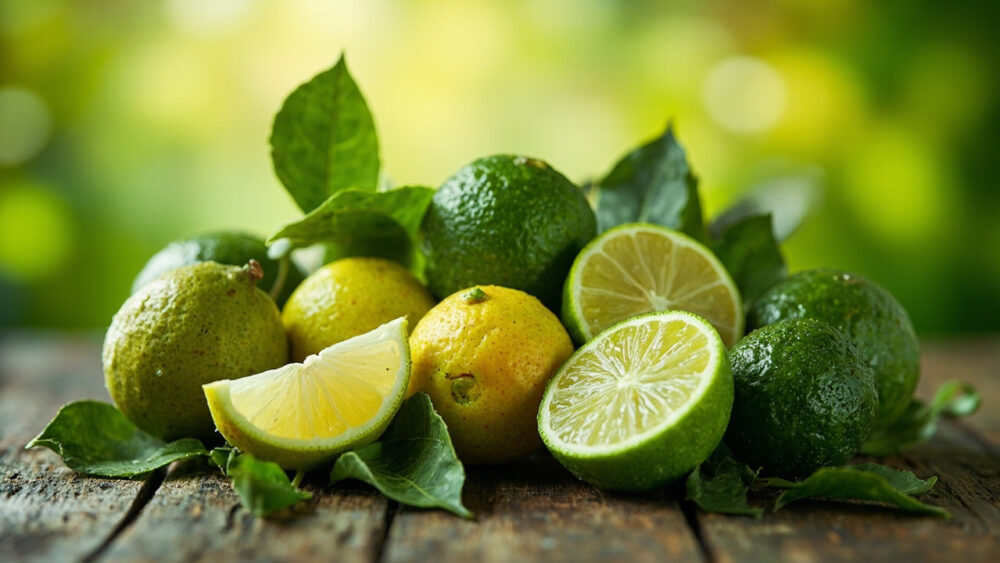
The fastest way to sort out the different types of limes is by size and cold tolerance, not flavor, because most limes taste “limey” in the same general direction while their hardiness and fruit size vary enormously. A Key lime tree and a Persian lime tree are barely the same plant to grow, even though the fruit ends up in the same glass of margarita. Get the size and zone question right first and the rest of the decision gets easy.
Most home gardeners reach straight for the Persian lime because it is the only one they have ever seen in a grocery store, which is a fine reason but not always the best one for a container on a patio. There is a quieter favorite among people who grow a lot of citrus, and it is not the one you would expect. There is also a lime almost everyone misreads as a lemon the first time they see it fruiting, and that mix-up shows up later at number 13.
The last few entries below, plus a straight method for narrowing all fifteen down to the one that fits your actual space, are waiting at the bottom. Worth the scroll if you only have room for one tree.
The Grocery Store Standards
These are the limes you have already tasted, even if you have never grown one.
1. Persian Lime
The default supermarket lime is a Persian, also called Tahiti lime, and it earns that spot by being seedless, juicy, and considerably less acidic and floral than a Key lime. The tree grows 10 to 20 feet in the ground or stays manageable in a large pot with pruning, and it wants USDA zone 9 to 11, sulking hard below about 30°F. It is the safest first lime for a beginner precisely because it is unremarkable in the best way: reliable, productive, forgiving of average care.
2. Key Lime
The one people buy for pie and regret buying full-size trees for is the Key lime, a small, thorny, shrubby tree that tops out around 6 to 8 feet and produces marble-sized, seedy, intensely aromatic fruit. It is more cold-sensitive than Persian lime, struggling below 32°F, and it is genuinely fussier about consistent moisture. Grow it if you actually bake with lime juice regularly; it is a lot of thorny tree for a garnish otherwise.
3. Bearss Lime
Bearss is technically a Persian-type lime, but nurseries sell it as its own cultivar because it is more cold-hardy than standard Persian and fruits a bit more heavily in containers. If your zone runs borderline for citrus, Bearss is often the specific cultivar a nursery will point you to over generic “Persian lime” stock.
Those three cover what almost everyone pictures when they hear “lime,” but the interesting choices start once you leave the produce aisle behind.
The Fragrant and Culinary Specialists
These earn their space in a garden for smell and cooking use more than for juice.
4. Kaffir Lime (Makrut Lime)
Grown for the leaf, not the fruit, kaffir lime has a distinctive double-lobed leaf that is the backbone of Thai and Southeast Asian cooking, while the bumpy fruit itself is nearly juiceless and mostly used for zest. The tree stays compact, 6 to 10 feet, and does well in a pot that can be moved indoors below zone 9. If you cook Thai food more than twice a month, this is the single most useful lime tree you can own.
5. Australian Finger Lime (Citrus australasica)
The fruit is a slender, finger-shaped pod packed with tiny caviar-like juice vesicles that pop on the tongue instead of squeezing out like normal citrus juice. This is the one experienced citrus growers quietly rate above Persian lime, because it is a genuine novelty at the table and the thin, thorny understory tree tolerates a bit more shade than most limes. It is slow to establish and takes several years to fruit well, so it rewards patience more than it rewards a beginner.
6. Rangpur Lime
Despite the name, Rangpur is technically a mandarin-lime hybrid with orange-colored skin and tart, lime-flavored juice, which confuses almost everyone who grows one for the first time. It is one of the most cold-hardy limes available, handling brief dips into the low 20s better than true limes, and it is frequently used as a rootstock as much as a fruiting tree in its own right.
The next group moves further from the familiar shape of a lime tree altogether.
The Unusual and Hybrid Limes
These blur the line between lime, lemon, and something else entirely.
7. Kieffer Lime
A close relative to kaffir lime sometimes sold under a nearly identical name, Kieffer is grown almost exclusively for its aromatic leaf and rind rather than juice volume. Confirm which one you are buying, since nursery labeling for kaffir versus Kieffer is inconsistent and the growing needs are nearly the same anyway: warm, humid, zone 9 and up.
8. Limequat
A cross between a Key lime and a kumquat, limequat produces small, thin-skinned fruit that can be eaten whole, peel and all, with a sweet-tart bite unlike anything else on this list. The tree is more cold-tolerant than Key lime, handling short dips near 25°F, and it stays small enough for a patio pot for its entire life. It is a genuinely good choice for a colder-than-ideal climate that still wants lime flavor.
9. Sweet Lime (Citrus limettioides)
Sweet lime, sometimes called Palestine sweet lime or Indian sweet lime, is low in acid and mild rather than sharp, which makes it an odd fit for cocktails but a pleasant fresh-eating fruit. People expecting a normal tart lime are usually disappointed, so grow this one specifically because you want a low-acid citrus, not as a substitute for Persian lime.
10. Blood Lime
Blood lime is a modern hybrid, a cross involving a red finger lime and a mandarin-type lime, producing fruit with pink to red flesh and a tart, faintly berry-like flavor. It is grown as much for looks as for taste, and the small tree suits a container where the striking cut fruit can actually be shown off.
One more genuinely useful cold-hardy option is waiting in the next section, along with the fruit almost everyone misidentifies on sight.
Cold-Hardy and Landscape Limes
If your winters are the real obstacle, these are the ones worth researching first.
11. Yuzu (Citrus junos)
Yuzu is often grouped with limes in nursery catalogs for its tart, aromatic use in cooking, though it is technically its own citrus species closer to a mandarin-lemon-lime blend. It survives cold that would kill true limes outright, tolerating brief drops into the teens once established, which makes it the pick for anyone north of zone 9 who still wants that sharp citrus zest in the kitchen.
12. Ichang Lime (Citrus cavaleriei)
Ichang lime is one of the hardiest true limes that exists, tolerating temperatures well below what kills a Persian or Key lime, and it is more often used as breeding stock or a curiosity tree than a kitchen staple because the fruit is seedy and only moderately palatable. Grow it for hardiness and interest, not for juice yield.
13. Meyer Lemon (Citrus × meyeri)
Here is the mix-up: Meyer lemon gets mistaken for a lime constantly because the fruit sometimes ripens with a greenish-yellow tint and the flavor carries a floral, less acidic edge that reads as “lime-like” to a lot of home cooks. It is a lemon hybrid, not a lime, full stop, but it earns a spot on this list because so many gardeners buy one specifically thinking they are getting a lime substitute, and honestly it works fine in that role in a pinch.
The last two entries close out the hardy end and the true miniature end of the spectrum.
Small-Space and Ornamental Picks
Two more worth knowing if a full-size tree is not realistic for your space.
14. Dwarf Persian Lime
A grafted dwarf version of standard Persian lime, this stays under 6 to 8 feet and fruits reliably in a container, making it the practical answer for anyone who wants normal supermarket-style lime flavor without a full-size tree. It still needs a warm, sunny spot, ideally six or more hours of direct light, and it should come indoors well before the first frost in any zone below 9.
15. Calamansi (Citrus microcarpa)
Calamansi is a Philippine staple, a small, extremely productive tree bearing tiny, intensely tart fruit used the way many households use lime juice in everyday cooking. It fruits almost continuously in warm conditions and tolerates a container life well, making it one of the most generous small citrus trees you can grow if you use a lot of tart juice in the kitchen.
How to Choose the Right One
Work through these in order and the right lime usually becomes obvious by step three.
- Measure your actual space: full ground planting allows Persian or standard Key lime, while a patio or indoor setup points you toward dwarf Persian, limequat, kaffir, or calamansi.
- Check your winter lows: true limes suffer below freezing, so anyone in zone 8 or colder should look at Rangpur, limequat, yuzu, or Ichang lime instead of forcing a tender variety to survive outdoors.
- Decide your main use: juice and cocktails point to Persian or Key, cooking aromatics point to kaffir or Kieffer, fresh eating points to sweet lime or calamansi, and visual novelty points to finger lime or blood lime.
- Be honest about your care appetite: finger lime and Key lime demand more attention and patience than a Persian or limequat, which forgive more mistakes.
- If you are still unsure, start with a dwarf Persian or a limequat: both are forgiving, both fruit reliably in a container, and both give you real lime flavor while you decide if you want to go further.
Fifteen limes, one obvious best first tree for most people: start small, start hardy, and let the tree earn a bigger pot later.