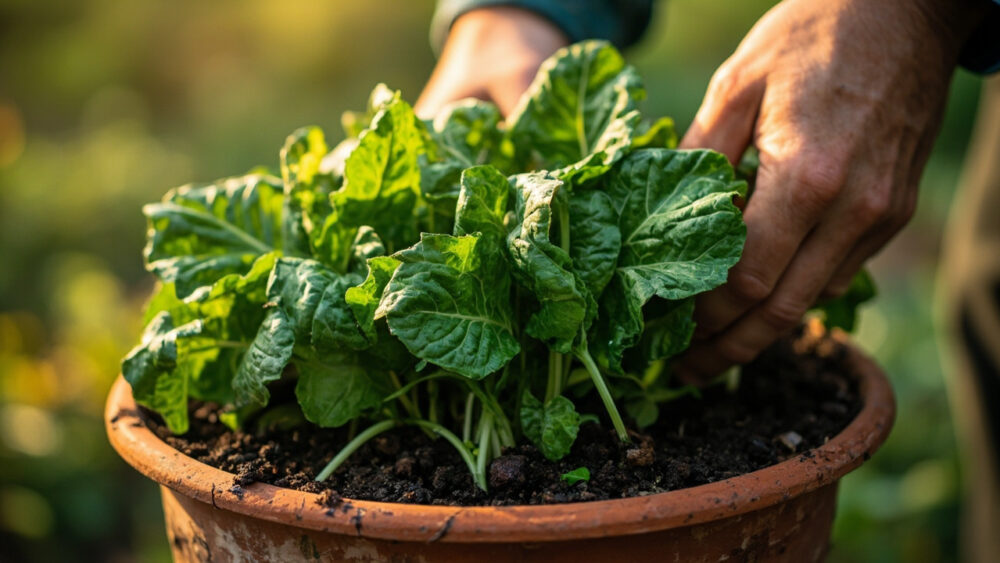
You can grow spinach in containers by using a pot at least 8 inches deep, filling it with loose, rich potting mix, and sowing seeds a half inch deep and 2 to 3 inches apart as soon as soil temperature sits between 45 and 75 degrees F. Spinach is one of the easiest greens for pots because its roots are shallow, but most people overcrowd the container or plant too late in warm weather, and both mistakes end the same way: bitter, bolted plants instead of a bowl of salad.
There is a sign most gardeners misread completely, a spinach plant that suddenly shoots up a tall central stem looks like it is thriving, but that is actually the plant quitting on you. There is also a watering habit that quietly stunts more container spinach than drought ever does. And there is an honest answer waiting for you about why your spinach grew fine for three weeks and then turned bitter overnight.
Stick with this guide through planting, feeding, and harvest, and I will hand you the full Spinach at a Glance card at the bottom, the kind of thing worth saving to your phone before you touch the soil.
When to Plant Spinach in Containers
Spinach is a cool-weather crop, and containers make timing easier because you can move pots or start them early on a porch. Sow seeds as soon as you can work the soil in spring, ideally 4 to 6 weeks before your last expected frost, once soil temperature reads 45 to 75 degrees F. Spinach germinates poorly above 75 degrees, so a late spring planting in a hot climate is fighting the clock from day one.
In zones 7 and warmer, fall and even winter plantings often outperform spring ones, since spinach tolerates light frost far better than heat. Aim for a fall sowing 6 to 8 weeks before your first fall frost.
The mistake that ruins most first attempts is planting too late in spring and watching it bolt in early summer heat.
Choosing the Spot and Prepping the Container
Spinach wants 4 to 6 hours of sun daily in cool weather, but partial afternoon shade actually helps once temperatures climb, buying you a few extra weeks before bolting. Pick a container at least 8 inches deep with drainage holes, wider is better since you can fit more plants per pot. A 12 to 18 inch diameter pot comfortably holds 6 to 9 spinach plants.
Fill it with a loose, well-draining potting mix blended with compost, spinach likes fertility but hates compacted, waterlogged soil. Skip garden soil straight from the yard, it compacts hard in a container and suffocates the shallow roots.
Get the container right and the planting step becomes almost foolproof.
Step-by-Step Planting
- Fill the pot with moistened potting mix, leaving an inch of headspace below the rim.
- Sow seeds a half inch deep, spacing them 2 to 3 inches apart, or scatter and thin later.
- Space rows or clusters about 4 inches apart if using a wide container.
- Water gently right after sowing to settle the soil around the seeds.
- Thin seedlings to 3 to 4 inches apart once they have two true leaves, using the thinnings in a salad rather than tossing them.
That thinning step is the one everyone skips, and it is the second big reason container spinach disappoints.
Watering and Feeding Through the Season
If you assumed spinach wants to dry out between waterings like a tomato, that guess is what stunts it. Spinach roots are shallow and thirsty, and containers dry out fast, so check the top inch of soil daily in warm weather and water whenever it feels dry to the touch. Inconsistent moisture is the quiet cause behind small, tough leaves that never seem to size up.
Feed every 2 to 3 weeks with a balanced or nitrogen-leaning liquid fertilizer, since container growing flushes nutrients out with every watering. Spinach is a leaf crop, it rewards nitrogen more than most vegetables do.
Get the water and feeding rhythm right, and the plant problems below mostly take care of themselves.
The Problems Most Likely to Strike
Bolting is the big one, and it is the answer to that overnight-bitterness question from the intro. Spinach bolts, meaning it sends up a flower stalk and turns bitter, once temperatures consistently push past 75 to 80 degrees F, and once it starts there is no reversing it, only harvesting fast or pulling the plant.
Leaf miners and aphids show up as pale squiggly tunnels or clusters of tiny insects on leaf undersides. Remove affected leaves promptly and check plants every few days, since container spinach is grown too fast to justify most sprays, and a floating row cover early in the season prevents leaf miners before they start. Downy mildew shows as yellow patches on top with fuzzy gray growth underneath, favored by wet leaves and crowded plants, so water at the soil line and keep that thinning spacing honest.
If you ever suspect a pet has eaten a large quantity of any garden crop treated with a product you’re unsure about, contact a veterinarian rather than guessing.
Once you know what to watch for, harvest timing is the last piece of the puzzle.
When and How to Harvest
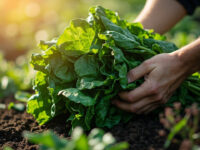
Spinach is ready to start harvesting once leaves reach 3 to 4 inches long, usually 35 to 45 days after sowing depending on temperature and variety. You do not need to wait for full maturity, baby spinach at 25 to 30 days is tender and delicious.
Harvest outer leaves first, letting the center keep producing, or cut the whole plant an inch above the soil line for a one-time harvest that often regrows once.
Pick in the cool morning hours when leaves are crisp, and harvest regularly, since a plant that is picked stays productive longer than one left to grow unchecked toward bolting.
That regular picking habit is also your best defense against the bolting problem this whole guide has been circling.
Spinach at a Glance
- When to plant: 4 to 6 weeks before last frost in spring, or 6 to 8 weeks before first fall frost in zones 7 and warmer, once soil is 45 to 75 degrees F.
- Container size: at least 8 inches deep, 12 to 18 inches wide for 6 to 9 plants.
- Planting depth and spacing: sow a half inch deep, thin to 3 to 4 inches apart.
- Sun needs: 4 to 6 hours daily, afternoon shade helps in warm weather.
- Watering: check daily, water whenever the top inch of soil feels dry.
- Feeding: balanced or nitrogen-rich liquid fertilizer every 2 to 3 weeks.
- Harvest window: baby leaves at 25 to 30 days, full leaves at 35 to 45 days.
Spinach rewards attention more than effort, a daily glance at the soil and a fast harvest once heat arrives will get you further than any amount of fussing over fertilizer brands.
Get the timing and the water right, and this is genuinely one of the easiest crops you will ever grow in a pot.