The best companion plants for cabbage are aromatic herbs and strong-smelling alliums like dill, chamomile, onions, and garlic, plus nectar plants like nasturtium that pull cabbage worms and aphids away from your heads. Beans and other legumes help too, feeding nitrogen into soil that cabbage burns through fast. Skip strawberries, tomatoes, and anything else in the nightshade family nearby, and never plant cabbage where broccoli, kale, or other brassicas grew last year.
That much you could probably guess. Here is what most people get wrong: they plant dill too close and it actually pulls MORE pests into the bed at the wrong growth stage, or they load up on nasturtium thinking it repels cabbage worms when it does the opposite, it lures them in on purpose, as a sacrifice crop. Get that mechanism backwards and you plant it in the wrong spot entirely.
There is also the mistake that quietly ruins more cabbage patches than any pest ever does, and it has nothing to do with companions at all. Stick with me and I will hand you the full breakdown, plus a save-able Cabbage at a Glance card at the bottom with spacing, timing, and soil numbers you will actually want on your phone this weekend.
The Companions Worth Planting
Dill
Dill draws in parasitic wasps and hoverflies that hunt down cabbage worms and aphids for you. The catch is timing: dill needs to be blooming, not just sprouting, to attract those predatory insects in real numbers. Plant it a few weeks ahead of your cabbage transplants so it is flowering by the time worms show up, and keep it 12 to 18 inches off the cabbage itself so it is not shading young heads.
Once dill is actually in bloom, it starts pulling its weight.
Chamomile
Chamomile is one of the few plants that seems to genuinely improve the vigor of what is growing next to it, cabbage included, and it also draws in the same beneficial wasps dill does. It is low and unobtrusive, so tuck it along bed edges where it will not compete for light. German chamomile self-seeds readily, which is a bonus if you want it back next year and a mild nuisance if you do not.
That same edge-of-bed logic applies to onions and garlic, just for a different reason.
Onions, Garlic, and Leeks
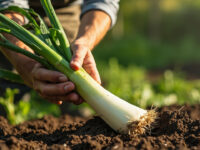
Alliums mask the sulfur compounds that cabbage gives off, the scent cabbage moths use to find a place to lay eggs. Interplant onion or garlic sets every 12 to 15 inches through the cabbage row and you meaningfully cut down on egg-laying visits. This is one of the oldest, best-documented pairings in the vegetable garden and it holds up.
Alliums confuse pests by smell, but the next companion works by taste, not scent.
Nasturtium
Here is the myth correction promised earlier. Nasturtium does not repel cabbage worms, it attracts them, and that is exactly the point. Planted a couple feet away as a sacrifice crop, nasturtium pulls egg-laying moths off your cabbage and onto itself, where you can watch it get chewed instead of your heads.
Treat it as a decoy, not a shield, and plant it at the bed’s outer edge rather than tucked against the cabbage.
Used correctly, nasturtium takes pressure off, but only if you know what it is actually doing.
Beans, Peas, and Other Legumes
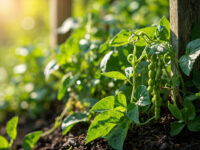
Cabbage is a heavy nitrogen feeder, and bush beans or peas fix nitrogen in the soil through bacteria on their roots, leaving some behind for neighboring crops. Plant beans 6 to 8 inches from cabbage seedlings. They also fill vertical or ground space cabbage is not using, without competing hard for the same nutrients.
Feeding the soil is one job done, but keeping the soil covered is another, and that is where the next plant earns its spot.
Thyme, Sage, and Rosemary
These woody herbs mask cabbage’s scent with their own strong oils and tend to repel cabbage moths, flea beetles, and loopers. They are perennial in many zones, so once established along a bed edge they keep working year after year with little upkeep. Give them their own strip since they prefer drier soil than cabbage wants.
All these companions help, but none of them fix the mistake that actually wrecks the most cabbage crops.
What to Never Plant Near Cabbage
Strawberries and cabbage compete hard for the same nutrients and water, and strawberries tend to lose that fight, ending up stunted and low-yielding. Tomatoes, peppers, and eggplant are less about direct competition and more about general vigor, cabbage tends to underperform near nightshades for reasons that are not fully settled, but the pattern shows up often enough that most experienced gardeners keep them apart.
Pole beans specifically, unlike their bush cousins, tend to shade and crowd cabbage too aggressively, so stick with bush varieties near cabbage, not climbers. And skip rue near cabbage entirely, it stunts growth in the whole brassica family.
None of these mistakes, though, cost you as much as the one buried in your own rotation plan.
The Mistake That Actually Ruins Most Cabbage
If you assumed the biggest risk to cabbage is a bad companion choice, that guess misses the real threat. The single most common way gardeners lose a cabbage crop is planting brassicas in the same soil year after year. Cabbage, broccoli, kale, and their relatives all share the same soil-borne disease, clubroot, and the same pest pressure from cabbage root maggots.
Rotate cabbage and its relatives out of any bed for three to four years minimum. No companion planting scheme, however well designed, will undo the damage of skipping that rotation.
With rotation handled, the layout of the bed itself is the next thing worth getting right.
Laying Out the Bed
Space cabbage transplants 12 to 18 inches apart in rows 18 to 24 inches apart, depending on whether you are growing compact or full-size heads. Set companions at the edges and corners rather than mixed directly into the row, since cabbage wants full sun and does not appreciate being shaded by taller herbs or beans crowding in close.
A simple, workable layout:
- Onion or garlic sets tucked between cabbage plants in the row itself
- Dill and chamomile along one long edge of the bed, given room to flower
- Bush beans on the opposite edge, 6 to 8 inches off the nearest cabbage
- A few nasturtium plants at the far corner, away from the cabbage but close enough to intercept moths headed that direction
Get the layout right and the last thing left to sort out is separating real advice from garden folklore.
Companion Myths Worth Retiring
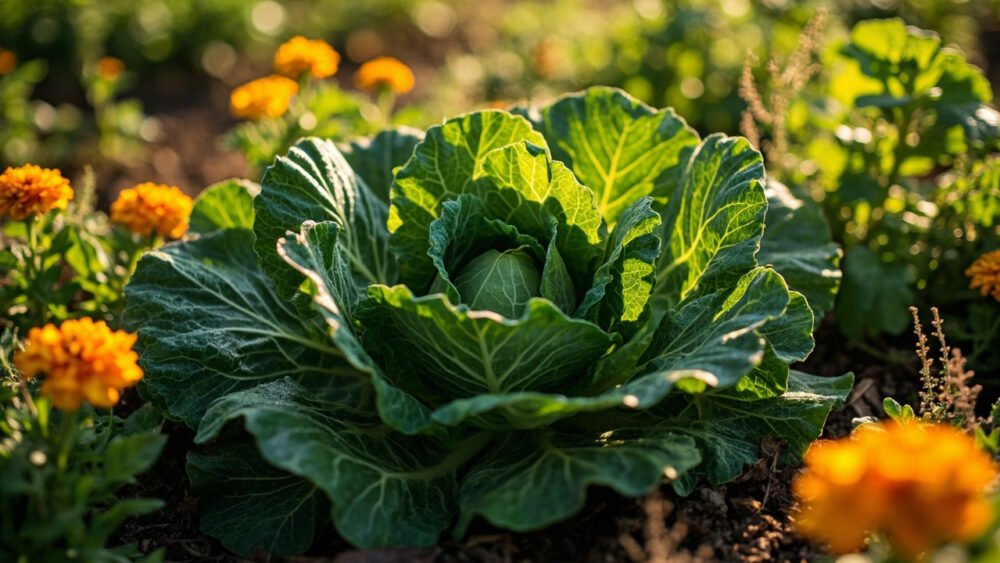
Marigolds get recommended for nearly every vegetable in existence, cabbage included, but the evidence for marigolds specifically deterring cabbage pests is thin. They are fine to plant for general garden health and pollinator support, just do not count on them to save your cabbage from worms.
Another persistent one: mint repels cabbage moths. Mint’s oils do have some repellent effect, but mint spreads aggressively enough through underground runners that it will invade your cabbage bed and everything else nearby within a season or two. If you want mint’s benefit, grow it in a container and set the container near the bed instead.
Skip the folklore, and the companions that actually hold up are the ones worth building your bed around.
Cabbage at a Glance
- When to plant: set transplants out 2 to 4 weeks before your last spring frost, or in mid to late summer for a fall crop timed to mature before hard frost.
- Spacing: 12 to 18 inches between plants, 18 to 24 inches between rows.
- Soil: rich, well-drained, consistently moist, with a pH between 6.0 and 7.0.
- Best companions: dill, chamomile, onions, garlic, bush beans, thyme, sage, and nasturtium used as a decoy planting.
- Never plant near: strawberries, tomatoes, peppers, eggplant, pole beans, and rue.
- Rotation rule: keep cabbage and all brassicas out of the same soil for 3 to 4 years to avoid clubroot and root maggot buildup.
- Watering: about 1 to 1.5 inches per week, steady moisture matters more than volume for preventing split or bitter heads.
Companions help around the edges, but rotation and spacing are what actually decide whether this crop makes it to harvest.
Get those two right first, then let the dill and onions do the rest of the work.