Growing luffa means giving this vigorous vine a long, hot growing season (90 to 200 days depending on whether you want it for eating young or drying into a sponge), a sturdy trellis to climb, and full sun with rich, well-drained soil. Plant seeds after the soil warms past 70°F, space vines 3 to 4 feet apart on strong support, and keep the soil evenly moist through summer. Get the timing and trellis right and the rest is mostly patience.
Most failed attempts do not fail from bad luck. They fail because someone planted too early into cold soil, or gave the vine a wimpy trellis that collapsed under 15 pounds of fruit in August.
There is also a harvest window most gardeners misread completely, because a luffa meant for eating and a luffa meant for a bath sponge come off the vine at almost opposite moments. Stick around and I will tell you exactly which sign to watch for and when, plus the one soil mistake that quietly stunts vines all season without ever showing an obvious symptom. Save-able specifics are waiting in the Luffa at a Glance card at the bottom.
When to Plant Luffa
Luffa is a heat lover, more sensitive to cold than cucumbers or zucchini. Wait until nighttime temperatures reliably stay above 55°F and soil temperature has climbed past 70°F, which is usually two to four weeks after your last spring frost.
In zones 7 and colder, start seeds indoors 4 to 6 weeks before that outdoor window, because luffa needs a long season and short summers will not finish the job outdoors from a direct seed.
Zones 8 and warmer can direct-seed once soil is warm. Cold, wet soil is the number one killer of luffa seed, it will simply rot before it sprouts.
Get the calendar right and the next decision is where that vine actually lives.
Choosing the Spot and Prepping the Soil
Luffa wants full sun, 6 to 8 hours minimum, and it wants room to run since a single vine can stretch 15 to 30 feet in a season. Pick a spot with a fence, arbor, or built trellis already in mind before you plant, not after.
Soil should be loose, rich, and well-drained, amended with a couple inches of compost worked into the top 8 to 10 inches. Heavy clay that stays soggy is the quiet stunting problem I mentioned, roots sitting in wet, airless soil grow weak all season with no dramatic symptom, just a vine that never quite takes off.
If your soil is heavy, raise the bed or mound it 6 to 8 inches to force drainage. A pH between 6.0 and 6.8 suits luffa fine, same range most vegetable gardens already sit in.
Soil sorted, support built, now the actual planting.
Planting Luffa Step by Step
1. Sow at the right depth
Plant seeds 1/2 to 1 inch deep. Luffa seed has a tough coat, so soaking seeds overnight or nicking the coat lightly with a nail file before planting speeds germination, which otherwise can drag on for 10 to 14 days even in warm soil.
2. Space for a vine that means business
Space plants 24 to 36 inches apart along the trellis line, or sow 2 to 3 seeds per hill spaced 3 to 4 feet apart and thin to the strongest seedling once true leaves appear. Crowded vines compete hard for light and airflow, which invites the fungal problems covered below.
3. Set the trellis before the vine needs it
This is the step everyone underestimates. A tomato cage will not hold a mature luffa vine loaded with fruit.
Build or install something sturdy, cattle panel, heavy wire fencing, or a wood arbor rated for real weight, at planting time, not once the vine starts reaching for something. Luffa climbs by tendril and appreciates a head start of string or twine to grab in the first few weeks.
Vine in the ground and climbing, next it needs steady feeding to keep that growth going.
Watering and Feeding Through the Season
Luffa wants consistent moisture, about 1 to 1.5 inches of water per week between rain and irrigation, more during hot, dry stretches once fruit is forming. Let the top inch of soil dry between waterings but do not let the whole root zone go bone dry, that stresses the vine and can cause blossom drop.
Feed with a balanced fertilizer or compost side-dressing at planting, then switch to something higher in phosphorus and potassium once flowering starts, since too much nitrogen late in the season pushes leafy growth at the expense of fruit.
Mulch around the base to hold moisture and keep weeds down, luffa does not compete well with weeds early on.
Feed and water right and you will still meet a few uninvited visitors along the way.
Problems That Actually Show Up
Luffa is fairly tough once established, but a few issues are common enough to expect.
- Squash bugs and cucumber beetles: check under leaves regularly, handpick where practical, and if pressure is heavy use a labeled insecticide for cucurbits following the product label exactly.
- Powdery mildew: shows up as white dusty patches on leaves in humid weather with poor airflow; improve spacing and airflow first, and a labeled fungicide can help if it takes hold.
- Poor fruit set: luffa produces separate male and female flowers, and early in the season you will see mostly males; this is normal, not a failure, and female flowers with tiny bulges at the base follow within a couple weeks.
- Blossom drop in extreme heat: common above 95°F, the vine usually resumes setting fruit once temperatures ease.
Once the vine is fruiting steadily, the real question becomes when to actually pick.
When and How to Harvest Luffa
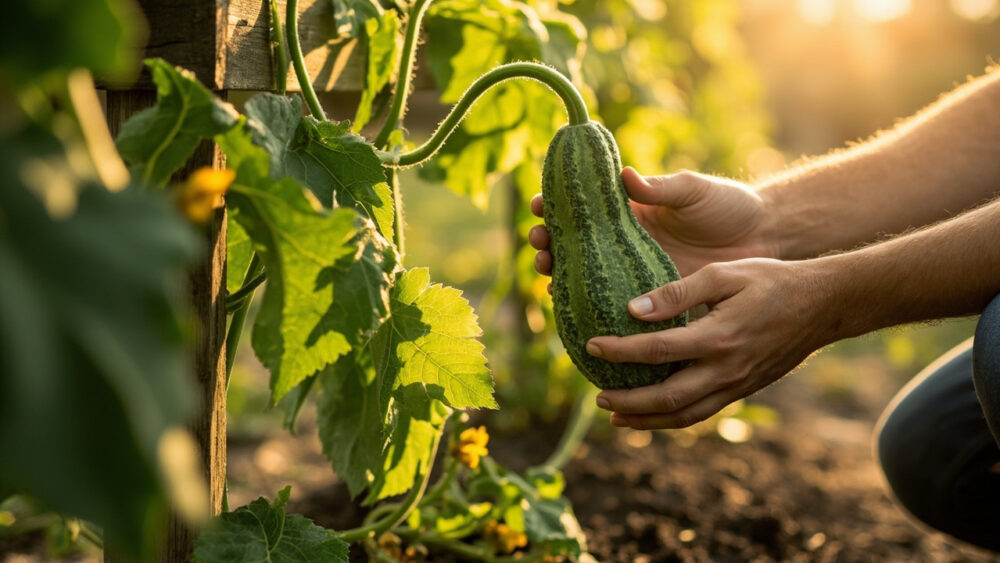
Here is the split most people guess wrong. If you want luffa as a vegetable, harvest young and tender, at 4 to 6 inches long and 40 to 65 days after planting, still soft enough to slice like a squash and dark green skinned.
If you assumed you pick a sponge luffa the same way, that guess wastes the whole point. For bath sponges, you let the fruit go all the way, staying on the vine until the skin turns yellow-brown, feels dry and papery, and rattles slightly when shaken, often 150 to 200 days from planting.
At that stage, cut it from the vine, peel the dried skin (it should crack and come away in pieces), shake out the seeds, and rinse the fibrous interior until it lightens. Let it dry fully in a well-ventilated spot for several days before storing.
A frost will kill the vine before fully mature fruit finishes drying in short-season climates, so gardeners in zones 6 and colder often need to start very early indoors or accept a shorter harvest window.
However you plan to use it, the specifics worth keeping are gathered right below.
Luffa at a Glance
- When to plant: direct sow or transplant once soil is above 70°F and nights stay above 55°F, usually two to four weeks after last frost.
- Spacing: 24 to 36 inches apart on a trellis, or hills 3 to 4 feet apart thinned to one strong seedling.
- Planting depth: 1/2 to 1 inch, with seeds soaked or lightly nicked to speed germination.
- Sun and soil: full sun, 6 to 8 hours minimum, rich well-drained soil with pH 6.0 to 6.8.
- Water: about 1 to 1.5 inches per week, consistent moisture without waterlogging.
- Days to maturity: 40 to 65 days for tender edible fruit, 150 to 200 days for a fully dried sponge.
- Harvest cue: pick young and green for eating, wait for yellow-brown, dry, rattling skin for sponges.
Get the trellis strong and the timing anchored to real soil temperature, and luffa mostly takes care of itself.
The only thing you cannot rush is that last stretch to a dry, rattling sponge.