The best companion plants for bush beans are summer savory, corn, cucumbers, radishes, and marigolds, and the worst are onions, garlic, and anything in the allium family. Alliums release compounds through their roots that actively stunt bean growth, which is why a bean row planted next to a garlic bed almost always looks pale and sulky by midsummer. Get the pairing right and beans fix nitrogen for their neighbors, get pest cover from strong-scented herbs, and stay off the ground with a little help from taller companions.
Most of what goes wrong with companion planting comes down to one guess everyone makes and gets backwards. Almost every new gardener assumes onions and beans are a safe pairing because they’re both common vegetable-garden staples, and that guess costs a whole row.
There’s also a timing mistake that ruins more bean companion setups than bad pairings do, and it has nothing to do with what you plant, but when. Stick around, because the full “Bush Beans at a Glance” card is at the bottom of this page, saveable to your phone before you head out to the garden.
Why Bush Beans Are Easy to Pair, But Not With Everything
Bush beans are nitrogen fixers. Bacteria in nodules on their roots pull nitrogen from the air and convert it into a form plants can use, and some of that nitrogen leaks into the surrounding soil while the plant is alive, with the bulk released after you cut the roots off at season’s end.
That makes beans generous neighbors for heavy feeders like corn and squash. But beans are also shallow-rooted and thin-stemmed, so they compete poorly with anything that shades them out early or crowds their root zone before they’ve bulked up.
The right companions solve a real problem: pests, soil fertility, or space. The wrong ones create one.
The Best Companion Plants for Bush Beans
Corn
Corn and beans are one of the oldest working pairs in vegetable gardening for good reason. Corn is a heavy nitrogen feeder and beans replace some of what corn pulls out of the soil.
Corn stalks also give beans a bit of afternoon shade in hot climates without blocking the morning sun they need to set pods. Space corn rows about 30 to 36 inches apart and tuck bush beans along the base once corn is 6 to 8 inches tall.
Squash is the traditional third partner here, but with bush beans specifically, give squash extra room since its leaves sprawl wide and can smother a bush bean’s low canopy.
Get the timing on corn wrong and you lose the whole benefit.
Summer Savory
Summer savory is the herb old-timers swear by next to beans, and it earns the reputation. It’s believed to improve bean flavor slightly, but its real job is masking the scent beans give off that attracts bean beetles.
Plant it along the row edge, 8 to 12 inches from your beans, and let it flower. The blooms also draw in small pollinators and predatory wasps that help keep aphids down.
It’s a low, bushy herb, so it never competes for light.
Radishes
Radishes mature in 25 to 35 days, which means they’re up and out of the ground before bush beans need the space. Fast radishes also work as a trap crop, pulling flea beetles and root maggots away from young bean seedlings.
Tuck them between bean seeds at planting time. By the time beans are vining out sideways, radishes are already on your dinner plate.
Cucumbers
Cucumbers and bush beans share similar water and soil needs, which makes bed planning simple; one watering schedule works for both. Cucumbers also draw in cucumber beetles, and while that sounds bad, it keeps those beetles somewhat concentrated on the cucumber vines rather than evenly spread across your whole bean patch.
Give cucumbers their own trellis or a few feet of sprawl room so they don’t vine directly over the beans.
Marigolds and Nasturtiums
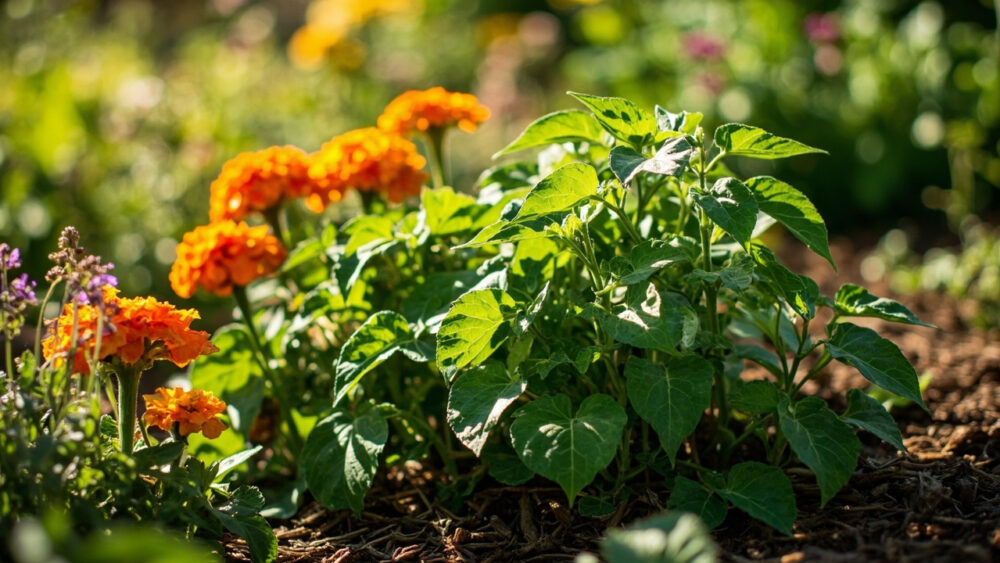
Marigolds repel some nematodes in the soil and their strong scent throws off Mexican bean beetles hunting by smell. Nasturtiums work as a trap crop for aphids, luring them away from beans almost every time.
Plant either along the bed border rather than mixed into the row itself, since nasturtiums especially will sprawl and climb if given the chance.
That covers what works. Now here’s the pairing that quietly wrecks a bean crop every single year.
What to Never Plant Near Bush Beans
Onions, Garlic, Shallots, and Chives
This is the guess that gets it backwards. Alliums release sulfur compounds into the soil that interfere with the rhizobia bacteria living in bean root nodules, the same bacteria responsible for nitrogen fixation.
Plant beans next to onions and you’ll typically see stunted growth, pale lower leaves, and a noticeably smaller harvest, not because the plants are fighting for the same nutrients, but because the onions are chemically shutting down the bean’s own fertilizer factory.
Keep a minimum of 12 to 18 inches between any allium and your bean rows, and more if your bed is small enough that roots will genuinely tangle.
Fennel
Fennel is close to a universal bad neighbor in the vegetable garden, and beans are no exception. It releases root compounds that suppress the growth of most nearby vegetables, beans included.
Grow fennel in its own container or a bed at least several feet removed from anything you actually want to harvest.
Tall, Aggressive Sprawlers
Beans are short and shallow-rooted, so anything that grows fast and wide, like winter squash varieties left unchecked or sprawling melons, will shade out bush beans before they get a chance to bulk up.
It’s not toxic, it’s just a light and space problem, and it’s an easy one to avoid by giving vines their own dedicated real estate.
Knowing what to avoid only helps if your bed layout backs it up.
Laying Out the Bed So Companions Actually Help
Bush beans want full sun, 6 to 8 hours minimum, and soil that’s warmed to at least 60°F before seeds go in, usually a week or two after your last frost date. Plant seeds 1 inch deep, 2 to 4 inches apart, in rows spaced 18 to 24 inches apart.
Border plantings work better than mixing companions directly into the bean row itself. Put fast herbs and flowers along the edges, put taller partners like corn on the north or west side so they don’t cast midday shade, and keep any allium bed a full arm’s length away at minimum.
Succession planting radishes every 10 days alongside a single bean sowing keeps that trap-crop benefit going through the whole season rather than just the first few weeks.
Layout solves half the battle, but timing is the mistake that actually sinks most attempts.
The Timing Mistake That Undoes Good Companion Choices
Here’s the part almost nobody accounts for: companion planting only works if both plants are actually established at the same time. Plant corn and beans on the same day, and by the time beans need that partial afternoon shade, corn is still six inches tall and providing none.
The fix is staggering, not guessing. Get corn in the ground first, then direct-seed beans once corn has a few true leaves and stands roughly 6 to 8 inches tall, which is usually 10 to 14 days later depending on your soil temperature.
Same logic applies to squash: give it a head start being planted, or plant it a week or two after beans so bush beans get established before squash leaves spread wide enough to shade them.
Get this sequencing right and every companion pairing above performs the way it’s supposed to.
Companion Planting Myths That Don’t Hold Up
Marigolds are often sold as a cure-all pest barrier, but they don’t repel everything, and they won’t save a bean crop from a heavy Japanese beetle infestation on their own. Treat them as one layer of defense, not a substitute for scouting your plants regularly.
The idea that beans “feed” every neighboring plant nitrogen while actively growing is overstated too. Most of the nitrogen benefit comes after harvest, when you cut the plants at soil level and let the roots decompose in place rather than pulling them.
And potatoes, often lumped in as a safe pairing since both are common garden vegetables, are actually a mixed bag: some gardeners report fine results, but potatoes can host similar pest pressures, so if you have room to separate them, do it.
None of that changes the core plan, and here’s everything worth saving before you go plant.
Bush Beans at a Glance
- When to plant: one to two weeks after your last frost, once soil is at least 60°F, ideally closer to 65 to 70°F for fastest germination.
- Spacing and depth: seeds 1 inch deep, 2 to 4 inches apart, rows 18 to 24 inches apart.
- Best companions: corn, summer savory, radishes, cucumbers, marigolds, and nasturtiums.
- Never plant nearby: onions, garlic, shallots, chives, and fennel, all of which suppress bean growth or the nitrogen-fixing bacteria in bean roots.
- Layout tip: keep companions on the bed border, tall partners on the north or west side, and alliums at least 12 to 18 inches away.
- Timing rule: stagger plantings so shade-giving or trap-crop companions are already established, not seeded on the same day as your beans.
- Light needs: 6 to 8 hours of full sun daily, with light afternoon shade from a tall companion tolerated in hot climates.
Get the allium distance and the planting stagger right, and every other companion choice on this list takes care of itself.
That’s the one card worth keeping open on your phone while you walk the rows this weekend.