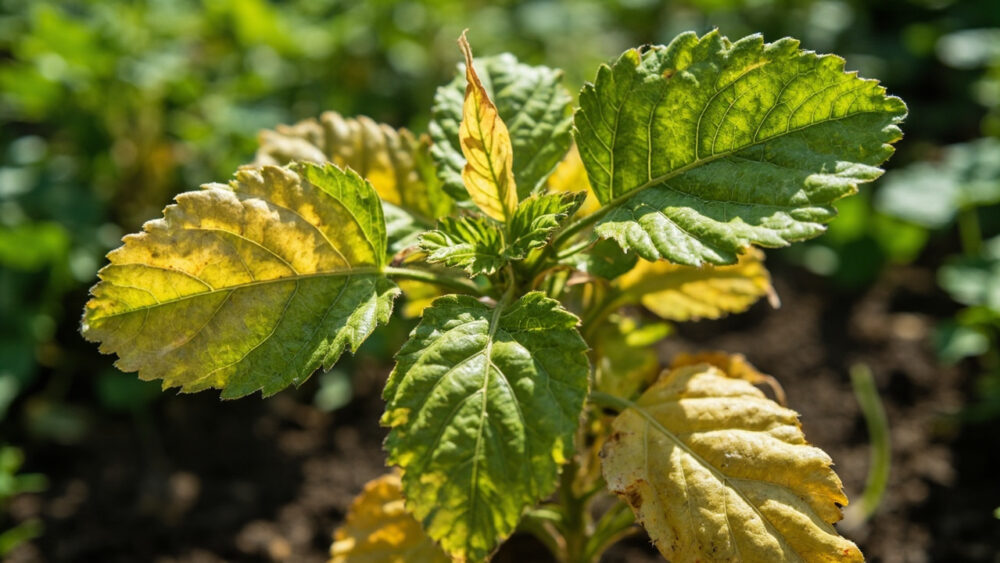
Nine times out of ten, yellowing that starts on the lower, older leaves and works its way up the plant is just normal senescence, the plant is finishing its job and pulling its energy back down into the tubers. If your potatoes are within a few weeks of their expected harvest window, this is not a problem, it is the plant telling you dinner is almost ready. If it’s happening early, in lush mid-season growth, the fix depends entirely on which of several culprits you’ve actually got.
Here’s what trips people up: most gardeners see yellow leaves on potatoes and reach straight for the water hose, assuming drought. That guess is wrong more often than it’s right, and overwatering a plant that’s actually short on nitrogen or fighting a fungus makes things worse, not better.
The detail that actually tells you which cause you’re dealing with is where on the plant the yellow starts, whether it’s spotted or solid, and whether it’s spreading up or staying put. Stick with this page and you’ll get every likely cause ranked by probability, the exact confirm test for each, an honest recovery outlook, and a two-minute diagnosis checklist at the very bottom you can run right now standing next to the plant.
Causes, Ranked Most to Least Likely
1. Natural end-of-season dieback
Confirm it: check your planting date. If you’re 80 to 100 days in (most varieties mature in that range) and the lowest leaves are yellowing evenly while upper leaves stay green, this is maturity, not disease.
The stems may also start to feel less rigid and the whole plant takes on a slightly tired, sprawling look.
Fix: there’s nothing to fix. Let the vines die back most of the way, then dig a test hill to check tuber size before pulling everything.
But if this is happening at week five instead of week twelve, keep reading.
2. Underwatering, especially during tuber set
Confirm it: push a finger 3 to 4 inches into the soil near the row. If it’s dry and crumbly at that depth, and the yellowing leaves feel slightly crisp or curled at the edges rather than limp, water is your problem.
Potatoes need consistent moisture, roughly 1 to 2 inches of water a week, especially once they start flowering and setting tubers.
Fix: water deeply and slowly at the base, aiming for moist soil down 6 to 8 inches, not a quick surface splash. Mulch with straw to hold that moisture and even out swings between wet and dry.
Uneven watering causes more tuber problems than almost anything else, and it leaves a clue on the leaves that’s easy to miss.
3. Nitrogen deficiency
Confirm it: look for a pale, uniform yellow (almost lime-green, not brown or spotted) that starts on the oldest lower leaves and moves upward as it worsens. The leaf still looks otherwise healthy, no spots, no wilting.
This shows up most in sandy soil, heavy rain years that leach nutrients, or beds that haven’t been fed since planting.
Fix: side-dress with a balanced or slightly nitrogen-forward fertilizer once plants are 6 to 8 inches tall, and again at flowering. Don’t overdo nitrogen late in the season though, it pushes leafy growth at the expense of tubers.
If the yellow comes with spots or a ring pattern instead of plain pale color, nitrogen isn’t your answer.
4. Overwatering or poor drainage
Confirm it: dig down near the roots. Soggy, gray, or foul-smelling soil, combined with yellowing that includes some wilting despite wet ground, points here. Roots may look brown and mushy rather than white and firm.
This is common after a run of heavy rain or in clay soil that doesn’t drain.
Fix: ease off watering immediately and improve drainage going forward with raised beds or hilled rows. If rot has set in, affected plants often don’t fully recover, but you can still save the rest of the row by fixing drainage now.
Root rot and disease often look similar at a glance, so the next cause matters.
5. Early blight or Verticillium wilt
Confirm it: early blight shows as brown-ringed spots with a yellow halo on lower leaves, often in target-like concentric circles. Verticillium wilt causes yellowing on one side of a leaf or one side of the whole plant, with V-shaped yellow wedges pointing inward from the leaf edge.
Both are fungal, both start low and move up, and both tend to show up in warm, humid weeks or in soil that’s grown potatoes or tomatoes recently.
Fix: remove affected leaves and destroy them, don’t compost. Improve airflow by spacing plants and avoiding overhead watering. A fungicide labeled for early blight can help if caught early, follow the product label exactly.
Verticillium lives in the soil for years, so this one changes your planting plan next season, not just this one.
6. Potato leafhopper or aphid feeding
Confirm it: flip the leaves over. Tiny pale insects, sticky residue, or a stippled, curled yellow leaf edge (sometimes called hopperburn) point to pests rather than soil or water.
You’ll usually spot the insects themselves if you look closely at dusk or early morning.
Fix: a strong water spray knocks aphids down, insecticidal soap handles both aphids and leafhoppers at the cultural level, always following label directions. Keep beds weeded, since many leafhoppers overwinter in nearby weeds.
Pest damage almost always comes with a visible insect or residue, which is the fastest way to rule this one in or out.
How to Tell the Causes Apart
Where it starts matters most. Lower and older leaves yellowing first, evenly, with no spots: maturity, nitrogen, or water. Yellowing on one side of the plant or leaf: Verticillium wilt. Spots with rings: early blight. Stippled or curled with sticky residue: pests.
Texture is the second clue. Crisp, dry, curled edges point to underwatering. Soft, wilted despite wet soil points to overwatering or rot. Firm and simply pale points to nitrogen.
Once you’ve matched the pattern, the prognosis question is what everyone actually wants to know.
Will It Recover?
Maturity dieback: nothing to recover from, this is on schedule.
Underwatering: excellent recovery once you resume consistent watering, usually visible improvement within a week.
Nitrogen deficiency: good recovery with feeding, though yellowed leaves themselves won’t turn green again, new growth will look better.
Overwatering or rot: mixed. Plants caught early bounce back once drainage improves, but plants with rotted roots usually decline regardless.
Fungal disease: managed, not cured. You can slow spread and often still get a decent harvest, but affected leaves stay damaged.
Pests: good recovery once populations drop, plants outgrow moderate feeding damage.
The honest line: if more than half the plant is yellow before flowering even starts, expect a smaller harvest no matter what you do now.
How to Keep It From Happening Again
Rotate your potato bed on a three to four year cycle away from tomatoes, peppers, and eggplant, since they share the same soil diseases.
Water deeply and consistently rather than in random bursts, and mulch to buffer dry spells.
Feed at planting and again at flowering rather than waiting until leaves already look pale.
Space plants for airflow and avoid wetting foliage when you water.
Get all that right and next season’s leaves stay green a lot longer, but check your plant against the list below before you do anything else today.
Diagnosis Checklist
- Check plant age: if you’re within three weeks of expected harvest and yellowing is even and low, stop here, this is normal maturity.
- Push a finger 3 to 4 inches into the soil: if dry and crumbly, water deeply and recheck in five days.
- If soil is wet or soggy, check root color: white and firm means ease off water, brown and mushy means rot has likely set in.
- Look at leaf color pattern: uniform pale yellow starting low with no spots means feed with balanced fertilizer.
- Look for rings or target-shaped brown spots with yellow halos: if present, remove those leaves and improve airflow, consider a labeled fungicide.
- Check for one-sided yellowing or V-shaped wedges from the leaf edge: if present, suspect Verticillium wilt and plan a rotation change next year.
- Flip several leaves over and check the undersides: sticky residue or tiny insects means treat for aphids or leafhoppers per product label.
Run through that list once and you’ll know exactly which fix to make today. Most yellow potato leaves are either water, nitrogen, or nothing at all, so don’t panic before you’ve checked the soil with your own hand.