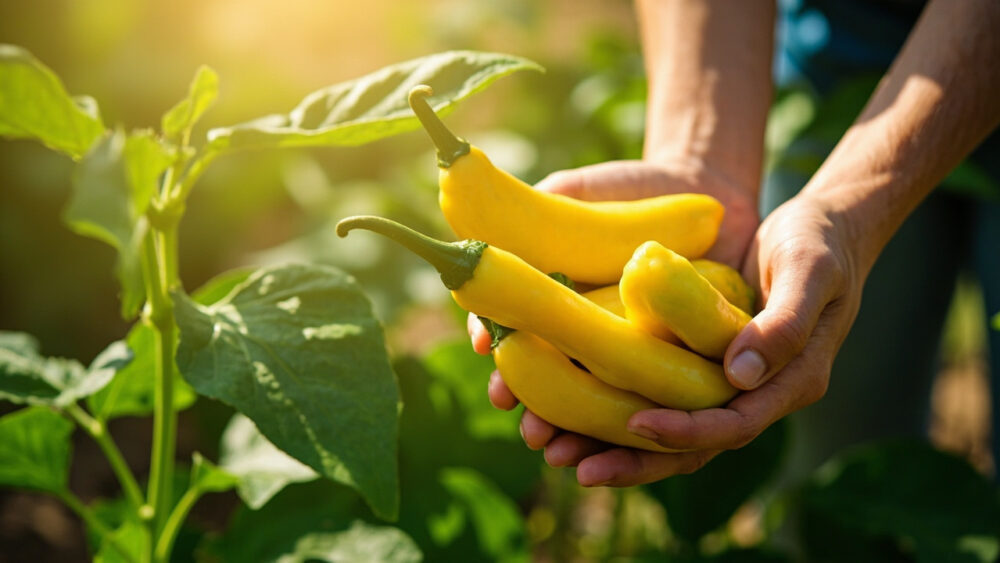
Here’s the short version of how to grow banana peppers: start them from seed indoors 8 to 10 weeks before your last frost, move transplants outside once nighttime temperatures stay above 55°F, give each plant 18 to 24 inches of space in full sun, and keep the soil evenly moist. You’ll get your first pale yellow peppers 65 to 80 days after transplanting, and they’ll ripen to orange-red if you leave them long enough.
That’s the outline. The plant fills in the rest, and it will test your patience in a few specific ways nobody warns you about.
The mistake that tanks most first attempts is planting too early into cold soil, which stalls the roots for weeks even if the leaves look fine. There’s also a sign on the plant itself that gets misread constantly, one that looks like disease but usually isn’t. And there’s a harvest question almost everyone has halfway through summer that I’ll answer plainly, including whether waiting for red peppers is actually worth it. Stick around for the Banana Peppers at a Glance card at the bottom, it’s built to save to your phone for the rest of the season.
When to Plant Banana Peppers
Banana peppers are warm-season plants through and through, and they will sit and sulk in cold soil rather than grow. Start seeds indoors 8 to 10 weeks before your average last frost date, at a soil temperature of 75 to 85°F for the fastest, most even germination. A heat mat under the seed tray makes a real difference here.
Do not move transplants outside until nighttime lows are reliably above 55°F and the soil itself has warmed to at least 60°F a few inches down. In much of zone 6 and colder, that means waiting two to three weeks past your last frost date, not planting the same weekend the frost risk clears.
If you’re direct-sowing instead of transplanting, you can, but you’ll be harvesting a good month later than someone who started indoors, and in short-season climates that can mean the difference between a full harvest and one cut short by fall cold.
Get the timing right and everything downstream gets easier.
Choosing the Spot and Prepping the Soil
Banana peppers want full sun, meaning 6 to 8 hours of direct light a day. Less than that and you’ll get a leafy plant with disappointing fruit set.
They’re not picky about soil type the way some vegetables are, but they do want it loose and well-drained. Heavy clay that stays soggy after rain will rot roots before the plant ever gets going. Work in 2 to 3 inches of compost before planting, and aim for a soil pH between 6.0 and 6.8.
If you had blossom end rot or stunted peppers last year, get a soil test rather than guessing at fixes. Calcium and consistent watering matter more than any fertilizer trick.
Once the bed is loose, fed, and warm, you’re ready to actually put plants in the ground.
Planting Banana Peppers Step by Step
1. Harden off transplants first
Whether you grew your own or bought started plants, give them 5 to 7 days outside in filtered sun before transplanting. Skipping this step shocks the plant and you’ll see it sulk for a week or two afterward.
2. Dig the hole and set the depth
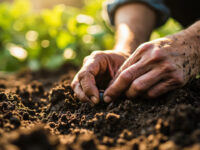
Plant transplants at the same depth they were growing in their pot, maybe half an inch deeper at most. Unlike tomatoes, peppers don’t root well from a buried stem, so don’t bury them deep hoping for extra roots.
3. Space them properly
Give each plant 18 to 24 inches of room, with rows 24 to 36 inches apart. Crowding them cuts airflow and invites the fungal problems covered below.
4. Water in immediately
Soak the planting hole well before and after setting the plant, even if the soil looks moist. This settles soil around the roots and cuts transplant shock significantly.
Once they’re in the ground, the next few weeks are about steady care, not more digging.
Watering and Feeding Through the Season
Banana peppers want consistent moisture, about 1 to 1.5 inches of water a week, whether from rain or your hose. Uneven watering, dry spells followed by a flood, is the single biggest cause of blossom drop and blossom end rot, more than any nutrient problem.
Check the soil an inch down with a finger. If it’s dry there, water. Mulch with 2 to 3 inches of straw or shredded leaves to even out moisture swings and cut down on weeding.
For feeding, work a balanced fertilizer into the soil at planting, then switch to something lower in nitrogen and higher in phosphorus and potassium once flowering starts. Too much nitrogen late in the season gives you a lush green plant with very few peppers, which is a common and frustrating outcome.
Feed and water consistently and the plant will do most of the rest of the work itself, but a few problems still show up uninvited.
Problems That Actually Show Up
Here’s the sign everyone misreads: curled or puckered upper leaves. Most people assume disease or a virus and panic. Nine times out of ten it’s aphid feeding or simple heat stress, not something that requires pulling the plant.
Check the undersides of curled leaves for small aphids or their sticky residue first. A strong water spray or insecticidal soap, applied per the product label, usually clears light infestations.
- Blossom drop: caused by temperature swings above 90°F or below 60°F at night, or by inconsistent watering. Not usually fixable in the moment, but it self-corrects as weather stabilizes.
- Blossom end rot: shows up as a dark, sunken spot on the fruit’s bottom, driven by uneven watering more often than a true calcium deficiency. Even out your watering schedule before you reach for a calcium spray.
- Fungal leaf spots: circular brown spots, usually from wet foliage and poor airflow. Water at the soil line, not overhead, and space plants properly from the start.
- Pepper weevils and hornworms: check plants weekly and hand-pick what you find. Small populations rarely need a spray at all.
Catch these early and none of them cost you the season, but ignoring blossom drop and hoping it’s something worse wastes time you don’t get back.
When and How to Harvest
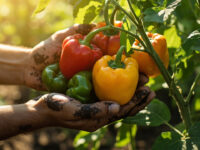
Here’s the honest answer to the question everyone eventually asks: should you wait for red? Banana peppers are fully mature and ready to eat at the pale yellow stage, typically 65 to 80 days after transplanting. Left on the plant longer, they’ll ripen through orange to red, and red banana peppers are sweeter and slightly less tangy, not more of anything alarming.
There’s no wrong answer here, it’s genuinely a preference call. Yellow peppers have that classic tang and crunch people expect for pickling. Red ones taste more like a mild sweet pepper.
What is true either way: harvesting regularly, rather than letting fruit sit, pushes the plant to keep setting new flowers. A plant left loaded with ripening peppers slows down new fruit production noticeably.
Cut peppers with a bit of stem attached using scissors or pruners rather than pulling, which can snap branches. The plant will keep producing until the first fall frost cuts it down.
That’s the whole cycle, and now here’s everything worth saving before you close this tab.
Banana Peppers at a Glance
- When to plant: start seed indoors 8 to 10 weeks before last frost, transplant outside once nights stay above 55°F and soil is at least 60°F.
- Sun and spacing: full sun, 6 to 8 hours daily, plants set 18 to 24 inches apart with 24 to 36 inches between rows.
- Soil: loose, well-drained, enriched with compost, pH 6.0 to 6.8.
- Watering: about 1 to 1.5 inches per week, kept consistent rather than feast or drought.
- Feeding: balanced fertilizer at planting, then lower nitrogen once flowering begins.
- Harvest window: 65 to 80 days after transplant, pale yellow for classic tang, or left longer for sweeter orange to red fruit.
- Biggest yield booster: pick often, since fruit left on the plant slows new flowering.
Get the timing and watering right and banana peppers practically grow themselves.
The rest is just picking them often enough to keep the plant working.