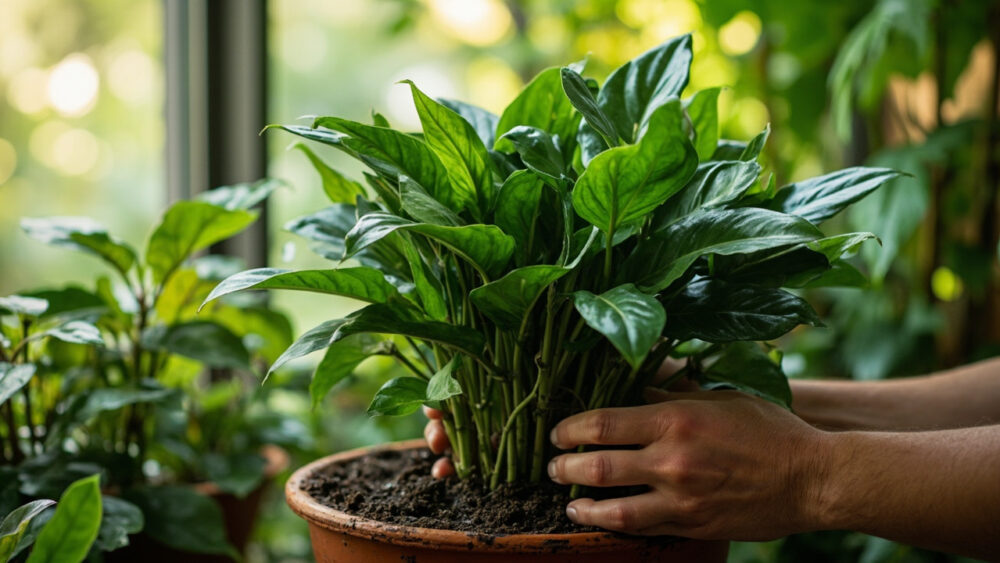
Zz plant light requirements are about as forgiving as houseplants get: it wants bright, indirect light but will genuinely survive in a dim corner most other plants would sulk in. The sweet spot is a spot near an east or west window where light lands on the leaves without direct sun baking them for hours. It will not thrive in a windowless room, but it will hang on longer than you would think, which is exactly where most people get into trouble.
Here is the loop worth opening now: the mistake that kills far more ZZ plants than low light ever does is not darkness, it is what you do to “help” a plant that looks fine sitting in the dark. There is also a sign almost everyone misreads as disease when it is actually just the plant telling you it wants a little more light, and a straight answer to the question you are probably about to ask next, which is whether that dark corner is a death sentence or just a slow fade.
Stick with this and you will get the full picture, plus a save-able ZZ Plant at a Glance card at the bottom with every number in one place.
How Much Light a ZZ Plant Actually Needs
A ZZ plant (Zamioculcas zamiifolia) does its best growing in medium to bright indirect light, roughly the light you get standing a few feet back from an east or west facing window. It tolerates low light, meaning a north window or a spot several feet from any window, but tolerating is not the same as thriving.
In low light it survives on stored energy in its thick rhizomes and grows slowly, sometimes for a year or more with barely a new stalk. Give it real indirect light and you get faster growth, glossier leaves, and new shoots pushing up multiple times a year instead of once.
Direct sun is the one thing it does not want for long stretches, and that surprises people who assume “tough plant” means “sun lover.”
Next question: what does that light actually look like in your living room, not in a grow guide.
What the Right Spot Looks Like in a Real Room
Picture a window with sheer curtains, or a spot four to eight feet back from an uncovered east or west window. That is the target. The light should be bright enough to read by comfortably without a lamp, and you should be able to see a soft-edged shadow if you hold your hand up, not a sharp, dark one.
An east window gives gentle morning sun that is almost never too strong for a ZZ plant sitting right on the sill. A west window brings hotter afternoon sun, so pull the plant back two to four feet or filter it with a sheer curtain. A south window is the most intense; keep the plant off to the side or several feet back rather than directly in the sill. A true north window is low light, workable but slow.
If you are not sure which direction you have, step outside at midday and check where your shadow falls, or just watch which window gets the longest direct sun during the day.
Once you know what good light looks like, you need to know what the plant looks like when it is not getting it.
The Signs of Too Little Light
A ZZ plant in genuinely low light does not usually die outright. It just slows down, and the signs are subtle enough that people miss them for months.
Watch for stretched, leggy stalks reaching toward the nearest light source, wider spacing between leaflets than normal, and a general thinning look where the plant seems sparser than when you bought it. New growth, if any comes at all, tends to be smaller and paler than the older leaves.
Here is the sign almost everyone misreads: a few older, lower leaves turning yellow and dropping off one at a time. That is often just normal leaf turnover, not a light problem or a disease, especially if the rest of the plant looks glossy and full. Do not panic and start moving pots or dumping fertilizer at the first yellow leaflet.
The real tell for insufficient light is a plant that has stopped producing new stalks entirely for six months or more with no other stress going on.
That brings up the opposite problem, because too much of a good thing causes its own damage.
The Signs of Too Much Light
If you assumed more sun is always safer for a “tough” plant, that assumption is what scorches ZZ leaves. Direct, hot sun, especially through an unfiltered south or west window in summer, will bleach and burn the glossy leaflets.
Look for pale, washed-out patches on leaves facing the window, or brown, crispy edges and tips that feel dry and papery rather than soft. Unlike the slow fade of low light, sun scorch shows up fast, often within a week or two of a plant landing in a hot direct spot, like after a move to a sunnier windowsill in spring.
The damaged leaflets will not green back up. You cut them off and let new growth replace them once the plant is back in appropriate light.
Next, the part nobody tells you: the same spot that was perfect in January can scorch that plant by July.
Why the Same Window Changes on You Through the Year
Light intensity and angle shift a lot across the year, even though the window stays put. A south or west window that felt like gentle indirect light in winter can throw hours of direct, intense sun through that same glass by early summer, when the sun sits higher and stronger.
Days also get shorter in fall and winter, cutting total light hours even if the angle stays mild. This is the honest answer to the follow-up question you were probably about to ask: no, you do not need to move the plant every season, but you do need to glance at it every few months and adjust.
In summer, pull it back from hot afternoon windows or add a sheer curtain. In winter, move it closer to the glass to make up for weaker, shorter days.
None of this requires a greenhouse, just a little seasonal attention, which leads into the easiest fixes for whatever room you have got.
Placement Fixes That Do Not Require a Sunroom
Most light problems have a cheap, low-effort fix that does not involve remodeling your living room around a plant.
- Too dark: move the pot within four to six feet of the nearest window, or rotate it to a room with an east or west exposure.
- Too intense: hang a sheer curtain, or shift the pot two to four feet back from the glass during the brightest months.
- No good window at all: a full spectrum grow light run ten to twelve hours a day, set a couple feet above the foliage, will carry a ZZ plant through an office or windowless hallway indefinitely.
- Uneven growth: give the pot a quarter turn every couple of weeks so it does not lean permanently toward one side.
Any one of these fixes usually turns a stalled, sparse plant back into an actively growing one within a month or two.
With placement sorted, the only thing left is keeping every number in one place for next time.
Zz Plant at a Glance
- Ideal light: bright to medium indirect light, near an east or west window or several feet back from a south window.
- Tolerable light: low light, such as a north window or a spot a few feet from any window, with slower growth.
- Avoid: hours of direct, hot sun through unfiltered south or west glass, which scorches the leaves.
- Low light signs: leggy stretched stalks, wider gaps between leaflets, no new growth for six months or more.
- Too much light signs: pale bleached patches or crispy brown edges appearing within a week or two of a sunnier spot.
- Seasonal adjustment: pull back from windows in summer, move closer to glass in winter as days shorten.
- No good window fix: a full spectrum grow light for ten to twelve hours daily works fine long term.
If you remember one thing, remember this: a ZZ plant fails from neglect far less often than it fails from someone overcorrecting a plant that was actually doing fine.
Give it steady indirect light, let the lower leaves drop without worry, and it will outlast most of the fussier plants on your windowsill.