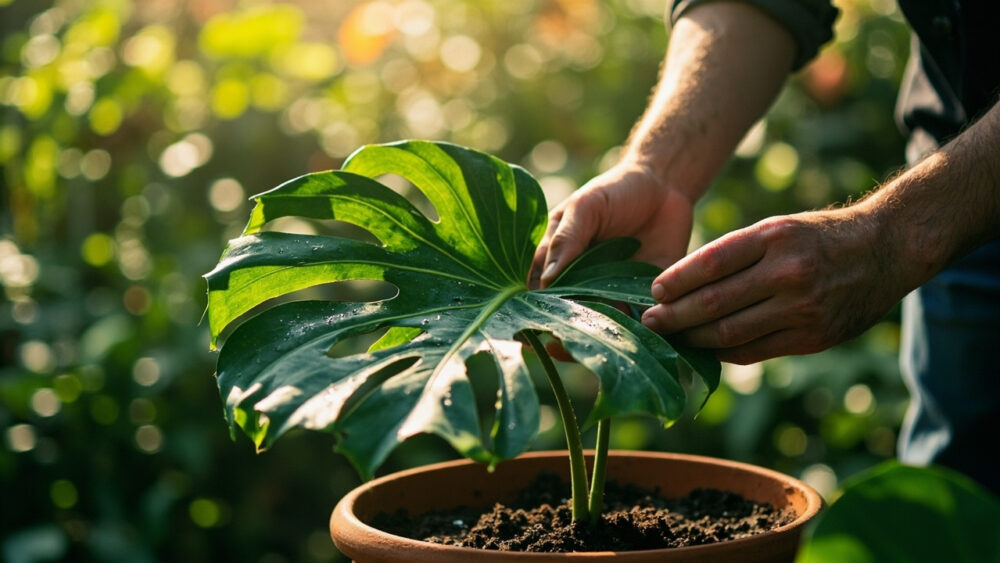
Growing monstera deliciosa well comes down to four things: bright indirect light, a chunky fast-draining potting mix, water only when the top two inches of soil dry out, and something for those aerial roots to climb once the plant gets going. Learning how to grow monstera deliciosa is less about babying it and more about getting out of its way once the basics are right. This is a jungle vine at heart, and jungle vines want humidity, warmth, and a little neglect between waterings.
Most of the trouble people run into isn’t watering, though everyone assumes it is. It’s light, or rather the wrong kind of it, and the split-leaf fenestrations everyone waits for don’t show up for the reason most people think. There’s also a repotting mistake that stalls growth for a full year without the plant ever looking sick.
Stick with me through planting, feeding, and the honest timeline for those famous holey leaves, and you’ll get the full save-able Monstera Deliciosa at a Glance card at the bottom with every number in one place.
When to Plant or Repot Monstera Deliciosa
Monstera deliciosa is a houseplant across nearly all of the US, only surviving outdoors year-round in USDA zones 10 through 12. For everyone else, timing is about the plant’s growth cycle, not the calendar season outside.
Spring through midsummer is the window, when the plant is actively pushing new leaves and can recover fast from a pot change. Repotting in fall or winter, when growth slows and light drops, means a plant that sits in disturbed soil without the energy to root into it.
If you’re starting from a nursery plant or a cutting, the same window applies. Warm room temperatures, 65 to 85°F, and long daylight hours are what actually trigger the growth spurt you’re planting into.
Get the timing right and the next decision, where you put it, matters just as much.
Choosing the Spot and Preparing the Soil
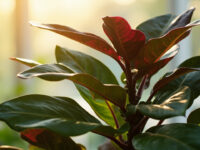
Monstera wants bright, indirect lightthink a few feet back from an east or south window, or filtered light through a sheer curtain. Direct hot sun scorches the leaves; deep shade gets you a plant that survives but never fenestrates.
If you assumed more sun always means faster growth, that’s the guess that burns leaf edges brown. This plant evolved climbing up shaded tree trunks in the understory, not sitting in a bare field.
For soil, skip straight potting soil out of the bag. Mix in perlite, orchid bark, or coarse coco chips at roughly one-third of the total volume.
Drainage is non-negotiable. Monstera roots rot fast in dense, wet soil, and a pot without a drainage hole is asking for trouble no matter how carefully you water.
Once the mix and the light are sorted, it’s time to actually get the plant in the pot.
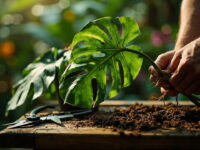
Planting Monstera Deliciosa Step by Step
Step 1: Pick the right pot size
Go up only one pot size from the nursery container, about 2 inches larger in diameter. A pot that’s too big holds excess moisture the roots can’t use fast enough.
Step 2: Set the depth
Plant at the same soil depth it was growing at before. Burying the stem deeper invites rot at the base.
Step 3: Backfill and firm gently
Fill in around the root ball with your chunky mix, pressing just enough to remove big air pockets. Don’t compact it hard; roots need to breathe.
Step 4: Add the climbing support now
Sink a moss pole or trellis into the pot at planting time, not later. Aerial roots that have nothing to grip early tend to wander instead of climbing.
Step 5: Water it in
Give it a thorough soak until water runs from the drainage holes, then let it drain completely. Don’t water again until the top couple inches of mix dry out.
Getting the plant in the ground is the easy part. Keeping it alive through the season is where most of the real decisions happen.
Watering and Feeding Through the Season
Check the soil, not the calendar. Stick a finger 2 inches down. If it’s dry, water thoroughly, if it’s still damp, wait. In most homes that’s every 7 to 12 days, faster in summer heat, slower in winter.
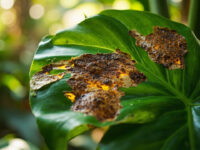
Yellow leaves get blamed on underwatering constantly, and that guess kills more monsteras than drought ever does. Overwatering, not underwatering, is the far more common cause of yellowing on this plant, especially when it’s paired with mushy brown stems near the soil line.
Feed monthly through spring and summer with a balanced liquid houseplant fertilizer at half the labeled strength. Skip feeding in fall and winter when growth naturally slows.
Humidity above 50 percent speeds things along considerably. Dry indoor air, especially from winter heating, is why growth stalls for months at a time.
Even with good watering habits, a few problems show up on almost every monstera sooner or later.
Problems to Head Off Early
- Yellowing lower leaves: usually overwatering or poor drainage. Let the soil dry out further between waterings and check roots for rot if it continues.
- Brown, crispy leaf edges: low humidity or too much direct sun. Move it back from the window and mist or group with other plants.
- No new fenestrated leaves: insufficient light, not lack of maturity alone. Move closer to a bright window.
- Spider mites or mealybugs: fine webbing or small cottony clusters on stems and leaf undersides. Wipe leaves down regularly and treat with insecticidal soap, following the product label exactly.
- Root rot: black, mushy stems at the soil line. Unpot, trim away affected roots with clean shears, and repot into fresh dry mix.
Note on toxicity: monstera deliciosa is toxic to cats, dogs, and humans if chewed or eaten, due to calcium oxalate crystals that cause mouth irritation, drooling, and swelling. If a pet or child ingests any part of the plant, contact a veterinarian or poison control immediately rather than waiting to see what happens.
Head off these issues and you’re left with the part everyone’s actually been waiting for.
When Monstera Deliciosa Actually Matures (and Whether You’ll Get Fruit)
Here’s the honest answer to the question everyone assumes has a simple timeline: fenestrated, split leaves show up only once the plant is mature enoughtypically after it has produced 6 to 10 solid, unsplit juvenile leaves and has something to climb. This usually takes one to two years indoors with good light, not a fixed number of months.
A monstera left to sprawl on the floor without support will often stay juvenile and un-split far longer than one given a pole or trellis to climb.
As for the “deliciosa” in the name, this plant does produce an edible fruit in its native range, but that only happens on large, mature outdoor specimens, usually well over a decade old and grown in tropical or subtropical conditions. Indoor houseplants essentially never fruit, so if fruit is the goal, this isn’t the path to it.
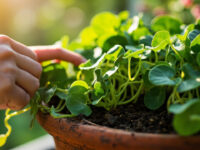
What you’re actually harvesting indoors are cuttings: once a stem has at least one node and ideally an aerial root, you can cut just below that node and propagate a whole new plant in water or moist soil.
Everything above compresses down to the card you can screenshot before you put the phone down and go check on your plant.
Monstera Deliciosa at a Glance
- When to plant or repot: spring through midsummer, during active growth, not fall or winter.
- Light: bright, indirect light. A few feet back from an east or south window.
- Soil: chunky, fast-draining mix, about one-third perlite or bark blended into potting soil.
- Watering: only when the top 2 inches of soil are dry, roughly every 7 to 12 days depending on season.
- Feeding: balanced liquid fertilizer monthly at half strength, spring through summer only.
- Support: add a moss pole or trellis at planting time so aerial roots climb from the start.
- Maturity for split leaves: after 6 to 10 juvenile leaves, usually one to two years, with adequate light and support.
Get the light and the drainage right, and this plant mostly grows itself.
Everything else, the moss pole, the feeding schedule, the patience for fenestrations, just speeds up what was already coming.