The window to plant butternut squash opens one to two weeks after your last spring frost, once the soil has warmed to at least 60°F, and it stays open for roughly four to six weeks after that, since butternut needs 80 to 100 warm days to mature and will happily go in as late as early summer in most zones. Cold soil is the real gatekeeper here, not the calendar. A lot of gardeners plant by date, get a rotten seed or a stalled seedling, and never figure out why.
There is one mistake that wrecks more butternut squash patches than anything else, and it is not frost. It is planting into soil that looks warm but is not, and I will show you the actual way to check it with your hand, not a guess.
There is also a sign everyone misreads once the vines are up and running, and a straight answer to the question you are probably already forming: can you still get a crop if you are planting late. Stick around, because the save-able Butternut Squash at a Glance card at the bottom has every number in one place for your phone.
The Real Planting Window, Anchored to Frost and Soil
Butternut squash is a heat lover with zero patience for cold soil. Direct-seed or transplant once nighttime temperatures are reliably staying above 50°F and soil at a 2 to 4 inch depth has held at 60°F or warmer for several days running. That usually lands one to two weeks past your last frost date.
In most of the country that means mid to late spring. In cooler northern zones (roughly zone 5 and below) it can slide into early summer before soil catches up, and that is fine, butternut has a long enough window to forgive a later start.
Working backward from harvest matters too. Count 80 to 100 days from your planting date to your first expected fall frost. If that math does not leave room, start seeds indoors 2 to 3 weeks early instead of waiting on direct-seeding.
Soil temperature decides more of this than the date on your wall ever will.
How to Read Your Own Yard, Not the Almanac
Forget the guess that warm air means warm soil. Air temperature lies to you constantly in spring; soil is slower and more honest, and it is the one your seed actually feels.
Push a soil thermometer 2 to 4 inches deep in the bed where you intend to plant, check it in the morning for a few days straight, and look for a steady 60°F or higher. No thermometer, no problem: grab a handful of soil from that depth. If it feels cool and clammy against your palm, it is still too cold, no matter how sunny the week has been.
Raised beds and south-facing slopes warm up a week or two ahead of low, shaded, or heavy clay ground. That is often the difference between two gardens ten miles apart being ready on completely different days.
Your soil will tell you the truth before your seed packet’s date ever does.
Planting Too Early: The Mistake That Actually Costs You the Season
Here is the mistake that ruins most butternut attempts, and it is not frost damage, since a light frost on tiny seedlings is usually just a setback you can replant from. It is cold, wet soil rotting the seed before it ever germinates, or stunting a transplant so badly it never recovers its growth rate for the rest of the summer.
Squash seed sown into soil below 60°F often just sits there, swells, and rots, especially in damp spring ground. A transplant set out too early survives but stalls, and a stalled squash plant rarely catches up to one planted two weeks later into warm soil. You lose more time waiting on a sulking plant than you would have lost waiting for the soil.
Planting late has its own honest cost, but it is smaller than most people fear.
Push planting back much past midsummer in short-season climates and you risk the vines still flowering when fall frost arrives, since butternut needs those 80 to 100 days uninterrupted. In long, warm-season regions you have real slack, a late-June planting still finishes fine before a late fall frost.
So the honest answer to “can I still plant this” is almost always yes, as long as you can count 80 to 100 frost-free days forward from today.
Prep to Finish Before the Window Opens
Get your bed ready while you are still waiting on soil temperature, not after. Butternut squash wants full sun, at least 6 hours a day, and rich, well-drained soil.
Work in a couple inches of compost or aged manure before planting, since squash is a heavy feeder that will show pale, stunted growth in thin soil by midsummer.
Mounding helps in cool or heavy soil. Build low hills 12 inches across and set 3 to 4 seeds per hill, later thinning to the strongest 2 plants once true leaves appear. Space hills 3 to 4 feet apart in rows 6 to 8 feet apart, since butternut vines run long and will happily eat a small garden alive if you crowd it.
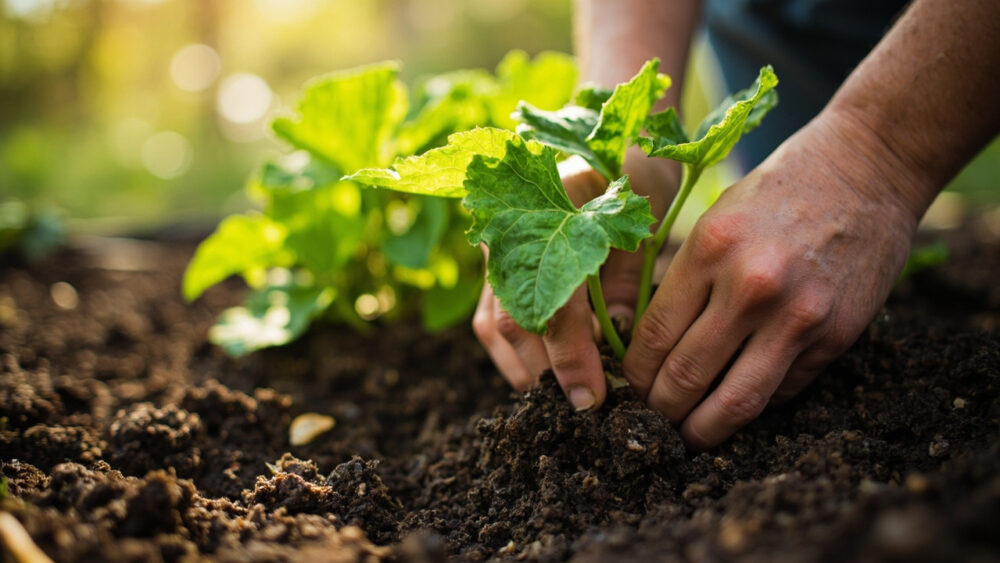
Plant seeds about 1 inch deep, transplants at the same depth they sat in their pot.
If you are starting indoors, do it 2 to 3 weeks before your target outdoor date, no earlier. Squash transplants get root-bound and sulky fast, and an overgrown transplant often underperforms a seed sown directly at the right time.
Once that bed is built and the soil hits your target temperature, there is nothing left to wait on.
Zone and Region Notes Worth Knowing
In zones 3 to 5, you are usually planting in late spring to early summer, and starting seed indoors is often the difference between a full harvest and a frost-cut one. In zones 6 to 7, mid to late spring direct-seeding works well and gives you room to make a second planting if the first fails. In zones 8 to 10, you have the most slack of anyone, with a window running from early spring into summer and sometimes a fall crop possible with a midsummer planting.
Hot, dry climates should watch the other end of the window too, since soil above roughly 95°F can stress germination and young seedlings just as much as cold soil stalls them.
Wherever you garden, the same rule holds: soil temperature and days-to-frost math beat any date printed on a seed packet.
Butternut Squash at a Glance
- When to plant: one to two weeks after last frost, once soil holds 60°F or warmer at 2 to 4 inches deep.
- Planting depth: about 1 inch for seed, same depth as the pot for transplants.
- Spacing: hills 3 to 4 feet apart, rows 6 to 8 feet apart, thin to 2 strong plants per hill.
- Days to maturity: 80 to 100 days from planting to harvest, count backward from your first fall frost.
- Soil and sun: full sun, at least 6 hours daily, rich soil amended with compost or aged manure.
- Starting indoors: only 2 to 3 weeks before your outdoor planting date, to avoid root-bound transplants.
- Zone notes: zones 3 to 5 lean on transplants and a later start, zones 6 to 7 direct-seed mid to late spring, zones 8 to 10 have the widest window and room for a second planting.
Watch the soil, not the calendar, and count your days to frost before you drop the first seed.
Get those two things right and butternut squash forgives almost everything else you do to it.