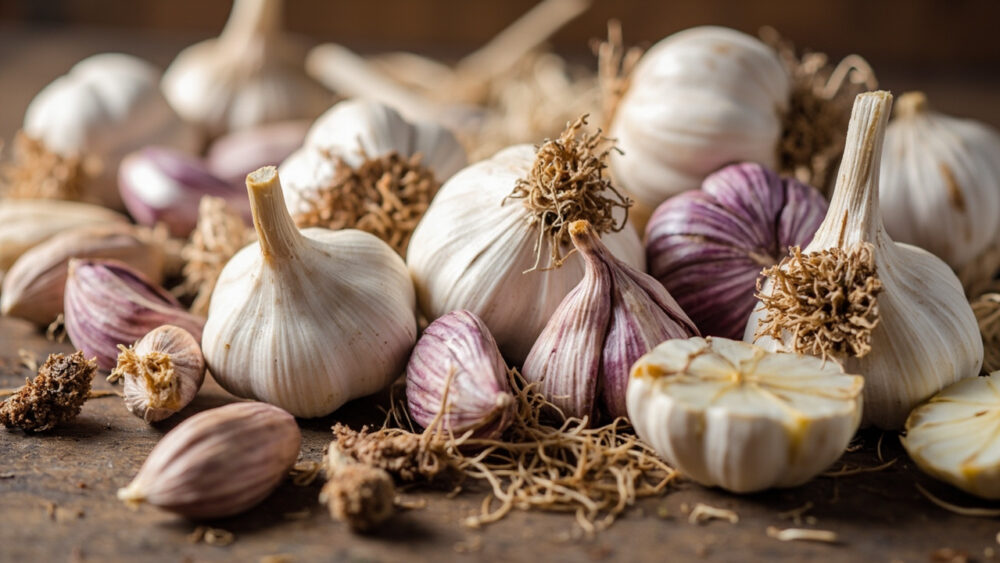
The one distinction that narrows fifteen garlic varieties down to two or three fast is hardneck versus softneck. Hardnecks handle cold winters, send up a flower stalk called a scape, and carry bold, complex flavor. Softnecks skip the scape, store far longer, and are what you’re picturing if you’ve ever braided garlic. Get that one choice right and the rest of choosing garlic varieties is just picking your flavor and storage window.
Most first-time growers reach for whatever the seed rack labels “elephant garlic,” assuming bigger means better. It’s actually a leek relative with mild flavor and a completely different growing habit, and it’s not even on this list for that reason. Meanwhile there’s a rare purple-streaked type experienced growers hoard seed stock of quietly, because it outperforms the famous names in a short, humid summer.
Number 13 on this list is the one most gardeners get completely backwards, picking it for looks when it should be picked for climate. The final entries, plus a straight method for choosing your own, are waiting at the bottom of this list, so keep scrolling past the categories that don’t fit your kitchen first.
Hardneck Types for Cold Winters and Bold Flavor
If you get real winter, USDA zone 6 or colder, hardnecks are where you start.
1. German Extra Hardy
Reliable cold tolerance is the whole pitch here. It shrugs off winters down to zone 3, produces large, easy-to-peel cloves, and delivers a straightforward hot-sharp flavor that mellows nicely when roasted.
2. Music
Big, white, four to six cloves per bulb and about the most widely grown hardneck in North America for good reason. It’s forgiving of average soil, stores six to eight months, and has a clean, medium-hot flavor that works raw or cooked.
3. Chesnok Red
Purple-streaked skin over easy-peeling cloves makes this a favorite for anyone who cooks garlic whole. It’s a purple stripe type, mild enough raw and genuinely sweet roasted, and it holds up in storage four to six months.
4. Georgian Fire
Heat that actually lingers sets this one apart from other hardnecks. It’s a porcelain type with large cloves, very cold hardy, and best suited to cooks who want garlic that fights back rather than fades into a dish.
5. Metechi
Rich, almost meaty flavor when cooked is what growers come back for. This marbled purple stripe type stores longer than most hardnecks, seven to eight months in the right conditions, and handles cold winters without complaint.
Hardnecks all share one weakness worth knowing before you plant a bed of them.
Softneck Types That Store Longest
These skip the scape, tolerate warmer winters, and are what you braid or keep on the counter for the better part of a year.
6. Inchelium Red
The softneck people switch to once they’ve grown it once. It’s an artichoke type with a rich, full flavor unusual for softnecks, big bulbs, and storage that stretches eight to ten months.
7. California Early
Early maturity and mild flavor make this the workhorse for warm-winter growers, zones 7 through 9 especially. It’s forgiving, productive, and stores nine to twelve months, which is close to the ceiling for garlic.
8. California Late
A few extra weeks in the ground compared to California Early buys you a slightly stronger flavor and even better storage. It’s the standard commercial softneck for a reason: consistent, high-yielding, and low drama.
9. Silverskin
The braiding garlic of the softneck world. Silverskin has papery white wrappers, sharp raw flavor that mellows with cooking, and the longest storage life of any garlic commonly grown, often past twelve months.
If long storage is your priority, you could stop right here, but the flavor specialists below are worth knowing about too.
Flavor and Novelty Types Worth Seeking Out
These are the varieties gardeners grow for a specific dish or a specific kick, not just a full pantry.
10. Spanish Roja
Old-school, classic garlic flavor is the reputation this rocambole type has earned over decades of home growing. It peels easily, has a true garlic bite that many cooks call the best-tasting variety period, but it stores only four to five months and doesn’t forgive warm, wet winters.
11. Duganski
Reddish-purple cloves with real heat make this porcelain type stand out at the table. It’s cold hardy, stores five to seven months, and holds its punch well when used raw in sauces or dressings.
12. Persian Star
Striking purple-striped bulbs that taste as good as they look. This purple stripe type is milder than most hardnecks, does well in slightly warmer zones than the true cold-climate porcelains, and is a favorite for garlic that gets eaten raw.
13. Creole Red
The one growers pick for its looks and then regret if they garden anywhere cold. Creole Red is a true warm-climate softneck, gorgeous rosy-pink wrappers, mild sweet flavor, and it needs mild winters, zone 7 and warmer, to bulb properly. Plant it in a hard-freeze climate expecting porcelain-type toughness and you’ll get small, disappointing bulbs; it’s built for the Gulf Coast and similar climates, not for looking pretty in a Minnesota bed.
14. Rocambole (Killarney Red)
The connoisseur’s garlic that quietly outperforms the famous names in humid, shorter summers. Rocambole types like Killarney Red have the most intense, complex flavor of any garlic you’ll grow, curl into a distinctive scape, peel easily, but store the shortest of any type here, often just three to four months, so it’s for eating, not hoarding.
15. Asiatic (Korean Purple)
Early to mature, big flavor for a smaller bulb describes this underused hardneck well. Korean Purple and other Asiatic types finish two to three weeks ahead of most hardnecks, carry a spicy-sweet flavor, and reward gardeners in short-season climates who need to get a crop in and out fast.
How to Choose the Right One
Work through these in order and you’ll land on the right variety without overthinking it.
- Start with your winter: if you regularly see hard freezes, choose a hardneck; if winters are mild, zone 7 and up, softnecks and Creole types will actually bulb properly.
- Decide how long you need it to store: reach for Silverskin or California Late for a year-round pantry, and accept that rocambole and Spanish Roja are for eating within a few months.
- Pick flavor to match how you cook: raw and sharp points toward porcelain or rocambole types, mellow and roastable points toward Chesnok Red or Inchelium Red.
- Check your season length: short, cool summers do better with early Asiatic types. Long, warm summers can grow almost anything on this list.
- Be honest about your care appetite: hardnecks need their scapes cut for best bulb size, softnecks are more hands-off and simply get planted and left alone.
- Buy seed garlic, not grocery-store bulbs, since grocery garlic is often treated to prevent sprouting and rarely matches your climate anyway.
Fifteen varieties sounds like a lot until you match one to your winter and your kitchen, and suddenly it’s obvious.
Plant good seed stock in the fall, and next summer’s harvest will tell you fast whether you chose well.