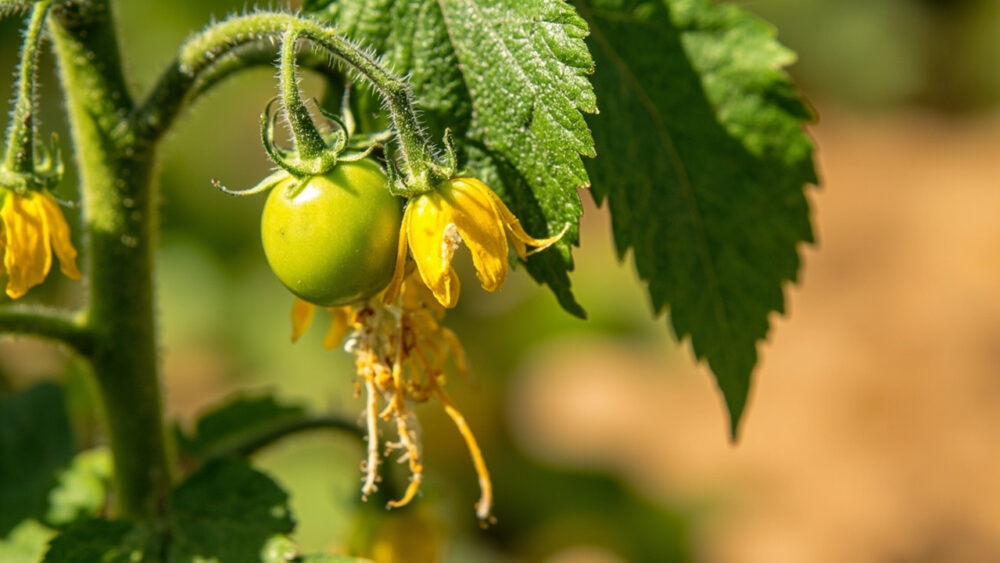
Most of the time this is blossom drop from heat stress, and the fix is simply waiting it out while you keep the plant otherwise healthy: once nighttime temps stay below about 75°F and daytime highs ease under 90°F, new flowers will start setting fruit again. Tomato pollen gets fried when it’s too hot or too cold, the flower can’t fertilize itself, and the plant drops it rather than waste energy on it. That’s not a disease and it’s not something you did wrong.
But heat isn’t the only cause, and it’s actually the one people blame first even when the real problem is nitrogen overload or a pollination issue with no bees in sight. The detail that tells you which one you’ve got is usually right there on the plant: how bushy and dark it looks, whether the flowers even opened before they dropped, and where on the plant the drop is happening.
Will the plant recover? Often yes, sometimes only partly, and I’ll give you the honest version for each cause below. Stick with me to the bottom and you’ll have a two-minute diagnosis checklist you can run right now, standing at the plant.
Causes, Most to Least Likely
1. Temperature stress
Confirm it: check your recent weather. Daytime highs above 90°F, nighttime lows above 75°F, or a cold snap under 55°F at night all cause drop. The plant otherwise looks green and normal, just short on fruit.
Flowers may open fully and even look pollinated before falling. Fix: there’s no product for this, only patience and stress reduction. Give afternoon shade with a light cloth or shade cloth during heat waves, mulch to keep root temps down, and keep watering consistent since drought stress compounds heat stress.
The next likely culprit is one gardeners create with good intentions and too much fertilizer.
2. Too much nitrogen
Confirm it: the plant is dark green, thick-stemmed, and growing fast and bushy, but flower clusters form and drop before opening or shortly after. Lots of leaf, little fruit.
Fix: stop nitrogen fertilizer immediately. Switch to a bloom-focused feed with more phosphorus and potassium relative to nitrogen, or just back off feeding entirely for a few weeks and let the plant redirect energy.
If your plant looks lean rather than lush, the story is different, and it points to pollination itself.
3. Poor pollination
Confirm it: flowers open, look fine, and hang around a few days longer than usual before dropping unfertilized. Low wind, low bee activity, or flowers packed too densely on a heavily caged or staked plant are common setups.
Fix: give the plant a gentle shake or flick each cluster midday when pollen is driest, ideally between 10am and 2pm. An electric toothbrush buzzed against the stem behind the flower works well too, mimicking a bumblebee’s vibration. Do this every day or two through the bloom flush.
Water problems cause a nearly identical drop, but with a different tell in the leaves.
4. Inconsistent watering
Confirm it: soil an inch down is bone dry, or the plant has gone through a drought-then-flood cycle recently. Lower leaves may look slightly wilted or curled even when watered.
Fix: water deeply and consistently, aiming for about 1 to 2 inches per week, more in containers or extreme heat. Mulch 2 to 3 inches deep to even out soil moisture swings, and set a regular schedule rather than watering only when the plant looks thirsty.
Sometimes the plant simply hasn’t had time to catch its breath, and that’s a cause of its own.
5. Transplant or stress shock
Confirm it: the plant was recently transplanted, root-pruned, or hit hard by wind, and the earliest flower clusters dropped within a week or two of that event while new growth still looks fine.
Fix: nothing to fix here except time. Keep the plant watered and out of harsh wind, and let it settle in. New flower flushes typically set normally once roots establish, usually within two to three weeks.
One more cause is easy to miss because it hides in the roots, not the flowers.
6. Root stress from overcrowding or poor drainage
Confirm it: the plant is in a container that’s too small (under 15 to 20 gallons for a full-size tomato), or the soil stays soggy after rain and never really dries.
Fix: upsize the container, or improve drainage in-ground by amending with compost and, if the spot stays wet, moving future plantings to a raised bed or mound.
Now that you’ve got the list, here’s how to line your plant up against it with confidence instead of guesswork.
How to Tell the Causes Apart
Location and pattern matter more than any single symptom. Heat and cold stress hit every flower cluster on the plant roughly equally, top to bottom, and coincide exactly with a weather event.
Nitrogen excess shows up with obviously oversized, dark, glossy foliage that looks almost too healthy, paired with sparse or dropping blooms.
Pollination failure tends to affect the whole plant evenly too, but the foliage looks completely normal, no color or size clues, and the flowers linger a bit before falling.
Watering problems often show first on lower or older leaves, which may yellow, curl, or feel thin, while the drop follows a period you can point to on a calendar.
Transplant shock is easy to place because it’s timed to an event, and it clears up as new growth resumes.
Once you know which one you’re looking at, the next question is how much of the season you’ve actually lost.
Will It Recover?
For heat, cold, and pollination-related drop, recovery is usually complete. Once conditions moderate or you start hand-pollinating, new flower flushes set fruit normally, and by four to six weeks later you often can’t tell the plant ever struggled.
Nitrogen excess takes longer to unwind since you’re waiting on the plant to burn through excess vigor, but it does recover, typically over several weeks once feeding stops.
Watering-related drop recovers well once you stabilize the schedule, though a plant that went through severe drought stress may drop one more flush before catching up.
Root and container stress is the one to watch. If the plant is badly rootbound in an undersized pot deep into the season, upsizing helps but won’t fully undo lost time, and a full harvest may not be realistic that year.
Cut your losses only if the plant is also showing wilting that doesn’t recover overnight, stunted new growth, or yellowing that’s climbing the plant; those point to a root or disease problem bigger than blossom drop alone.
Recovery is the good news, but preventing a repeat next flush is where the real payoff is.
How to Keep It From Happening Again
Feed lightly and specifically. Use a tomato-formulated fertilizer with modest nitrogen once flowering starts, not an all-purpose high-nitrogen feed meant for leafy greens.
Water on a schedule, not a whim. Deep, even watering with mulch on top prevents the drought-flood cycles that stress flowers.
Encourage pollinators and help them out. Plant flowers nearby that draw bees, and hand-pollinate during still, windless stretches.
Plan around your heat window. In hot climates, choose varieties bred for heat-set flowering and time planting so heavy bloom happens before the worst of summer heat arrives.
Size containers generously from the start, and don’t wait until roots are jammed to move a plant up.
All of that is prevention for next time, but let’s get you an answer for the plant in front of you right now.
Diagnosis Checklist
- Check today’s and this week’s temperatures: if highs are above 90°F or lows above 75°F, or a recent cold snap dropped below 55°F, suspect temperature stress first.
- Look at the foliage color and size: if it’s unusually dark, thick, and lush with few flowers, suspect too much nitrogen.
- Check the flowers themselves: if they open fully, look healthy, and linger before dropping with no odd leaf color, suspect poor pollination.
- Press a finger an inch into the soil: if it’s dry and watering has been irregular, suspect inconsistent watering.
- Check the lower leaves: if they’re yellowing, curling, or thin while upper growth looks fine, that supports a watering cause over heat or nitrogen.
- Ask if the plant was recently transplanted or stressed: if drop started within two weeks of that event, suspect transplant shock and give it time.
- Check the container size or drainage: if roots are crowded or soil stays soggy, suspect root stress and plan to upsize or improve drainage.
- Watch the next flower flush after making one change: recovery within two to four weeks confirms you diagnosed it correctly.
Blossom drop looks alarming but it’s rarely fatal to the plant, just a pause button on fruit.
Fix the condition behind it and the next flush almost always comes through.