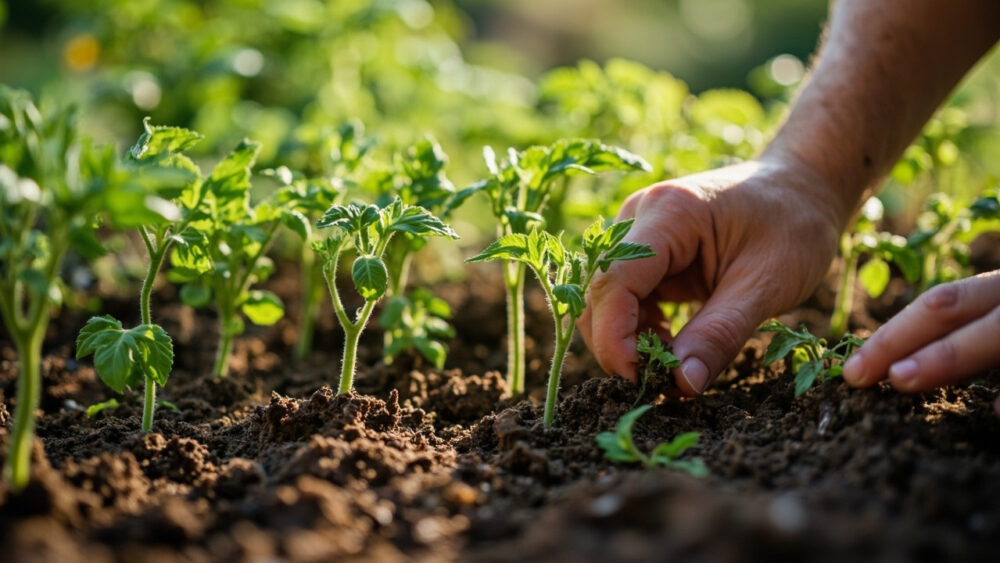
Space cherry tomatoes 18 to 24 inches apart if you’re staking or caging them tightly, or 24 to 36 inches apart if you’re letting them sprawl in cages or on a trellis with more room to fill out. Plant them slightly deeper than they sat in the pot, burying an inch or two of stem, and give rows 3 to 4 feet of walking room between them. That’s the number, but the reasoning behind it is what actually saves your harvest.
Most people who plant cherry tomatoes too close aren’t guessing randomly. They’re doing it because the seedling looks small and lonely in the garden bed, and cramming four plants where two belong feels like it should mean more tomatoes. It almost never does.
There’s also a sign nearly everyone misreads once the plants get going, a mistake with depth that either helps or wrecks your season depending on your soil, and an honest answer about what happens if you already planted too tight and it’s showing. All three are ahead, and the printable Cherry Tomatoes at a Glance card with every number in one place is waiting at the bottom once you’ve got the full picture.
The Exact Spacing and Why It’s Not Arbitrary
Cherry tomato plants get bigger than their fruit size suggests. Many indeterminate cherry varieties, which is most of them, will throw vines 5 to 7 feet long over a season.
Tight spacing (18 to 24 inches) works only if you’re pruning suckers and keeping the plant trained vertically on a stake or sturdy cage. Loose spacing (24 to 36 inches) is for plants you plan to let bush out, or for varieties like Sungold and other vigorous types that get genuinely large no matter what you do.
The spacing exists to manage airflow and root competition, not just elbow room for you. Crowded tomato foliage stays damp longer after rain or watering, and damp foliage is exactly what fungal diseases like early blight and septoria leaf spot are waiting for.
Get the spacing right and you’re already ahead of half the problems that show up in July.
Planting Depth: Deeper Than You Think, But Not Too Deep
If you assumed depth barely matters for tomatoes, that guess costs people a weaker root system than they could have had. Tomato stems grow tiny root hairs along any buried section, so planting deep gives you a bigger, sturdier root mass than planting at the same depth as the nursery pot.
Bury the stem up to the first set of true leaves, removing any lower leaves that would end up underground. For a 6 to 8 inch seedling, that usually means 2 to 4 inches of stem below soil level.
Don’t bury the growing tip or the topmost leaves, and don’t go so deep that the plant sits in cold, wet soil that hasn’t warmed up yet. Soil should be reliably above 60°F before transplanting at all, ideally two to three weeks after your last frost date, not right on top of it.
Depth solves half the battle underground, but layout above ground decides the rest.
Row and Bed Layout Options That Actually Work
In traditional rows, keep plants 18 to 24 inches apart within the row and leave 3 to 4 feet between rows so you can walk through, water, and harvest without body-checking the foliage every time.
In raised beds or blocks, stagger plants in a diamond pattern rather than a straight grid. This gets you a bit more distance between any two plants without wasting bed space.
- Small raised bed (4×4 feet): four plants max, one per corner-ish zone, staked individually.
- Long row bed: one row down the center, 20 to 24 inches apart, staked or caged in a line.
- Sprawling, unstaked patch: 3 feet apart minimum, and accept that you’ll lose some bed space to vine sprawl.
Layout on paper is easy, the real test is what happens once the plants actually fill in.
What Goes Wrong When Plants Are Too Close
This is the part people misread. The sign of overcrowding isn’t usually stunted growth, it’s the opposite: lush, dense, dark green foliage that looks like success right up until it isn’t.
Underneath that canopy, airflow drops to nothing. Humidity sits trapped against the lower leaves overnight. Within a few weeks you’ll typically see yellowing lower leaves, then brown or black spots working their way up the plant, which is early blight or septoria doing exactly what damp, still air lets them do.
Fruit set suffers too. Crowded plants compete hard for water and nutrients, and tomatoes that are stressed for resources often abort blossoms rather than setting fruit. You end up with a jungle of leaves and a disappointing number of cherry tomatoes hiding inside it.
Too close also means harder harvesting, tangled stems that snap when you try to separate them, and diseases that jump plant to plant almost instantly once one gets infected.
Planting too far apart has its own quieter cost, and it’s the one nobody warns you about.
The Honest Problem With Planting Too Far Apart
Wide spacing won’t rot your plants, but it wastes bed space and, in short-season climates, wastes time. Bare soil between young plants dries out fast, grows weeds aggressively, and doesn’t shade the ground the way a properly filled-in tomato bed does.
Cherry tomatoes also perform slightly better with some canopy density since neighboring plants shade each other’s root zones and reduce soil moisture swings. Go much past 3 feet and you’re not gaining anything, you’re just leaving the bed underused.
The sweet spot is full canopy coverage by midsummer with just enough gap between plants for your hand and a pair of pruners to fit through.
Containers change these numbers more than people expect, and that’s worth getting right before you plant one more pot.
Container Spacing: One Plant, One Pot, No Exceptions
The container version of this mistake is putting two cherry tomato seedlings in one pot to “double the harvest.” It doesn’t. It halves both plants’ root space and you get two mediocre plants instead of one strong one.
One cherry tomato plant per container, minimum 15 to 20 gallon size, roughly 18 to 24 inches in diameter. Smaller pots dry out too fast and stunt root development, which shows up later as smaller fruit and more blossom end rot.
If you’re running multiple containers, space the pots themselves 24 to 36 inches apart so foliage doesn’t mesh together and trap moisture between them, same logic as in-ground spacing.
If you’ve already got plants crowded in the ground right now, there’s still something you can do about it.
Fixing an Overcrowded Planting Without Starting Over
You generally can’t move mature tomato plants without serious root damage once they’re past the first few weeks, so digging and relocating isn’t the fix here. Pruning and thinning airflow is.
- Remove suckers (the shoots growing in the joint between the main stem and a branch) to reduce density without losing the main fruiting stems.
- Strip lower leaves up to 12 inches from the soil line to cut down splash-borne fungal spread.
- Stake or tie plants more vertically to force growth up instead of sideways into a neighbor’s space.
- Thin the weakest plant entirely if two are genuinely fighting for the same small footprint. Losing one plant is often better than losing all of them to disease.
None of this undoes bad spacing completely, but it buys back airflow, which is the thing overcrowding takes away first.
With the fixes covered, here’s everything worth saving in one place.
Cherry Tomatoes at a Glance
- When to plant: two to three weeks after your last frost, once soil is consistently above 60°F.
- Spacing, staked or caged: 18 to 24 inches apart.
- Spacing, sprawling or vigorous varieties: 24 to 36 inches apart.
- Row spacing: 3 to 4 feet between rows for airflow and access.
- Planting depth: bury 2 to 4 inches of stem, up to the first set of true leaves.
- Container size: 15 to 20 gallons, one plant per pot, pots spaced 24 to 36 inches apart.
- Sign of overcrowding: dense dark foliage followed by yellowing lower leaves and reduced fruit set, not stunted growth.
Get the spacing and depth right once at planting time and you spend the rest of the season managing tomatoes instead of managing disease.
Everything else about growing cherry tomatoes well starts from that one decision.